
Kalonzo dismisses President Ruto's First-World plan as ‘fantasy’, cites constitutional gaps
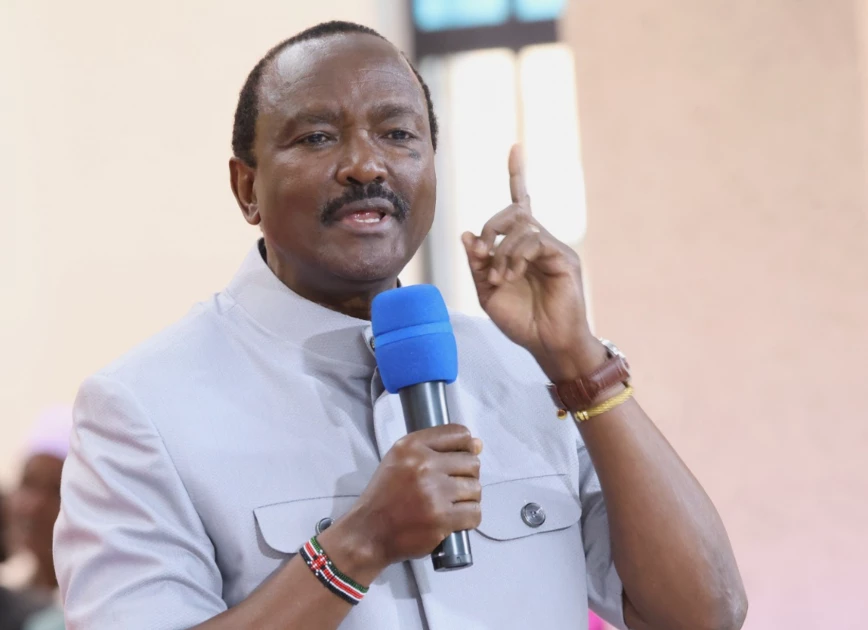
Wiper Patriotic Front (WPF) party leader Kalonzo Musyoka. | PHOTO: @skmusyoka/X

Audio By Vocalize
Speaking during a church service in South B, Nairobi, the former Vice President accused the Head of State of “living in fantasy,” questioning how the proposed economic transformation would be financed within the confines of the Constitution.
Musyoka, who is also a key figure in the United Opposition, faulted the government for what he termed an unconstitutional approach to resource mobilisation, arguing that any funding not anchored in the national budget violates established legal processes.
“The worst crime, which is contrary to the Constitution, is to say that you will look for money which is not accounted for under the budget. The budgetary process is a constitutional process,” Musyoka said.
He further criticised the State for what he described as a growing appetite to blur the line between government and religion. Taking issue with the proposed Religious Organizations Bill, 2024, Musyoka termed the legislation repressive and an attempt by the State to encroach on constitutionally guaranteed freedom of worship.
According to the WPF leader, the Bill uses the Shakahola tragedy as justification to impose sweeping controls on religious institutions, including potential taxation of church activities.
“Now they are using the Shakahola excuse to regulate the entire Church. I have looked at the draft Bill; they are a little shy about taxing tithes, but anything the Church tries to do will be subject to taxation,” he said.
Musyoka also weighed in on the political landscape ahead of the next general election, expressing confidence in the opposition’s prospects while warning against electoral malpractice.
“The only thing they are hoping to do is to steal the election. But I think we are able to stop them from stealing the election. But it is not us—the good Lord in Heaven will,” he remarked.
His remarks add to growing political debate over economic policy, constitutional governance, and the relationship between the State and religious institutions.
Join the Discussion
Share your perspective with the Citizen Digital community.
No comments yet
This discussion is waiting for your voice. Be the first to share your thoughts!