

OPINION: Shaping Africa’s future - Kenya’s role at the 39th African Union Assembly
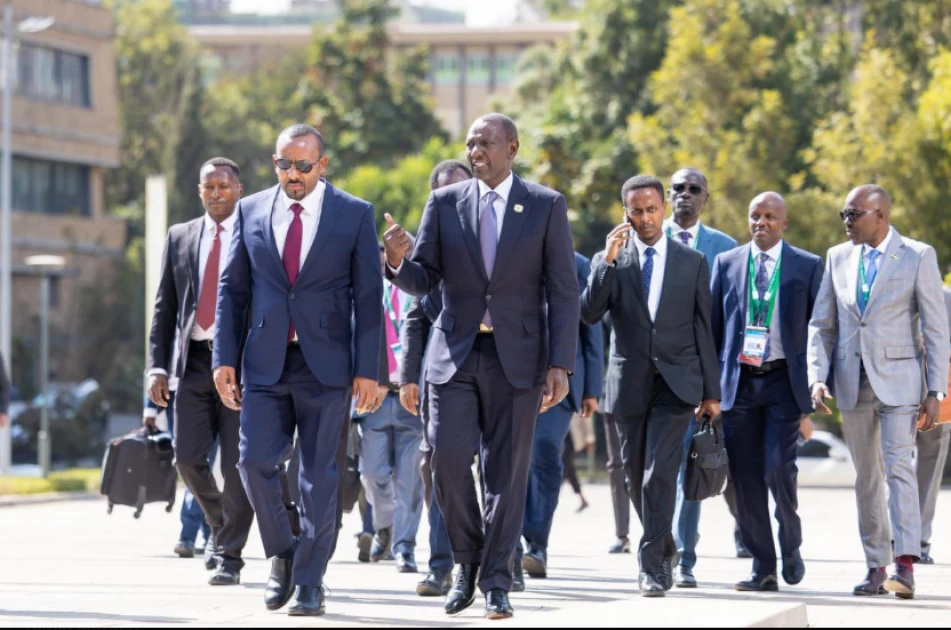
President William Ruto at the African Union High-Level Ad Hoc Committee for South Sudan on the sidelines of the 39th Ordinary Session of the African Union Summit, Addis Ababa, Ethiopia.

Audio By Vocalize
Africa stands at a defining moment in its collective journey toward unity, prosperity and self-reliance. The 39th Ordinary Session of the African Union Assembly in Addis Ababa was a diplomatic gathering that offered a reflection of our shared ambition to shape a continent that is resilient, integrated and globally competitive. Kenya was honoured to play an active and constructive role in advancing this vision.
Guided by the leadership of President William Ruto and Prime Cabinet Secretary and Foreign Affairs Cabinet Secretary, Musalia Mudavadi, Kenya’s participation focused on institutional reform, climate action, trade integration, health security and regional peace. These priorities reflect our enduring pledge to Africa’s transformation under the framework of Agenda 2063.
At the centre of our engagement was the urgent need to strengthen the AU’s institutional capacity. As the African Union Champion for Institutional Reform, President Ruto outlined proposals to heighten accountability, improve operational efficiency and secure sustainable financing for the Union. A stronger and more self-reliant AU is essential if we are to effectively respond to the continent’s challenges while advancing our collective aspirations.
Kenya also reaffirmed its commitment to amplifying Africa’s voice in global governance. At the C-10 meeting on the sidelines of the Summit, under the chair of Sierra Leone, President Ruto persuaded his counterparts that time was nigh for the continent to present its proposals for Security Council reforms during the forthcoming UN General Assembly, arguing that any further delay could undermine the continent’s consensus consolidated in the Ezelwini framework.
Our endorsement of Justice Phoebe Okowa’s candidature to the International Court of Justice reflects our belief that Africa must be adequately represented in international decision-making processes that shape global justice and diplomacy.
Climate action remains another defining priority for the continent. As Chair of the Committee of African Heads of State and Government on Climate Change, Kenya emphasised Africa’s common position on climate adaptation, resilience and sustainable financing.
Africa contributes the least to global emissions yet bears a disproportionate burden of climate change impacts. The continent must therefore speak with one voice in advocating for equitable climate solutions that support development while protecting our environment.
Equally important is economic integration through trade. Kenya reiterated its commitment to accelerate the implementation of the African Continental Free Trade Area, which represents one of the most transformative economic initiatives in Africa’s history.
To amplify this imperative, on the sidelines of the summit, Kenya launched a digital trade platform, Biashara Link and Dealroom, developed with Real Sources Africa, designed to strengthen commercial diplomacy, facilitate investment opportunities and empower our missions abroad to drive economic partnerships that benefit both Kenya and the wider continent.
Health security also featured prominently in the discussions with Kenya continuing to champion local manufacturing of health products across Africa, recognising that sustainable health systems require domestic production capacity.
We proposed the convening of an extraordinary summit to assess progress toward Africa’s target of producing at least 60 per cent of its health commodities locally by 2040. Strengthening health sovereignty remains fundamental to safeguarding our people and ensuring resilience against future shocks as instructed by the challenges faced during the COVID pandemic.
The AU summit further provided an opportunity to advance peace and security across the region. Kenya reaffirmed its commitment to supporting stability in South Sudan and the Horn of Africa through dialogue, mediation and institutional support.
At the C-5 meeting chaired by South Africa, President Ruto shared Kenya’s experience in supporting the South Sudanese transition through the Tumaini Initiative and called for inclusive dialogue as a precondition to the holding of a credible election at the end of this year.
Equally, during his meeting with former Sudan Prime Minister Hamdock, he reiterated his earlier view on the near impossibility of resolving the conflict in that country through the force of arms, imploring state and non state actors to double efforts to encourage the main protagonists to the conflict to come to the negotiation table to avoid further loss.
Beyond multilateral engagement, the Assembly enabled productive bilateral discussions with fellow African leaders and development partners to improve trade, infrastructure development, energy cooperation and investment partnerships. These engagements are essential to unlocking shared prosperity and advancing regional integration.
Kenya’s participation at the 39th African Union Assembly reflects a wider national vision. We seek an Africa that is united, self-reliant and globally influential; a continent that draws strength from its diversity and works collectively to secure a better future for its people.
Our engagement in Addis Ababa indorsed Kenya’s unwavering fidelity to Pan-African cooperation and solidarity. Together, as Africans, we have the capacity to shape our destiny, strengthen our institutions and build a continent defined by peace, prosperity and shared progress.
Korir Sing'oei is the Principal Secretary for Foreign Affairs, Kenya
Leave a Comment