

OPINION: Creative Arts - Unearthing a goldmine for Kenyan students
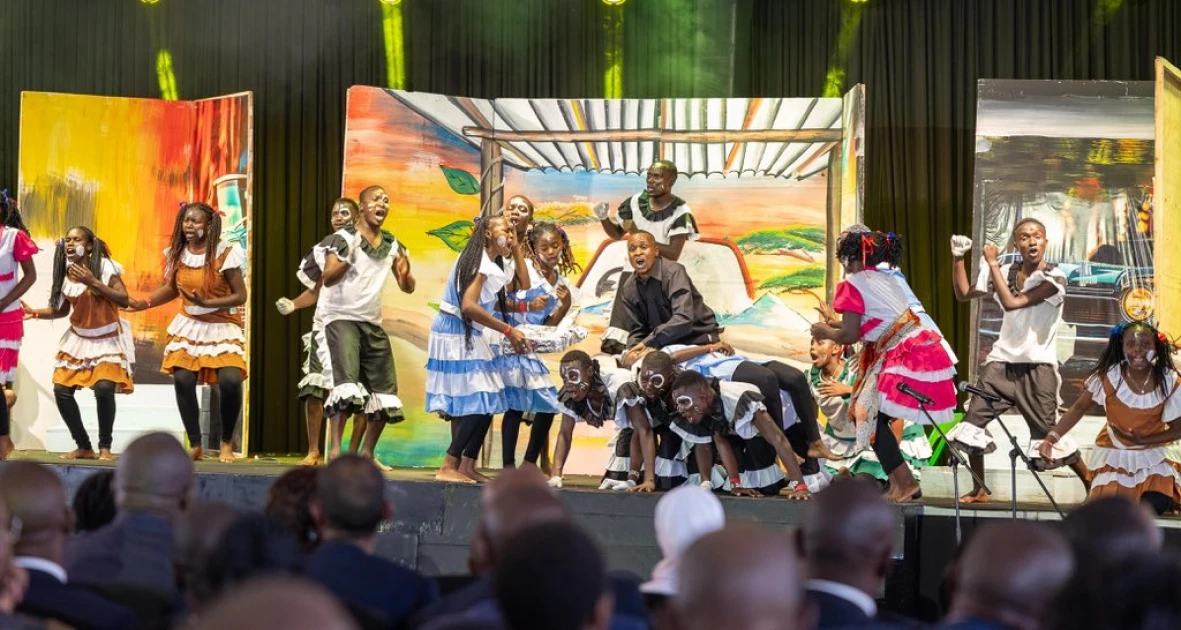
Some of the winners of the 63rd Kenya National Drama and Film Festival 2025 performing at State House, Nakuru where they were hosted by President William Ruto. PHOTO| PCS

Audio By Vocalize

The recently concluded Kenya National Drama and Film Festival (KNDFF) not only showcased remarkable artistic talent but also underscored its role as a vital incubator for Kenya's burgeoning creative economy.
As students grappled with pressing
issues from artificial intelligence and societal challenges to wealth creation,
they demonstrated the transformative power of art in driving both social change
and economic advancement.
This year’s theme, "Leveraging Technology to Nurture
Talent While Inculcating National Values for Social Economic Prosperity,"
highlighted the pivotal role of arts in education, fostering creativity,
critical thinking, and essential problem-solving skills for today's dynamic
economy.
Beyond the festival stage, these artistic skills translate
into tangible economic prospects. The competencies developed through drama and
film, such as storytelling, visual communication, and performance, are highly
valued in the modern creative landscape.
These talents can be directly
monetised through content creation, digital marketing, film production, and
event management, offering sustainable income streams and significantly
contributing to Kenya's creative sector. The success stories of alumni from
past Drama Festivals, such as comedian Timothy Kimani, popularly known as Njugush
and content creator Abel Mutua, are vivid examples of this potential.
As Education Principal Secretary
Julius Bitok rightfully noted at the festival's opening in Nakuru, the creative
economy represents a multi-billion-shilling industry, urging the empowerment of
Kenyan youth to harness its vast opportunities.
Furthermore, students engaged in creative arts develop
invaluable public speaking skills, opening pathways to leadership roles in
various sectors, including executive leadership and politics. Global figures
like Ukraine President Volodymyr Zelensky, a former comedian, and Madagascar
President Andry Rajoelina, a former DJ, exemplify how individuals with arts
backgrounds can ascend to the highest echelons of leadership.
Kenya, too, boasts politicians with creative sector roots, including former Starehe MP Charles Njagua Kanyi, who rose to politics from a music background, previously known for popular hits such as Kipepeo and Kigeugeu among many other chart bangers.
Langata MP, Phelix Odiwour, also known as Jalang’o and Dagoreti MP,
John Kiarie (KJ), both trace their roots to stage performance at the Kenya
National Theatre and appearances on popular comedy shows on TV. In neighbouring
Tanzania, musician Professor Jay has also served as a legislator, highlighting
the diverse applicability of skills honed through the arts.
The significant growth and potential
of Kenya's film industry further motivate students. Despite being smaller than
industry giants like Hollywood and Bollywood, the Kenyan film sector
contributed an average of 0.4% to Kenya's GDP from 2016
to 2022, creating 42,823 jobs and generating a gross output value of KSh 86.9
billion.
This vibrant cinematic landscape is fueled by the increasing
accessibility of affordable digital filmmaking technology, the proliferation of
streaming platforms, and the emergence of talented local filmmakers.
However, the Kenyan film industry faces considerable
challenges, including inadequate funding, piracy, limited production studios, a
shortage of skilled professionals, and issues with distribution and visibility.
Overcoming these obstacles through strategic investments and targeted support
is crucial to unlocking the industry's full potential.
As we begin conversations on career pathways for CBC
learners, it is crucial to recognise that STEM and Humanities should not
overshadow the arts within the educational system. Instead, integrating STEM
and Humanities with the arts can unlock greater innovation and create more
diverse economic opportunities, as reflected in the 2025 KNDFF theme, which
acknowledges technology's role in income generation while upholding social
values.
The private sector also plays a vital
role in providing financial support and mentorship. Equity Bank's partnership
with the KNDFF, under the Ministry of Education, through sponsorship of Ksh.25
million, exemplifies how the private sector can also play a role in elevating
the place for talents in our education sector and society in general. Such
investments not only support education but also nurture young talent, fostering
well-rounded individuals who contribute to thriving communities.
The Ministry of Education has
demonstrated a willingness to collaborate with partners to provide learners with
avenues to explore their talents and pursue careers in the performing arts.
The just-ended festivals should serve as a reminder to all stakeholders to encourage these young artists to seize the opportunities presented through drama and film to forge successful careers.
By uniting to
cultivate an environment where creativity flourishes, we can empower young
Kenyans to monetize their talents and build a brighter future for themselves
and our nation. Together, we can unlock the untapped goldmine of creative arts
for Kenyan students, ensuring a prosperous and culturally rich future.
Leave a Comment