

OPINION: Beyond policy, every budget line needs to future-proof the African child

Audio By Vocalize
By Fred W Waithaka

Fifteen years ago, African nations declared that planning and budgeting for children’s rights was a collective responsibility. It was a necessary response to the chronic underinvestment, fragmented coordination, and absence of reliable data that kept millions of children locked out of essential services.
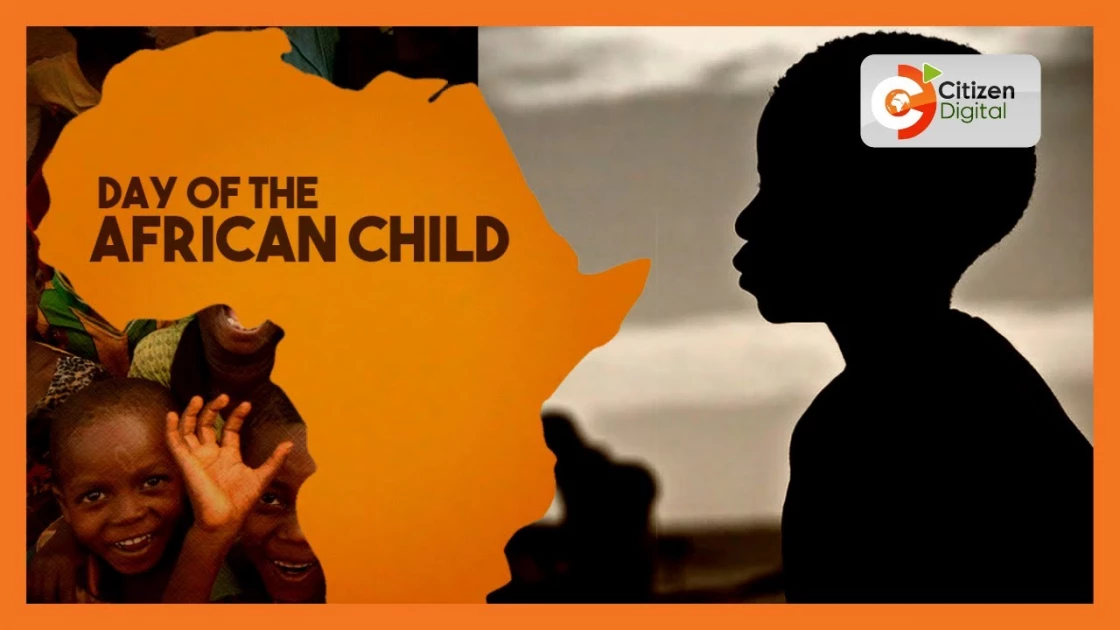
This year’s Day of the African Child was themed “Planning and budgeting for children’s rights: progress since 2010”, offers an opportunity to ask: what has changed, and where must we go next?
Progress has certainly been made. Many African
Union States have elevated children’s rights within national policy frameworks.
In Kenya, for instance, the development of the National Child Online Protection
Strategy marked a significant milestone in protecting young people in an
increasingly digital world. Across the continent, we’ve seen stronger laws on
early childhood education, child labour, child marriage, and health rights.
Yet, translating policy into real life
impact is the next hurdle, and has proven to be a stubborn challenge, so far.
Budgets remain thin, coordination uneven, and in many cases, children
themselves are still excluded from the processes that shape their futures.
This year’s reflection is especially urgent as the threats facing African children today are evolving faster than the systems meant to protect them. Technology has not only become central to education, health, socialization, and economic opportunities but has also opened new avenues for exploitation, exclusion, and harm.
The pandemic exposed
how unprepared our countries were to guarantee continuity of education and
child welfare in a digital-first environment. Even now, the digital divide
continues to deepen existing inequalities, especially for children in rural and
marginalized communities.
Meaningful protection and empowerment
of African children requires an honest reckoning on how budgets are drawn,
priorities set, and how systems are built. It is not enough to legislate rights
if those rights are not underwritten by dedicated, well-managed financial
resources. Child rights budgeting must be deliberate, transparent, and
accompanied by reliable data. Far too often, funding for child-focused
programmes is scattered across ministries, dependent on donor cycles, or
sidelined when fiscal pressures mount.
Equally important is institutional
coordination. African states cannot afford to treat children’s rights as the
exclusive responsibility of children’s departments or social services
ministries. In this digital world, protecting children demands active
participation from educators, regulators, law enforcement, telecom operators,
tech platforms, and civil society. At the heart of it all must be the child’s
voice.
Private sector actors, too, must recognize that safeguarding children is not a peripheral concern but a core business responsibility in today’s connected economies. Telcos, techcos, financial institutions, media outlets, and content creators shape the environments in which children grow and learn.
The responsibility to create safe, inclusive,
and empowering digital ecosystems cannot be outsourced. In conjunction with the
Internet Watch Foundation, Safaricom proactively blocks sites that have
inappropriate child sexual content. This is to support global efforts to block
websites flagged globally for inappropriate and harmful content. Such
interventions, while vital, must become the rule rather than the exception.
As we mark the Day of the African Child
this year, it is worth recalling the wisdom of the proverb: “A child who is not
embraced by the village will burn it down to feel its warmth.” Our society
cannot afford to neglect the rights and welfare of its youngest citizens
without risking long-term social and economic instability.
The African child yearns for more than
commemoration. They long for governments, corporates, and communities to turn
promise into practice, and for a continent willing to plan for their futures
with the urgency those futures demand.
The writer is the Ag. Chief Corporate
Affairs Officer, Safaricom PLC.
Leave a Comment