

Sudan on the brink of de facto apartheid: Ethnic divides and fractures within the military alliance
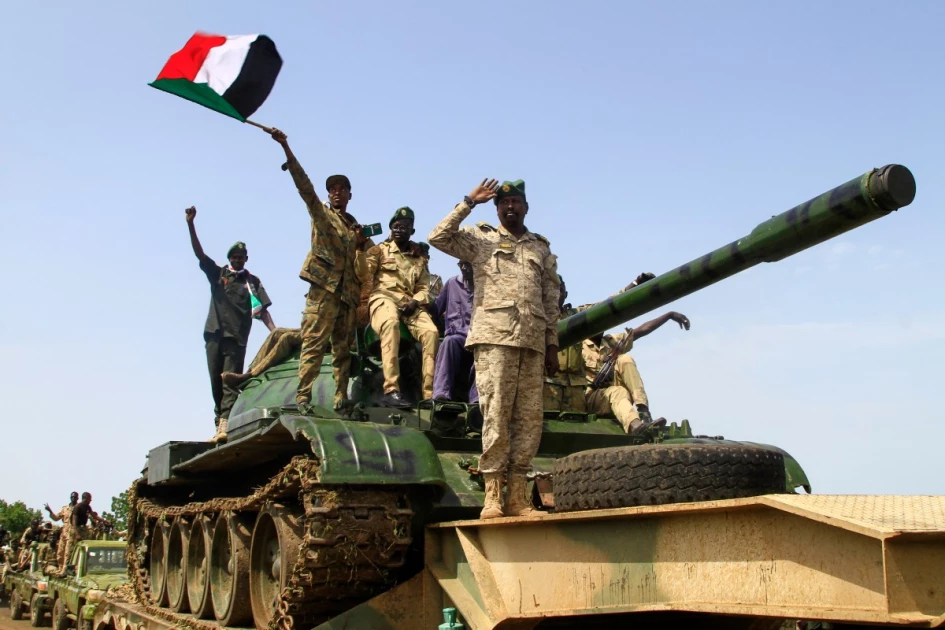
Sudanese armed forces mark Army Day in Sudan's eastern Gedaref State near the border with Ethiopia on August 14, 2023. (Photo by AFP) Related co

Audio By Vocalize
As Sudan’s armed conflict enters its third year, the country descends deeper into a humanitarian crisis, with over 14 million people internally displaced and famine threatening more than half of its states.
Beneath the surface of hunger and displacement, however, signs
of a systematic ethnic discrimination are rapidly emerging, tearing apart
Sudan’s fragile social fabric. State institutions are increasingly being used
to implement punitive and selective policies, most notably in Al Jazirah State,
which has become a hotspot for settling political and ethnic scores under the
guise of "urban planning."
In recent days, local authorities in Al Jazirah have launched
a wide-scale demolition campaign targeting hundreds of homes and shops in
neighborhoods mostly inhabited by displaced families from Darfur, Kordofan, and
Blue Nile.
The Sudanese Rights Coalition described the campaign as a “systematic act of
retaliation,” stating:
“The demolitions disproportionately target specific
communities. These neighborhoods have existed for decades with state approval,
receiving public infrastructure such as schools, mosques, and health centers - effectively recognizing their
legal status.”
Human rights organizations expressed shock at the timing,
noting that the demolitions were carried out at the peak of the rainy season,
rendering relocation nearly impossible. Families were thrown into the streets without
shelter or compensation, a move
described as a stark departure from previous practices that at least considered
humanitarian concerns.
The demolitions were accompanied by an uptick in
discriminatory and hate-filled media campaigns, which categorize residents
based on ethnic and geographic origins. According to the coalition's statement:
“In this context, the demolitions appear to serve political
and racist agendas more than administrative goals, deepening exclusion,
discrimination, and collective punishment.”
Activists from the resistance committees in Al-Hasahisa
reported selective enforcement of the demolitions, with similar neighborhoods
spared due to differences in ethnic composition.
Legal experts argue that these measures amount to forced
displacement and violate Sudan’s national and international obligations,
including Article 29 of Sudan’s Interim Constitution prohibiting arbitrary
deprivation of property; Article 14 of the African Charter on Human and
Peoples’ Rights, which guarantees the right to property; the Kampala Convention
mandating protection for internally displaced persons; and the International
Covenant on Economic, Social and Cultural Rights, which prohibits discrimination
and guarantees the right to housing.
Amnesty International previously called for an end to “all
forms of collective punishment based on identity or geographic origin.” UN High
Commissioner for Human Rights Volker Türk warned that “targeting specific
communities under catastrophic humanitarian conditions may amount to group
persecution.”
This escalation coincides with rising discontent among armed
groups allied with the army - particularly from the Zaghawa and Masalit
communities - who have begun to reassess their alliance, citing “systematic
discrimination” against their people.
Field reports quoted local commanders saying they feel “betrayed,” especially
as their neighborhoods were singled out despite their prior support of the
military in its operations against the Rapid Support Forces.
The Sudanese Rights Coalition has called for an independent
investigation into the ongoing violations in Al Jazirah State, an immediate
suspension of demolition orders, emergency shelter and fair compensation for
affected families, and direct intervention by the African Commission on Human
and Peoples’ Rights and relevant UN special rapporteurs.
“Using legal instruments to justify collective punishment and
ethnic discrimination is intolerable,” the coalition stated. “This is not
merely administrative abuse - it is an assault on the dignity and safety of
entire communities.”
What is happening in Al Jazirah is not just a local
administrative decision; it is a dangerous indicator of the state's slide
toward a covert form of apartheid.
The Sudanese conflict may take many forms, but the most perilous is that which
hides behind bureaucracy - executing exclusion and displacement in the name of
law. In this context, continued silence from African and international actors
is no longer acceptable.
[By Francis Ahovi, Global Security For Africa
Research and Good Governance (GLOSARRG)]
Leave a Comment