

Rwanda's actions in DR Congo unjustified: Belgian top diplomat

Audio By Vocalize
Belgium's foreign minister told AFP that Rwanda's
"legitimate" security concerns in the eastern Democratic Republic of
Congo could not justify its former colony's backing for the M23 armed group.
In an interview with AFP, Maxime Prevot urged both sides to
negotiate an end to the conflict in the DRC's troubled east, where the M23 has
seized swathes of territory from the Congolese government.
"There will be no military solution in the east of the
Congo. We need dialogue," Prevot told AFP after meeting Ugandan President
Yoweri Museveni in the capital Kampala on Friday.
"The situation there remains extremely precarious and
the local population pays the price every day," the minister added,
raising concerns of human rights abuses.
Since the beginning of 2025 the M23 armed group has forced
the Congolese army out of swathes of the DRC's mineral-rich east, triggering a
worsening humanitarian crisis and displacing hundreds of thousands.
UN experts and some Western countries have accused Rwanda of
backing the M23, whose lightning offensive has raised fears of a regional war.
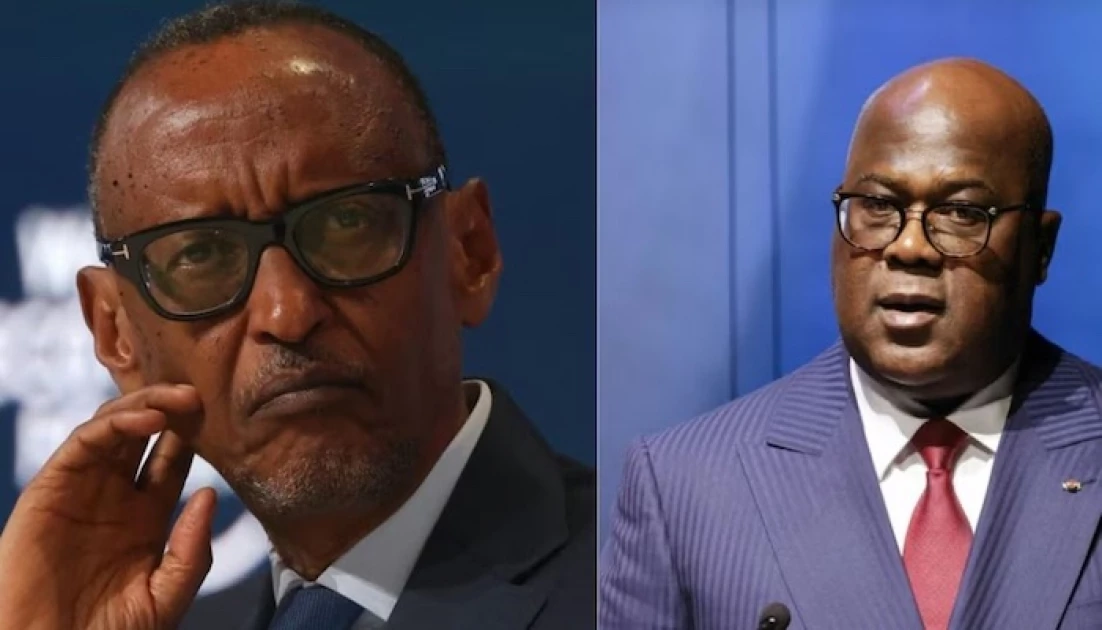
President Paul Kagame's government denies offering the M23
military support, but argues it faces threats from armed groups linked to the
1994 Rwandan genocide present in the DRC's east.
Prevot said Rwanda's security concerns were understandable,
but its actions in the eastern DRC were unacceptable.
"I think that Rwanda, and it is legitimate, is looking
for security," Prevot said.
"But I fully disagree with Rwanda considering the way
it is acting in the east of Congo."
Prevot denied Belgium's position was linked to its colonial
history. Belgium ruled Rwanda and neighbouring Burundi from 1916 to 1962.
Rwanda, which according to UN experts maintains 4,000 troops
in the DRC to support the M23, severed diplomatic links with Belgium in March
because of its stance on the conflict.
"We do not have any feeling of past colonialism
regrets," Prevot said. "And certainly not for me. I have a lot of
respect for Rwanda."
Prevot welcomed mediation efforts by Qatar and the United
States between the DRC, the M23 and Rwanda but cautioned against false
optimism.
"I hope I'm not being naive with the positive
announcements" made this week, the minister said.
The DRC and the M23 issued a statement this week pledging to
work towards a ceasefire and to engage in dialogue to end the conflict, with
Qatar facilitating the talks.
Responding to suggestions that the parties to the talks were
using a lull in the fighting to prepare a further military offensive, Prevot
said: "I hope that this is not a kind of smokescreen and that everybody is
sincere."
Prevot acknowledged Belgium's limited influence, given
diplomatic tensions with Rwanda, but said efforts should continue.
"I hope it will be possible in the coming months to
reopen, maybe discreetly, maybe informally, communication channels," the
foreign minister said.
"The way Belgium is reacting is not against Rwanda,
it's for the defence of international law, humanitarian law, sovereignty and
territorial integrity."
Kristof Titeca, a Belgian academic specialising in the
African Great Lakes region, told AFP that Belgium has played a key role in
Europe advocating for sanctions against Rwanda.
But he warned that the situation on the ground remains
fragile, while domestic Congolese politics complicated the picture.
"It has become close to impossible for Kinshasa to
regain the territories lost to M23 and Rwanda," Titeca said.
Any outside power hoping to intervene would have "to
navigate both Rwanda's support for M23 and the structural weaknesses in the
Congolese political system", he added.
Titeca said Rwanda's minimum objective appears to be the
establishment of a "buffer zone" in the eastern DRC, either through
the M23 or through influence over a local administration.
Following his visit to Uganda, Prevot will continue his tour
in Burundi and the DRC.
Leave a Comment