

Protests over police killing in Kenya as gov't presents budget
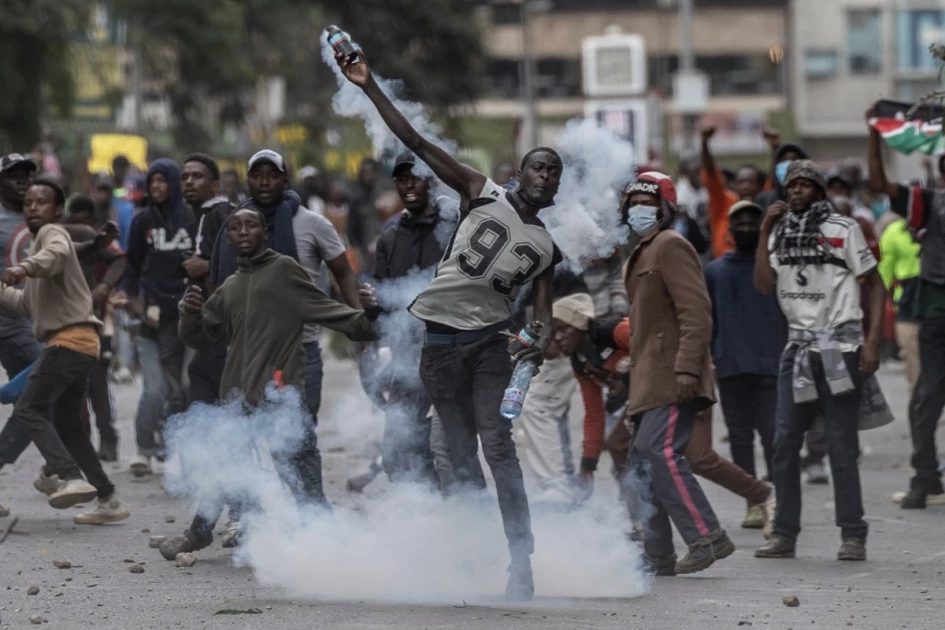
A Kenyan protester returns a teargas canister during a demonstration over the death of Kenyan blogger Albert Ojwang, who died in police custody, as the government presents the 2025-2026 budget statement in downtown Nairobi on June 12, 2025. (Photo by SIMON MAINA / AFP)

Audio By Vocalize
Kenyan security forces fired tear gas Thursday against protesters angry
over a police killing, threatening to overshadow the government's attempts to
pass a budget without sparking unrest.
The government carefully prepared its new finance bill with the aim of
avoiding the massive protests over tax hikes that engulfed Kenya a year ago.
But the killing of 31-year-old teacher Albert Ojwang while in police
custody last weekend, after he was arrested for criticising a senior officer
online, has reawakened anger over police brutality in the east African country.
"You can't kill one of us in prison and then expect us to just lie
down," said Tiffany, 22, a protester in Nairobi's business district who
gave only her first name.
Hundreds of protesters were spread in small groups across Nairobi's
business district, with some throwing rocks at police who fired back with tear
gas, while at least two cars were set alight.
AFP reporters saw at least three people wounded by rubber bullets, with
one taken to hospital.
The unrest was limited compared to the protests last year that peaked
when thousands stormed parliament on June 25, forcing President William Ruto to
cancel a finance bill that would have raised taxes on many everyday items.
At least 60 people were killed in the weeks of youth-led protests in
June and July 2024, and rights groups say dozens more were illegally detained
by security forces in the aftermath.
The east African nation is a regional economic powerhouse but tensions have
simmered over a rising cost of living, a stagnant job market and rights abuses.
This year, the government played it safe with its finance bill, focusing
tax hikes on businesses rather than consumers.
Finance Minister John Mbadi acknowledged last year's protests had
highlighted "the importance of values and principles of governance"
and called for a minute of silence in parliament for protesters who lost their
lives.
"To win public trust, we have strengthened public participation in
all policy formulation, including the budget-making process," he said,
referring to a new online portal in which citizens could give their views.
But there was anger last month when a software designer was arrested for
creating her own website that criticised the budget and allowed people to email
the government with complaints.
-
'Avoid controversy' -
Kenya faces a daunting task in boosting social services and investment
at a time when its heavy debts mean interest payments outweigh its spending on
health and education.
Analysts say the new budget is unlikely to provoke the public anger of
last year.
It seeks to boost revenues by cutting government spending and closing
tax loopholes, though critics say it still includes backdoor price increases
and will hurt small businesses.
"This year's finance bill is, in comparison to last year's, very
much seeking to avoid controversy," said Patricia Rodrigues, of global
consultancy Control Risks.
But businesses will be impacted by increases in income taxes and social
contributions, she said.
In a difficult global environment, the World Bank has reduced its growth
projections for Kenya from 5.0 to 4.5 percent in 2025.
Ojwang, the teacher killed in police custody, was arrested for
criticising deputy inspector-general Eliud Kipkoech Lagat in online posts.
"What we are demanding is for the deputy inspector general to
resign, and then he should be arrested," said protester Anami Daudi Toure,
27, on Thursday.
Leave a Comment