

Kenya, precarious refuge for LGBTQ Ugandans
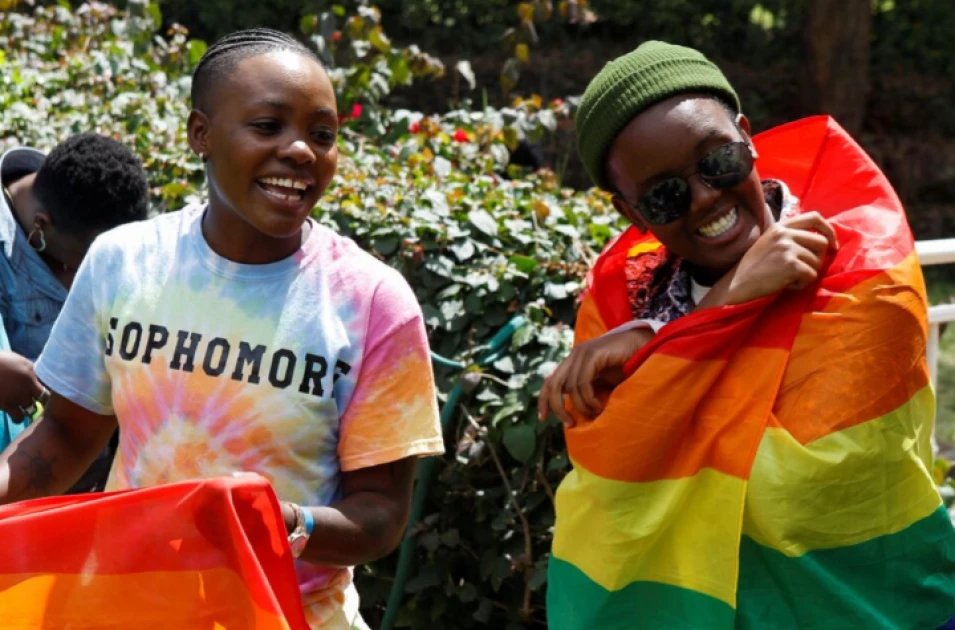
Participants react with Pride rainbow flags as they attend the Badilika festival to celebrate the LGBT rights in Nairobi, Kenya, June 11, 2023. REUTERS/Monicah Mwangi

Audio By Vocalize
Julie, a transgender woman, fled Uganda after her own family
had her house burned down, but her initial hopes of finding refuge in
neighbouring Kenya are fading.
"My brothers incited villagers to attack me. I was
physically assaulted several times," said the 32-year-old. AFP is only
using her first name to protect her.
"Luckily, I was not asleep and escaped through the back
door," she said.
Julie ended up in Kenya's Kakuma refugee camp. Initially,
she felt "a sense of belonging" among hundreds of other LGBTQ asylum
seekers.
But seven years later, she is still waiting for her asylum
application to be approved.
In 2023, it passed the Anti-Homosexuality Act, one of the
most repressive laws of its kind in the world, with penalties of up to life in
prison for consensual same-sex relations and death for "aggravated
homosexuality".
A transgender woman, she had been a high-profile advocate
for the community's rights. When the law was passed, she became a target.
"I was very visible and I couldn't hide myself
anymore," said Zuri, whose name was changed for this article.
She spoke to AFP at a shelter in the Kenyan capital Nairobi
run by a group of queer asylum seekers called Nature. Hidden behind a tall
green fence, it houses around a dozen mostly Ugandan asylum seekers.
"I was attacked at my place and almost got killed. The
following morning I immediately had to leave my country and run here to
Kenya."
But Kenya, long seen as a sanctuary for those escaping
discrimination, could be heading in the same direction as its neighbour.
A so-called Protection of the Family Bill could be debated
in the Kenyan parliament this year, proposing sentences of up to 30 years in
prison for same-sex relations and calls for them to be reported.
"What happened in Uganda, it can also happen
here," said Zuri.
There are other problems too. Cuts to global humanitarian
aid are limiting access to healthcare. The Nairobi shelter is two months
overdue on its rent and facing eviction.
The Refugee Coalition of East Africa documented at least 200
LGBTQ asylum seekers who went to South Sudan, a war-torn and desperately poor
country to Kenya's north, after rumours spread that it was offering rapid
clearance of asylum claims and relocation to Western countries.
Some paid $1,000 to smugglers to get to South Sudan, said
the coalition's executive director Craig Paris, only to find the situation was
even more dire than Kenya.
"I wanted to go to Europe to restart my life but that
was not to be," one of the victims, Jeremy, told AFP.
He soon gave up and returned to the Kakuma camp in Kenya,
only now he had lost the pass that allowed him to travel outside the camp.
"There seems to be no light at the end of the
tunnel," he said.
Kenya was praised by the United Nations' refugee agency in
2021 as the only country in the region to grant asylum for persecution based on
sexual orientation or gender identity.
But that changed the same year when management of asylum
cases passed from the UN to the Kenyan government, which stopped granting
refugee status based on those criteria, said Paris.
It came at a time when asylum seeker numbers are rising fast
in the wake of Uganda's anti-gay law, with some 4,000 queer Ugandans now in
Kenya, according to Paris.
Many have been in limbo for years. Without refugee status,
they cannot rent apartments, work or open bank accounts.
"Champagne", a 26-year-old transgender woman, said
Kenyan asylum officers tell her: "We don't want you here. Go repent. Don't
come back."
"Many are getting very tired of the process. They feel
like they want to die," said Champagne.
Leave a Comment