

Iran-Israel war: latest developments
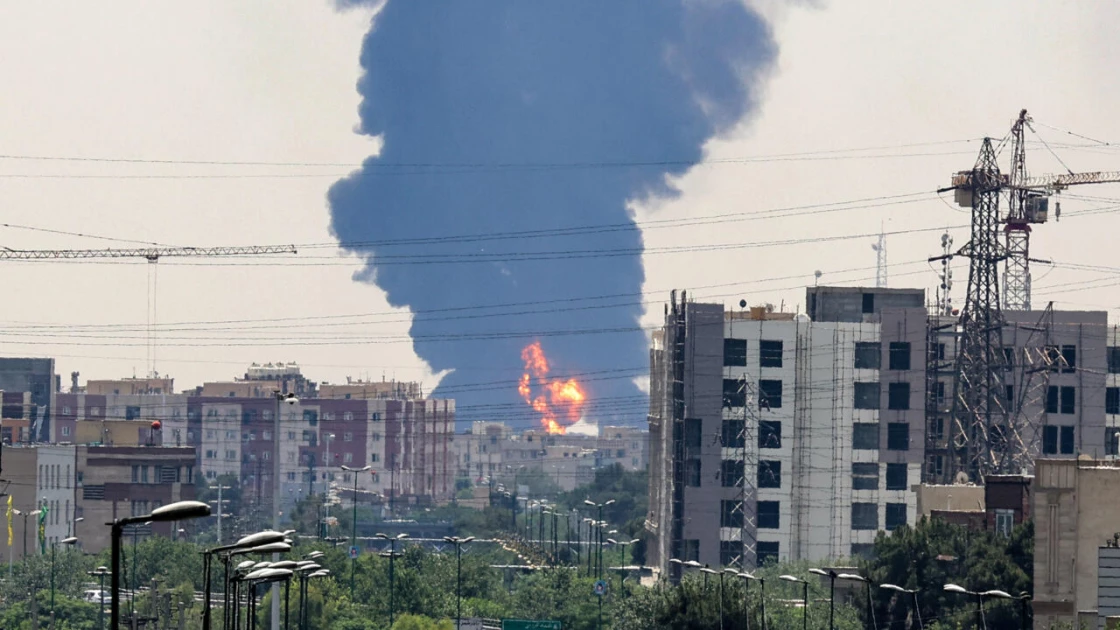
Overnight Israeli strikes hit an oil refinery in southern Tehran © ATTA KENARE / AFP

Audio By Vocalize
Israel and Iran exchanged fire again on Friday, a week into
the war between the longtime enemies.
- Iran meetings -
European top diplomats are meeting with Iran's Foreign
Minister Abbas Araghchi in Geneva on Friday to discuss Iran's nuclear
programme.
Foreign ministers from France, Germany, Britain and the EU
are urging de-escalation, with British Foreign Secretary David Lammy saying the
next two weeks are "a window... to achieve a diplomatic solution".
Separately, the UN Security Council is also due to convene
on Friday for a second session on the conflict, at Iran's request with support
from Russia, China and Pakistan, a diplomat told AFP on Wednesday.
US President Donald Trump said Thursday he will decide
whether to join Israel's strikes on Iran within the next two weeks, as there is
still a "substantial" chance of negotiations to end the conflict.
The Wall Street Journal reported that Trump told aides he
approved attack plans but is holding off to see if Iran will give up its
nuclear programme.
Tehran ally Moscow said any US military action "would
be an extremely dangerous step", while pro-Iran groups in Iraq threatened
retaliatory attacks.
Dozens of US military aircraft were no longer visible at a
US base in Qatar on Thursday, satellite images showed -- a possible move to
shield them from potential Iranian strikes.
Iran appointed a new chief of intelligence at its
Revolutionary Guards on Thursday, the official Irna news agency said, after his
predecessor was killed in an Israeli strike last week.
Major General Mohammad Pakpour, the commander of Iran's
Islamic Revolutionary Guards Corps (IRGC), appointed Brigadier General Majid
Khadami as the new head of its intelligence division, Irna said.
He replaces Mohammed Kazemi, who was killed on Sunday
alongside two other Revolutionary Guards officers -- Hassan Mohaghegh and
Mohsen Bagheri -- in an Israeli strike.
A hospital in southern Israel was hit as Iran fired
"dozens" of missiles at the country, officials said.
The Soroka Hospital in Beersheba was left in flames, and its
director, Shlomi Codish, said 40 people had sustained injuries.
Iran said the main target of its missile attack was not the
hospital but a nearby military and intelligence base.
UN rights chief Volker Turk urged restraint from both Iran
and Israel, saying it is "appalling to see how civilians are treated as
collateral damage in the conduct of hostilities".
Meanwhile, Israeli Prime Minister Benjamin Netanyahu said
Tehran would pay a "heavy price".
The Israeli military said it struck an "inactive nuclear
reactor" in Arak in overnight raids on Iran that also saw the uranium
enrichment facility in Natanz targeted again.
It said the strike on the Arak site was carried out "to
prevent the reactor from being restored".
Iranian atomic energy chief Mohammed Eslami condemned the
"barbaric and unlawful attack" on Arak, asking the UN nuclear
watchdog to intervene.
Netanyahu told Israeli public broadcaster Kan that Israel
had destroyed "more than half" of Iran's missile launchers since
Friday.
Iran's Revolutionary Guards said more than 100
"combat and suicide" drones were launched at Israel on Thursday,
while Iranian media reported blasts in Tehran.
The body of a woman was recovered on Thursday from a
building struck by an Iranian missile four days earlier, taking the overall
death toll in Israel to 25 since the war began, according to Israeli
authorities.
Iran said Sunday that Israeli strikes had killed at least
224 people, including military commanders, nuclear scientists and civilians.
Authorities have not issued an updated toll since.
Iranian police announced the arrest on Thursday of 24 people
accused of spying for Israel.
Authorities in both Israel and Iran have announced arrests
for espionage and other charges since the war began on Friday.
Norway-based NGO Iran Human Rights said at least 223 people
have been arrested nationwide on charges related to collaboration with Israel,
cautioning that the actual figure was likely higher.
Iran imposed a "nationwide internet shutdown" on
Thursday -- the most extensive blackout since widespread anti-government
protests in 2019 -- internet watchdog NetBlocks said.
The shutdown "impacts the public's ability to stay
connected at a time when communications are vital", NetBlocks wrote on X.
Leave a Comment