

Hidden divisions within Sudanese army: Fragility behind the frontlines
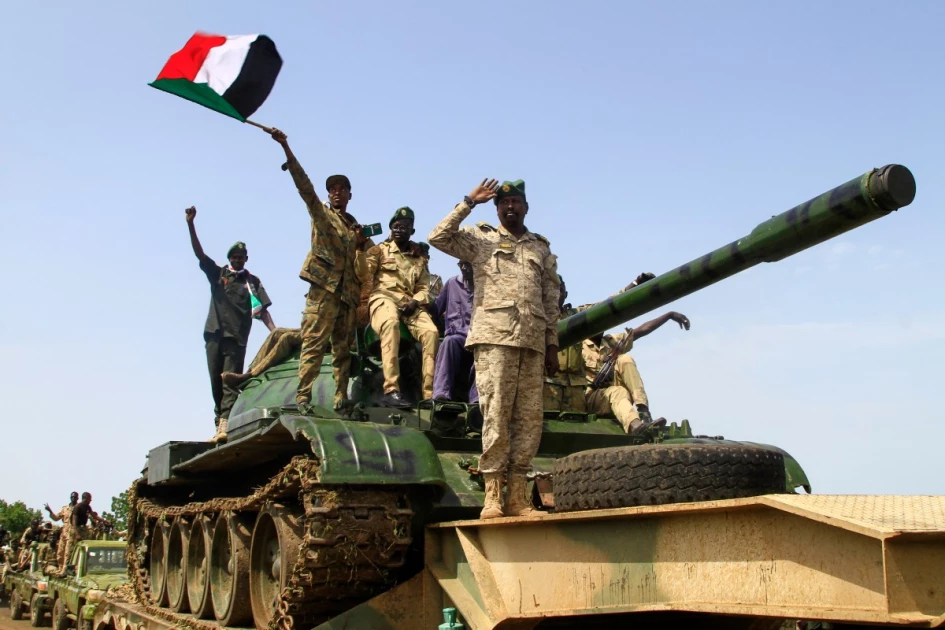
Sudanese armed forces mark Army Day in Sudan's eastern Gedaref State near the border with Ethiopia on August 14, 2023. (Photo by AFP) Related co

Audio By Vocalize
As armed conflict continues to ravage Sudan, with its political, ethnic, and military dynamics in constant flux, the situation proves to be far more complex than it appears at first glance.
While the Sudanese army has long
positioned itself as the protector of statehood and national unity, it is
increasingly confronting deep-rooted structural issues that are now becoming
evident on the battlefield.
A recent development that has
raised questions within the military is the death of Major General Ihab Youssef
Al-Tayeb, commander of the Kordofan mobile units.
Although official statements
remain limited, field sources suggest that his death may be linked to tensions
within the groups supporting the army. This led to the detention of field
commander Abdallah Janna, who is connected to a faction of fighters from the
Zaghawa tribe.
The involvement of Zaghawa
fighters in the army is not new, but the current situation highlights growing
internal tensions. Once seen as an influential group in certain power
structures, the Zaghawa now occupy a precarious position within the military.
Despite their involvement in the
army, reports suggest that they are still treated as second-class citizens
within military ranks and institutions. This situation aligns with past
statements from Minni Arko Minnawi, a leading figure among the Zaghawa, who has
spoken out about systemic discrimination against non-Arab groups such as the
Zaghawa, Masalit, and Fur within the armed forces.
Minnawi has highlighted that these
groups are often marked by military intelligence with the code “MFZ,” a label
that carries an undertone of mistrust and suspicion, limiting their access to
senior positions and decision-making roles.
These emerging internal divisions
are further complicated by ongoing violations by army units and Islamist
brigades, particularly in Khartoum and Al Jazirah State.
These operations, which have
targeted civilian groups of non-Arab descent, have intensified grievances and
contributed to growing ethnic divisions within the military and society at
large.
In light of these developments, a
crucial question arises: Can the Sudanese army maintain its cohesion in an
environment where ethnic discrimination and marginalisation persist?
The challenges faced within the
ranks may ultimately prove to be as destabilising as the external threats the
army is engaged with. The internal fractures within the military could have
far-reaching implications, both for the army itself and for Sudan’s future
stability.
[By Francis Ahovi: Global Security For
Africa Research and Good Governance (GLOSARRG)}
Leave a Comment