
Cyrus Jirongo: The rise, fall and enduring legacy of YK ’92 power broker

Audio By Vocalize
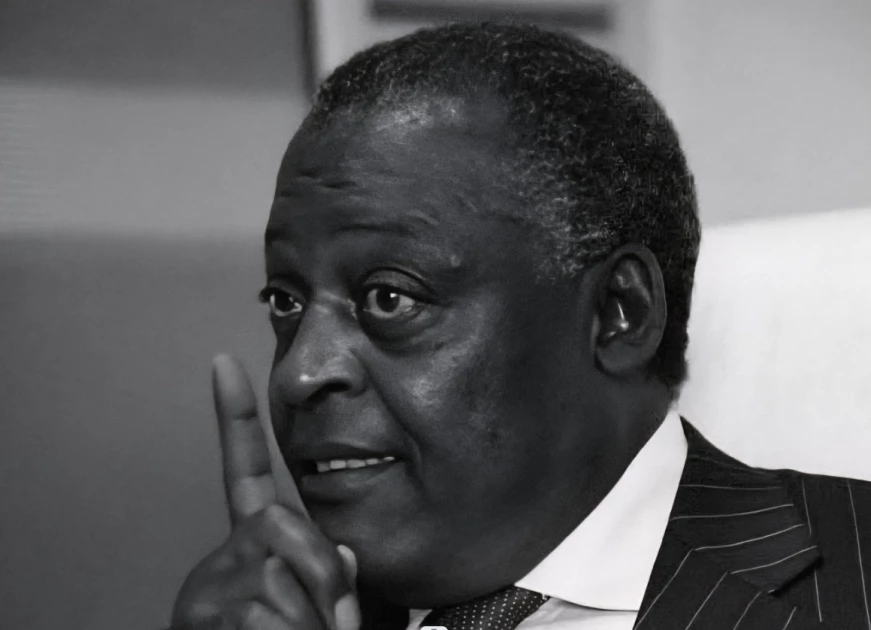
The life of Cyrus Shakhalaga Khwa Jirongo paints the picture of a politician who survived Kenya’s political arena for decades, while simultaneously standing out as a flamboyant and wealthy businessman.
To his allies, he was boundlessly generous, sometimes to a fault. To many who lived through KANU’s final years in power, he became a symbol of some of the most glaring excesses of the Moi regime.
Citizen TV revisits the life and times of Cyrus
Jirongo, tracing his rise, political fall and the enduring memories of YK ’92.
Jirongo rose rapidly through Kenya’s political ranks in 1992, emerging as the youthful force behind KANU’s formidable lobby group, Youth for KANU (YK ’92).
The movement’s mission was
clear: mobilise the youth vote to secure victory for Kenya’s second president,
Daniel Toroitich Arap Moi.
“He started YK ’92 from scratch. He was looking for young
men and women who would campaign for President Moi. My name, Mukabwa, came to
be known because of him,” said Alex Mukabwa, a YK ’92 politician.
Former minister Franklin Bett recalled Jirongo’s blunt
approach to politics.
“He was bold in saying things as they were. He would tell
Mzee, ‘there we are not getting anything,’ and he would say it boldly,” Bett
said.
Alongside other youthful powerbrokers such as Sam Nyamweya,
Patrick Musumba, Gerald Bomett, Micah Kigen and William Ruto, Jirongo was
tasked with delivering Moi’s victory in the 1992 elections. At the height of
the campaign, he became the custodian of vast political resources, with large
sums of cash reportedly moving with him, sometimes even in his own vehicle.
“Cyrus showed major signs of leadership. He is the one who
brought out the understanding that politics is also business,” said Patrick
Musumba, a YK ’92 politician.
Former minister Noah Wekesa recalled receiving financial
support from Jirongo during the campaign period.
“He came and told me that he had some support for me, and he
gave me Ksh.500,000. I was with Wafula Buke. I have a feeling he got more,”
Wekesa said.
The newly introduced Ksh.500 note at the time quickly earned
the nickname “Jirongo”, a reflection of how widely the currency circulated
during the campaign period.
“This money was printed during the 1992 campaign period and
it was called ‘Jirongo’ because he was the first person to distribute it,” said
Kakamega deputy governor Ayub Savula.
Partly through this political machinery, Moi went on to win
both the 1992 and 1997 elections. However, Jirongo’s political fortunes shifted
in 2003 when he resigned from KANU after losing the Lugari parliamentary seat
to Dr Enoch Kibunguchy.
“He later formed UDM together with President William Ruto,
but the president left it to Kipruto Kirwa, and it also fizzled out,” Bett
said.
Jirongo’s once close relationship with President Ruto later
deteriorated, with political rivalry between the former allies playing out
publicly.
“Mimi nakuambia wewe uende pole pole,” Jirongo once said
during a public exchange.
“Unajua nilikuwa mtu wake wa mkono, sasa anashindwa nilipita
wapi,” President Ruto responded.
Despite the public tension, close associates insist the
fallout was purely political and that the two reconciled before Jirongo’s
death.
“There was no problem between the two. At that time, Cyrus
was our chairman. The current president had no problem with him. He knew Cyrus
was his chairman,” Mukabwa said.
Savula added that Jirongo had assured him that relations
with the president were cordial.
“He would tell me that he had spoken to the president and
that everything was okay, not long ago,” Savula said.
Jirongo is widely remembered for his extraordinary
generosity, often giving away large sums of money and walking away with
nothing. At one point, he publicly declared bankruptcy and faced multiple
debt-related court cases.
However, his allies maintain that he remained a shrewd
businessman who understood how to make money, even if he never held on to it.
Join the Discussion
Share your perspective with the Citizen Digital community.
No comments yet
This discussion is waiting for your voice. Be the first to share your thoughts!