

Bill offers tax exemptions for persons with disabilities, caregivers
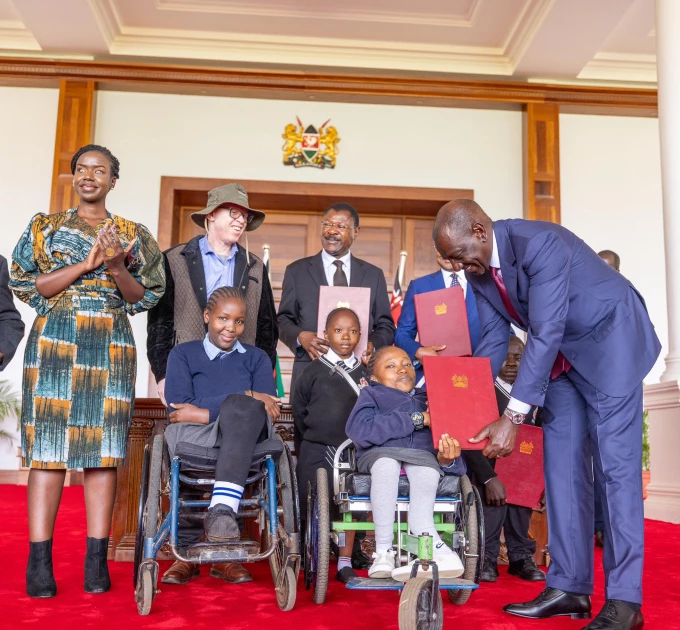
President William Ruto at State House Nairobi after he assented to the Persons with Disabilities Bill 2025 on May 8, 2025.

Audio By Vocalize
The Bill, sponsored by Senator Crystal Asige, was assented to law by President William Ruto on May 8, 2025.
It gives effect to Article 54 of the Constitution by providing a legal framework for persons with disabilities, ensuring their rights are enforced.
The Bill has introduced tax reliefs for employees with disabilities and also tax exemption for materials and equipment imported for use by persons with disabilities.
Part IV, Section 53 of the Bill dictates that materials, articles and equipment, including motor vehicles specially designed for use by persons with disabilities, shall be exempt from import duty and value added tax (VAT) under the tax laws.
Likewise, all goods, items, materials, machinery or tools donated to institutions and organizations of or for persons with disabilities shall be exempt from import duties and VAT under the tax laws.
Similar exemptions shall also be introduced to the purchase, importation, transfer, or gift of health materials or equipment relating to persons with disability.
Expenses incurred by employers who make reasonable accommodation in their premises for employees with disabilities will benefit from a tax exemption.
Postal charges for braille, printed, or recorded literature, hearing aids, mobility aids and orthopedic devices sent or received by postal mail from within or outside Kenya will also not be incurred.
The Bill also includes penalties that seek to tame discrimination against people living with disabilities.
It dictates that any person who willfully and without any lawful justification treats a person with disability in any manner resulting in the contravention of article 27(4) and (5) of the constitution - on the Equality and Freedom from discrimination - shall be liable to a fine not exceeding Ksh.2 million or imprisonment not exceeding two years or both.
Some of these offences include denying access to public services or entry to public premises, the right of inheritance, health services, educational or other training services and employment or indentured learner-ship.
Leave a Comment