
Kenya must tackle spending to free up development funds: World Bank Director

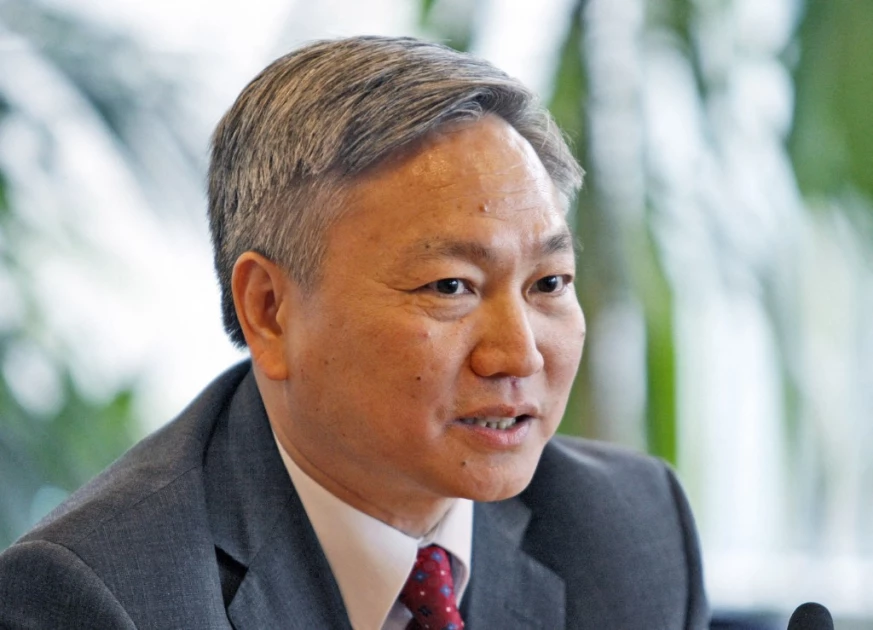
Qimiao Fan, World Bank Country Director for Kenya. (Photo by AFP)

Audio By Vocalize
Kenya must take bolder
steps to overhaul its public spending structure and improve financial
discipline if it hopes to create more room for investment in critical
development projects, the World Bank has advised.
The multilateral lender’s
country director for Kenya, Qimiao Fan, in a Tuesday interview with NTV, acknowledged
Kenya’s recent progress in reducing its debt-to-GDP ratio from over 70% to
around 67% at the close of last year.
But he cautioned that
this alone is not enough to secure long-term fiscal sustainability or
accelerate growth.
“Kenya has been able
to reduce its debt-to-GDP ratio… that is a good direction. However, we believe
the current reduction needs to be more for it to be sustainable,” said Fan.
According to the country director,
Kenya faces a structural challenge where a disproportionate share of public
funds is tied up in recurrent costs rather than development projects.
“Over 86 percent of
Kenya’s public expenditure is on wages, pensions, and interest payments; that
means there is very little left to build roads, invest in schools, and create
more healthcare facilities,” he noted.
“There is nothing
intrinsically wrong with debt; the question is how you use it: if it is
productive use that can help you increase your growth and create jobs, giving
you more capacity to borrow.”
The World Bank has previously warned that
Kenya’s debt level is increasingly concerning, classifying it as a "high
risk of default" to put more pressure on the National Treasury.
The lender says President William Ruto’s government’s ‘austerity measures’ alone might not be enough to get the country out of fiscal hurdles, saying structural and governance reforms are also needed. Treasury should ensure Kenya does not default to avoid far-reaching consequences to the economy, it warns.
World Bank’s public finance review for Kenya,
released in May, recommends sweeping reforms to save money and tame the
burgeoning national wage bill.
Among them is a two-year public service hiring
freeze, slashing of the government’s travel-related budget, and the exemption
of low-income earners from the housing levy, which it says raises the relative
cost of labour, thus reducing formal employment.
“There is significant
room for improving efficiency and equity of public expenditure,” Fan said in
the Tuesday interview.
“Undertake the
much-needed structural reforms, including addressing governance issues and
making the investment climate much more conducive to attract private
investment. That creates a fast-growing economy with more jobs.”
The World Bank has also proposed the introduction
of a carbon tax and higher excise taxes on alcohol, tobacco, and
sugar-sweetened beverages, which it terms a considerable and growing
contributor to mortality and morbidity.
Kenya's domestic and external debt is
projected to reach Ksh.12 trillion by the end of the 2025/26
financial year.
Debt service obligations are also estimated
to exceed Ksh.1 trillion in the current fiscal year – a quarter of the Ksh.4.2
trillion budget presented last month.
Join the Discussion
Share your perspective with the Citizen Digital community.
No comments yet
This discussion is waiting for your voice. Be the first to share your thoughts!