
Wuhan Textile University Seminar Connects China with Kenya, South Africa, Ethiopia, and 6 other nations
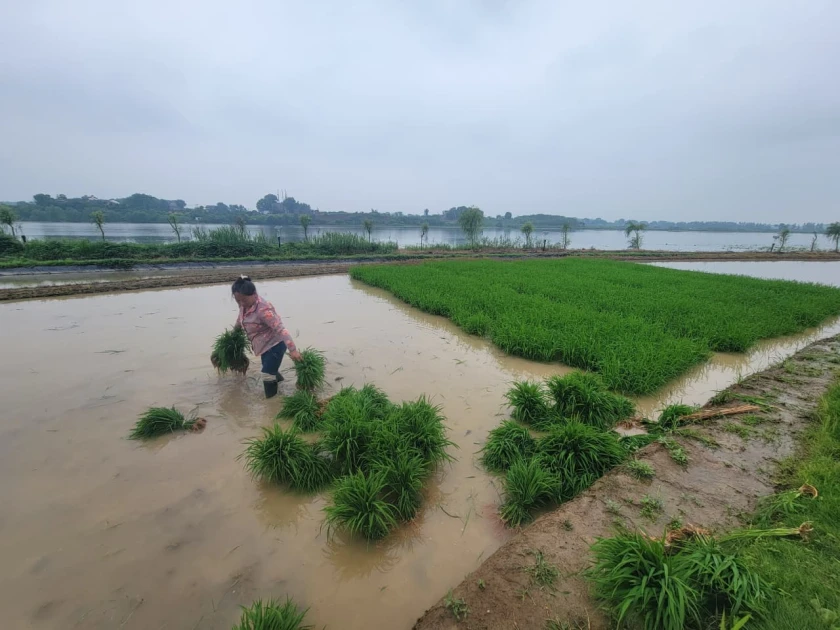
A farmer from Lihuashan, on the banks of Hubei, province Sanling Lake National wetland Park carry the rice seedlings from the Nursery for transplanting in one of the village's paddies. But this field will do more than grow grain , it will also raise crayfish and welcome thousands of visitors. One farmer. One field. Three incomes. PHOTO| Moses Mwakisha Elvis

Audio By Vocalize
WUHAN, China –Since the launch of the Rural Revitalization Strategy in 2017, China has implemented a series of targeted policies and initiatives to drive rural development, strengthen agricultural modernization, and improve living standards in rural communities.
Behind the walls of Wuhan Textile University, a quiet revolution is being shared with nine developing countries.
The occasion is the Seminar on Economic Globalization and Made-in-China for Developing Countries, the programme that has brought together delegates from Kenya, South Africa, Romania, Ethiopia, North Macedonia, Grenada, Jordan, Palestine, and Guinea.
Standing by a slow moving river, a staff member from Wuhan Textile University’s International Office, Sean Che, explains to the visiting delegation..
“This village is called Lihuashan in Taohuashan Town, Hubei Province, and receives around 300,000 visitors who visit this place from the city and others from the provinces. The population here is approximately 3,000 and most of them are farmers. They major in rice, fish farming, cows and chicken. The river is called Sanling and serves the people around for farming.”
Lihuashan is not a tourist resort. There are no hotels, no golf courses, no theme parks. What it has is a working farming system that does three things at once:
- Rice for food and income.
- Crayfish in the same paddies.
- Cows and chickens that provide manure for the fields and protein for visiting plates.
The Sanling River ties it all together. The community has formed a water management committee that ensures every farmer gets enough water for both rice and crayfish. In return, farmers keep the river clean because visitors pay to walk along its banks.
300,000 every year from the nearby city of Wuhan with approximately 13.8 million and other provinces. 3,000 villagers roughly the size of a large rice-growing community in Kirinyaga or Kisumu counties, 300,000 visitors annually more than the entire population of some Kenyan sub-counties.
Sean Che’s description points to three pillars that Kenya can replicate not by copying, but by adapting to local conditions.
Lihuashan Feature Kenyan Adaptation
Rice + crayfish Rice + freshwater prawns already piloted in Kirinyaga County with Chinese technical support.
Kirinyaga rice farming received significant boosts through technology transfers, capacity building, and agricultural research collaborations with China. These partnerships have focused on introducing high-yielding hybrid rice varieties and advancing irrigation infrastructure to drastically increase yields in the Mwea Irrigation
What makes Lihuashan remarkable is not its technology , rice-crayfish systems are ancient in China. What makes it remarkable is that farmers stopped seeing their land as a production unit and started seeing it as a destination.
The same paddy grows food, raises livestock, and hosts tourists. The same river irrigates, cleans, and attracts visitors. The same farmer works the land in the morning and welcomes guests in the evening.
For Kenya’s rice-growing areas, this is not a distant dream. Mwea has reliable water, good roads, and a cooperative structure. Ahero has vast paddies and a river. Bunyala sits on the edge of Lake Victoria. Each of these places could pilot a Lihuashan style model with modest investment and strong community buy-in.
Kenya’s rice farmers already know how to grow rice. Now they know there is more they can grow: prawns, tourism, and prosperity.
Join the Discussion
Share your perspective with the Citizen Digital community.
No comments yet
This discussion is waiting for your voice. Be the first to share your thoughts!