
Why research must drive Kenya’s economic transformation, food security through science-led agriculture

Audio By Vocalize
Yet, the sector continues to face persistent challenges, including climate change, declining soil fertility, emerging pests and diseases, post-harvest losses, limited access to quality seeds, and fluctuating global food systems.
Addressing these challenges requires more than traditional farming approaches; it demands sustained investment in agricultural research, innovation, and science-led solutions.
Agricultural research institutions such as Kenya Agricultural and Livestock Research Organization continue to play a central role in developing technologies and innovations that enhance productivity, resilience, and competitiveness across agricultural value chains.
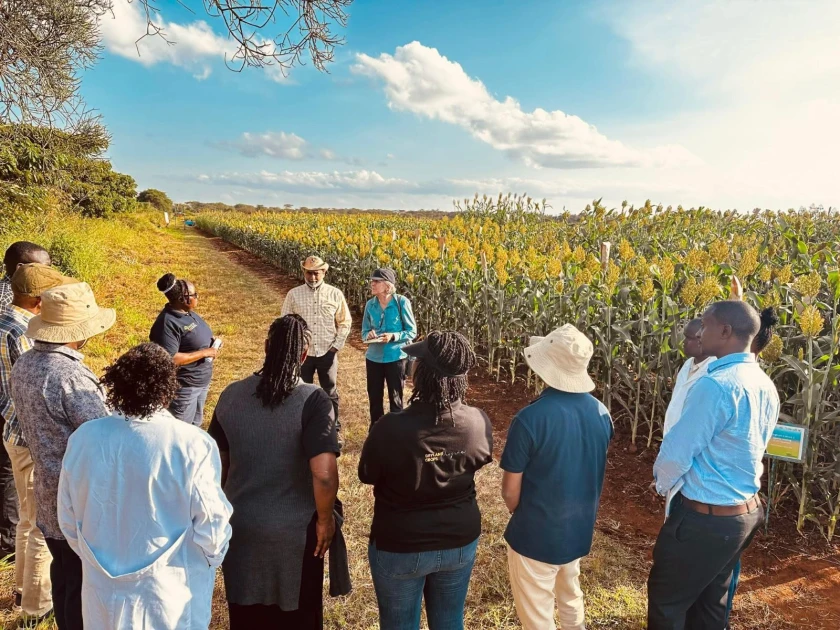
Over the years, KALRO has registered remarkable achievements that continue to transform Kenya’s agriculture and improve livelihoods. Through scientific research, the institution has developed improved crop varieties, climate-smart technologies, disease-resistant livestock breeds, sustainable soil management practices, and digital advisory systems that directly support farmers and strengthen national food production.
Among the institution’s outstanding achievements has been the development of drought-tolerant and disease-resistant maize varieties that have helped farmers cope with erratic rainfall and emerging diseases.
KALRO has also played a leading role in combating Maize Lethal Necrosis (MLN), one of the most devastating maize diseases to affect Eastern Africa, through the development and promotion of resistant maize varieties and integrated management technologies.
In the livestock sector, KALRO research has contributed significantly to improved dairy productivity through enhanced breeding technologies, better animal feeds, disease control innovations, and pasture management systems.
The institution’s work in vaccine development and animal health research continues to support livestock farmers in reducing losses and improving household incomes.
KALRO has also made major contributions in the rice subsector through the development and promotion of improved rice varieties and certified seed systems aimed at increasing local rice production and reducing dependence on imports.
Current initiatives such as the K-Ricebelt Project are strengthening Kenya’s capacity in rice seed production, processing, and value chain development, supporting the national agenda on food and nutrition security.
In addition, the institution has championed climate-smart agriculture by promoting soil fertility management technologies, water harvesting innovations, integrated pest management systems, and conservation agriculture practices that help farmers adapt to climate change.
Research on fertilizer recommendations and soil health management continues to guide farmers on sustainable land use and increased productivity.
KALRO’s advances in biotechnology and modern breeding technologies also present new opportunities for addressing major agricultural challenges. Innovations in biotechnology are supporting the development of crops that are more resilient to pests, diseases, and climate stress while enhancing productivity and food security.
Equally important is the institution’s role in public awareness and science communication to ensure that farmers, consumers, and policymakers have access to factual, science-based information.
Science-led agriculture is critical in strengthening Kenya’s food security agenda. With a growing population and increasing pressure on land and water resources, the country must produce more food using fewer resources while adapting to changing climatic conditions.
Research-driven innovations such as drought-tolerant crops, improved seed systems, precision agriculture, irrigation technologies, and sustainable farming systems are already helping farmers increase yields, reduce losses, and improve resilience.
Beyond food production, agricultural research contributes significantly to economic growth by supporting agro-industrialization, value addition, job creation, and export competitiveness.
Investments in research and innovation stimulate the development of seed systems, mechanization, biotechnology, irrigation technologies, and agribusiness enterprises that create employment opportunities for youth and women while expanding market access for farmers.
For Kenya to achieve sustainable economic transformation, agricultural research must be treated as a strategic national investment rather than a peripheral activity.
Strong partnerships between government, research institutions, universities, development partners, private sector players, and farmers are essential in ensuring that innovations move efficiently from laboratories to farms and markets.
A food-secure and economically resilient Kenya will not be built through policy declarations alone. It will be achieved through science, innovation, strategic partnerships, and sustained support for agricultural research institutions that continue to develop practical solutions for farmers and consumers alike.
By embracing science-led agriculture, Kenya can strengthen national food systems, reduce poverty, create jobs, and build a more prosperous and resilient economy for future generations.
The writer is the Director General, Kenya Agricultural and Livestock Research Organization (KALRO)
Join the Discussion
Share your perspective with the Citizen Digital community.
No comments yet
This discussion is waiting for your voice. Be the first to share your thoughts!