
Why Kenyans are shying away from blood donation amid supply shortfall
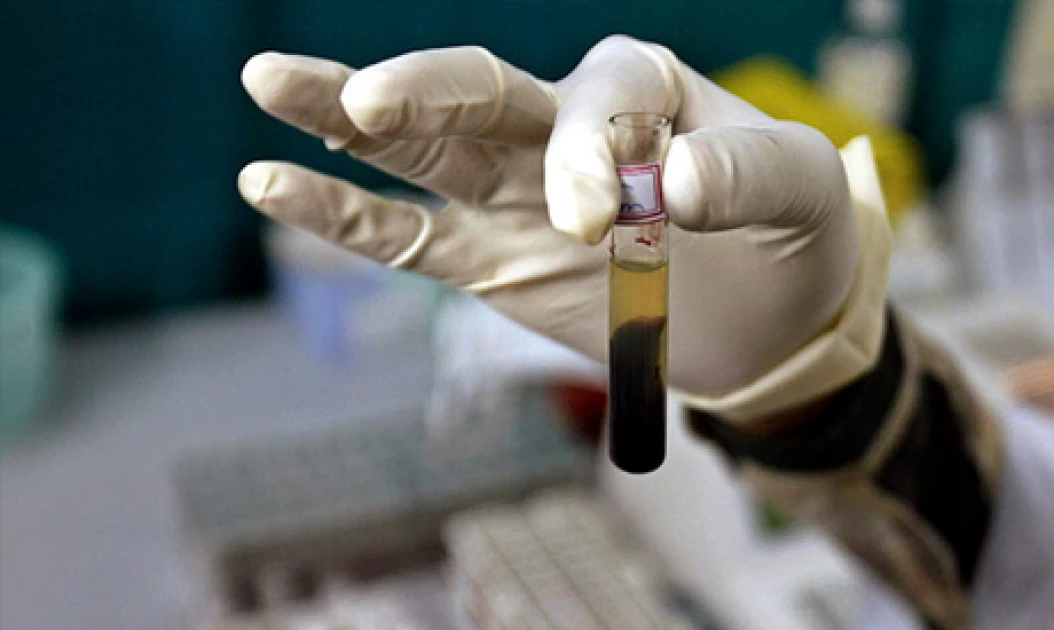
File Photo: Laboratory assistant examines blood sample inside laboratory (Photo: Reuters)

Audio By Vocalize
Every year, Kenya requires an estimated 550,000 units of blood
to adequately meet the needs of patients across the country. For many, this
blood is the thin line between life and death. However, during the 2024/2025
financial year, collections fell significantly short of this target, raising
alarm among health experts and exposing persistent gaps in the national blood
donation system.
According to data from the Ministry of Health (MoH), only 62
per cent of the required blood supply was collected, leaving a substantial
deficit that continues to endanger lives in hospitals across the country.
Health officials attribute the shortfall to public
reluctance to donate blood, driven in part by long-standing misconceptions. One
of the most persistent beliefs is that donated blood is sold for profit rather
than used to save lives, an assertion authorities have repeatedly dismissed. It
started in 2020 when a renowned TV station aired a documentary indicating that
donated blood from Kenya was being sold in Somalia.
The Director of Blood Transfusion Services at the Ministry
of Health, Dr. Martin Sirengo, emphasises that Kenya requires at least 550,000
units of blood annually to adequately meet demand and prevent avoidable deaths.
He also rejects claims of mismanagement within the system,
noting that Kenya has a structured and decentralised blood distribution
network. Every county is equipped with a blood bank, supported by six regional
centres, each serving approximately seven counties to ensure equitable
distribution and timely access.
Despite this infrastructure, systemic challenges have
persisted.
One of the most critical pressure points occurs during long
school holidays, when blood donations drop sharply. Students form a significant
proportion of voluntary donors, and their absence during these periods creates
immediate and visible shortages in supply.
The consequences of the deficit are far-reaching.
Approximately 25 per cent of all collected blood is used to support mothers
during childbirth, particularly in managing postpartum haemorrhage, a leading
cause of maternal mortality. It is estimated that nearly 5,000 women in Kenya
die annually from complications linked to excessive bleeding after delivery.
For many families, the shortage translates into distress, delays,
and uncertainty at moments when every second counts. The situation is even more
critical for patients requiring O negative blood, a rare and universal blood type
often needed in emergencies.
Pauline Juma is among those who have experienced the harsh
reality of this shortage first-hand. She recalls a desperate search for O
negative blood in a bid to save her father’s life, an effort that ultimately
proved unsuccessful. She is yet to come to terms with the fact that she lost
her beloved father over something that should be readily available.
In contrast, James (not his real name) recounts a moment
when swift action made the difference between life and death. When his wife
developed severe complications during childbirth, and her blood levels dropped
dangerously low, immediate transfusion was required.
“My wife’s blood level had dropped to 8, and the doctors
said she urgently needed a transfusion. There was no blood available at the
time, so my friend and I had to donate immediately. It was the only way to save
her life,” he said.
Concerns have also emerged from some donors who expect their
blood to be reserved for specific relatives or acquaintances. However, Dr.
Sirengo explains that this is not always possible due to strict medical and
ethical protocols governing blood use.
Before any transfusion, donated blood undergoes rigorous
screening to ensure safety. This includes testing for infectious diseases such
as HIV, Hepatitis B and C, and syphilis, as well as determining blood group
compatibility through ABO and Rh typing and cross-matching. These safeguards
are essential in preventing adverse reactions and ensuring patient safety.
Yet despite these stringent measures, delays in accessing
safe blood remain a challeng in many health facilities across the country.
Experts argue that the solution lies not only in
infrastructure, but in public engagement. Strengthening awareness campaigns and
encouraging regular voluntary donation, rather than relying on emergency or
replacement donations, could help stabilise supply throughout the year.
As demand for blood continues to rise, health authorities
are calling on Kenyans to embrace regular donation as a civic responsibility. A
single unit of blood, they note, can be separated into components that may save
multiple lives, making donation one of the simplest yet most impactful contributions
to the healthcare system.
Without sustained public participation, experts warn, the
gap between supply and demand is likely to persist, placing thousands of lives
at continued risk each year.
Join the Discussion
Share your perspective with the Citizen Digital community.
No comments yet
This discussion is waiting for your voice. Be the first to share your thoughts!