
Wajackoyah links Kenya's economic woes to overdependence on Western powers
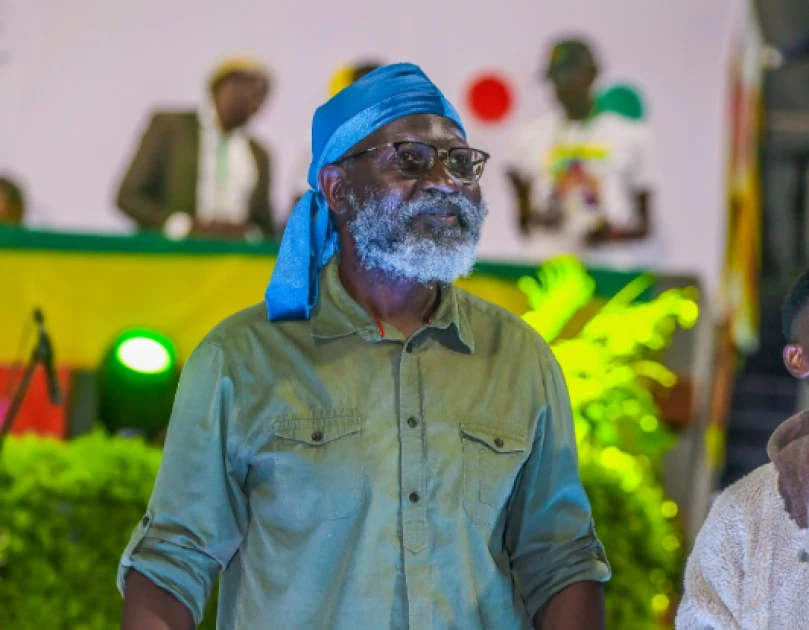
Roots Party leader George Wajackoyah during his manifesto launch on June 30, 2022. Roots Party leader George Wajackoyah during his manifesto launch on June 30, 2022.

Audio By Vocalize
Speaking on Thursday, Wajackoyah said Kenya’s existing economic policies were largely modelled on Western development blueprints.
“Look at Delmonte. Nobody wants to tell us about that contract. Nobody reads about the Earl Grey tea made in Kenya, tea grown in Kenya, being processed in foreign countries instead of being processed in Kenya,” the Roots Party leader told Spice FM.
He questioned companies that review contracts for Kenyan products being taken abroad for processing instead of being processed locally, arguing that the practice reduces the country's potential earnings.
“And I'm telling those companies who have to review those contracts, how long are we going to be dependent on foreign governments, foreign companies? Is it because of diplomacy that is one-sided? Is it because of the contracts that have been made for us, for us to sign?” Wajackoyah posed.
He questioned the amount of land owned by companies such as Delmonte and the duration of their ownership, calling for a review of existing contracts to increase Kenyan ownership and control of the economy.
“Why can't we downgrade these contracts and say, no, no, no, no, no. Let us monopolise this economy,” Wajackoyah said.
Wajackoyah had unveiled his economic transformation plan during an interview on Citizen TV on May 24th 2026, saying hemp-based business remained central in his economic vision.
Wajackoyah claimed that he was fully dressed in hemp-based clothing, including his shoes and trousers, arguing that hemp represents a major global economic opportunity.
He argued that countries such as Canada were already investing in hemp-based industrial products, including aircraft manufacturing, while parts of Europe and the United States had legalized its cultivation and commercialisation.
He also made wide-ranging claims about global adoption of hemp, stating that economies in the UK, Germany, Israel, and even institutions such as the Vatican are increasingly linked to hemp-related production.
Join the Discussion
Share your perspective with the Citizen Digital community.
No comments yet
This discussion is waiting for your voice. Be the first to share your thoughts!