
US State Department regrets "unfortunate error" after map mislabels every African country at top AIDS summit

Audio By Vocalize
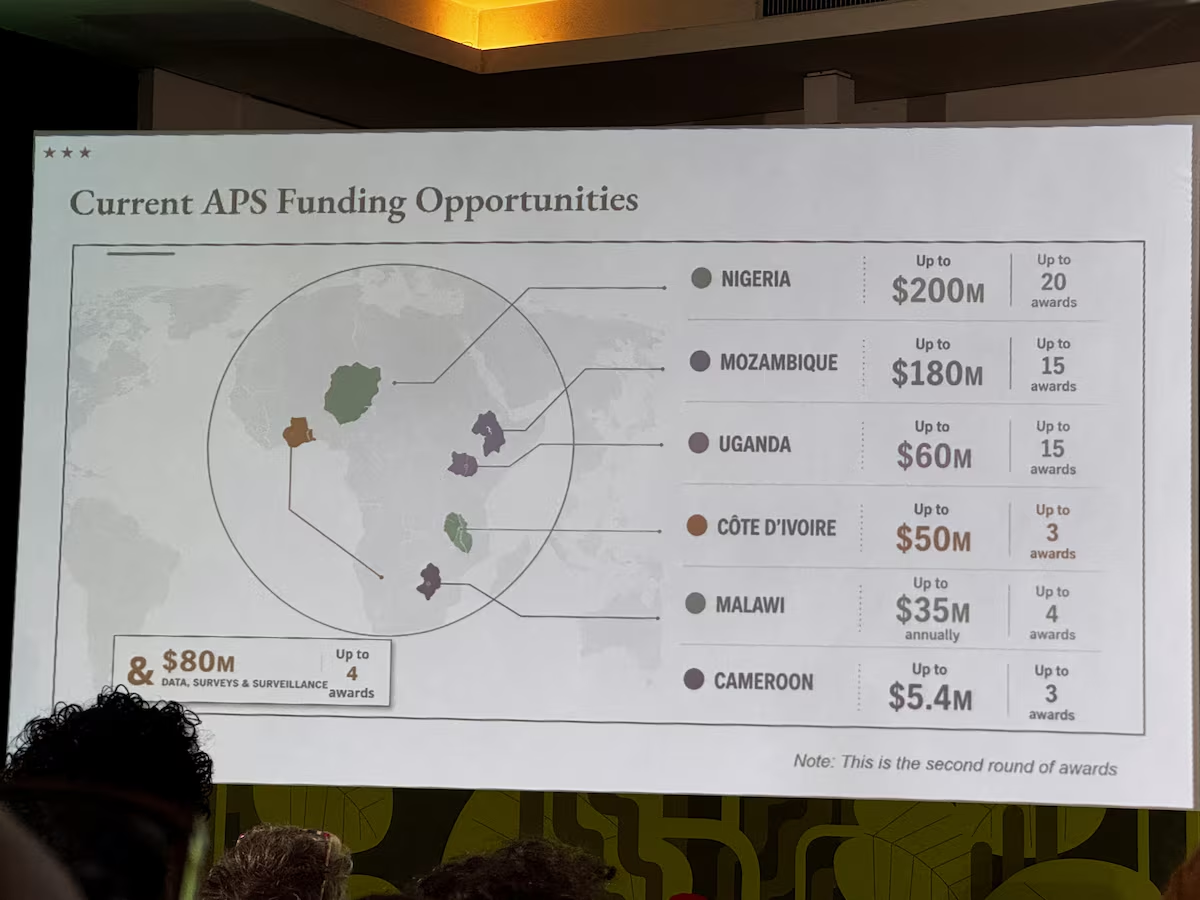
The presentation occurred at a high-level briefing hosted alongside the AIDS 2026 conference in Rio de Janeiro, Brazil. Intended to highlight bilateral agreements under the President’s Emergency Plan for AIDS Relief (PEPFAR), the slide featured six partner nations: Nigeria, Mozambique, Uganda, Côte d’Ivoire, Malawi, and Cameroon.
However, pointers on the map misidentified the location of all six countries.
Nigeria, a coastal West African nation, was depicted as a landlocked territory deep in the Sahara Desert.
Mozambique, situated in southeastern Africa, was transposed to the Horn of Africa and Côte d’Ivoire was shifted to the opposite side of the continent.
Attendees took screenshots of the errant graphic, which were published in a Substack newsletter by health expert Emily Bass and shared across professional networks like LinkedIn.
A forensic analysis reported by Reuters revealed that the map contained an embedded watermark indicating it had been generated using OpenAI tools.
Generative AI image tools are known to frequently output visually appealing maps that scramble geographic labels and spatial relationships unless carefully reviewed.
In a statement, a State Department spokesperson acknowledged the blunder, explaining that a staff member had hastily modified the slide deck shortly before top health envoy Jeff Graham took the stage.
"This was an unfortunate error caused by a team member who hastily altered the slide deck immediately before the presentation at the AIDS 2026 Conference," the State Department spokesperson said. "We take full responsibility for the confusion and misrepresentation it caused for attendees, including our African partners."
The diplomatic gaffe drew widespread criticism from public health researchers, geopolitics analysts, and foreign policy veterans.
Matt Petit, an AI and geopolitics expert at the Atlantic Council, noted in a widely circulated post that "whoever created and approved this slide did not know where countries in Africa are and did not care to check their work."
Former U.S. diplomats framed the mistake as a symptom of recent institutional strain following administrative cuts and foreign service restructurings.
"This is a reflection of what happens when you fire a third of the State Department, eliminate multiple layers of bureaucracy, and have junior staff performing work under-supervised," stated Cameron Hudson, a former National Security Council and State Department official focused on Africa.
"There isn't just a cost savings when eviscerating staff and expertise. There's a real cost in reputation and effectiveness."
Despite the diplomatic embarrassment, State Department officials emphasized that substantive discussions with international partners at the summit proceeded productively following the clarification.
The Trump administration's decision last year to pause funding pending a review disrupted aid programs worldwide but PEPFAR's core work such as the provision of life-saving drugs has largely resumed.
The U.S. is scaling back other areas of its spending including on prevention and surveillance, and plans to fully phase out the program in South Africa.
Join the Discussion
Share your perspective with the Citizen Digital community.
No comments yet
This discussion is waiting for your voice. Be the first to share your thoughts!