
US sanctions Rwanda’s defence ministry over alleged M23 links

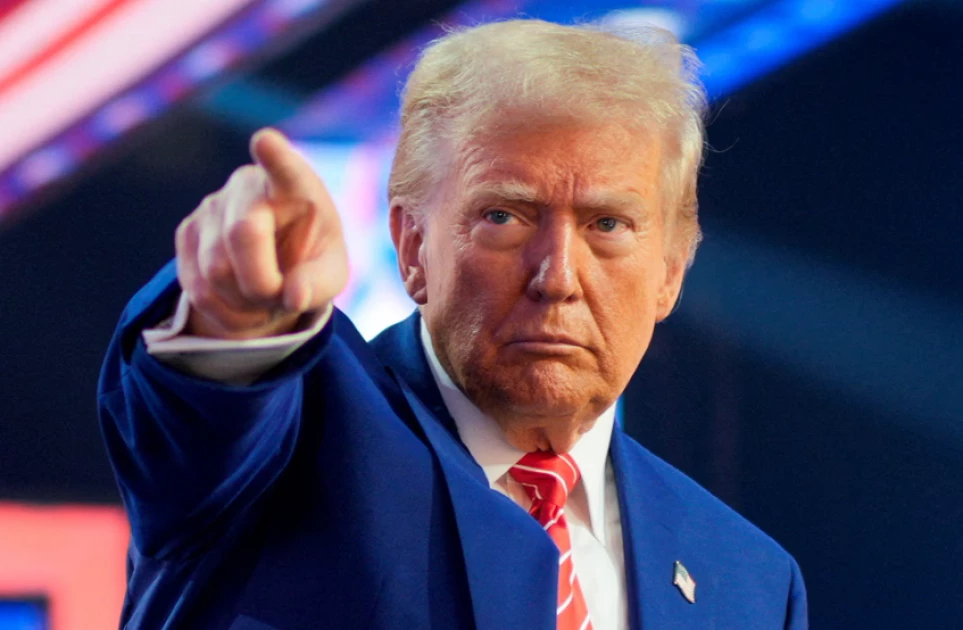
U.S. President-elect Donald Trump gestures at Turning Point USA's AmericaFest in Phoenix, Arizona, U.S., December 22, 2024. REUTERS/Cheney Orr/File Photo

Audio By Vocalize
The US Department of the Treasury announced the measures on October 28, 2026, citing the alleged provision of military assistance, financial services and logistical support to the rebel group and its political wing, the Congo River Alliance.
Treasury Secretary Scott Bessent said the action was intended to hold Rwanda accountable for commitments under the Washington Accords for Peace and Prosperity, signed by the Rwandan and Congolese presidents on December 4, 2025.
Bessent called on Kigali to stop supporting M23 and withdraw its troops from eastern DRC, where the group has captured strategic towns and mineral-rich territories.
According to the US Treasury, Rwanda’s security apparatus, including the Rwanda Defence Force (RDF), has deployed thousands of troops in North and South Kivu provinces and supplied M23 with weapons, equipment, training and logistical assistance.
Washington alleges that this support has contributed to human rights violations, forced labour, civilian exploitation and widespread displacement in the conflict-hit region.
The department also accused Rwandan forces of conducting joint operations with M23 and introducing advanced military equipment, including surface-to-air missile systems and jamming technology, raising concerns about the safety of civilian aviation.
M23 re-emerged as a major force in 2021 and captured Goma and Bukavu, the provincial capitals of North and South Kivu, respectively, in early 2025.
The group has also taken control of mineral-producing areas, including gold mining sites in South Kivu and the Rubaya coltan-mining zone in North Kivu.
The US Treasury further alleged that civilians in areas under M23 control have faced forced labour, unsafe mining conditions and illegal taxation.
It claimed that minerals extracted from these territories enter supply chains through Rwanda, raising questions about the country’s mineral exports.
Zigama Credit and Savings Society, which operates on behalf of Rwanda’s security services, was accused of facilitating payments for weapons, ammunition and other military equipment for the RDF.
The institution allegedly also covered travel and accommodation expenses linked to military training.
The Treasury also claimed that a Zigama branch helped transport gold from M23-controlled territory to Kigali and facilitated tens of millions of dollars in financial transactions for M23 and the Congo River Alliance.
The sanctions form part of Washington’s broader efforts to secure a negotiated settlement to the conflict in eastern DRC. The Washington Accords seek to advance peace while promoting regional trade, investment and transparency in critical mineral supply chains.
Under the new measures, assets belonging to designated entities within US jurisdiction or held by US persons must be frozen and reported to the Office of Foreign Assets Control. Businesses owned at least 50 per cent by blocked parties are also subject to restrictions.
The measures generally prohibit US persons from conducting transactions involving the sanctioned entities unless authorised or exempted. Violations could attract civil or criminal penalties, while certain dealings by foreign individuals and institutions may also expose them to sanctions.
The US Treasury said its sanctions policy is intended to encourage changes in behaviour, as Washington presses for an end to the conflict and greater compliance with commitments aimed at restoring peace in eastern DRC.
Join the Discussion
Share your perspective with the Citizen Digital community.
No comments yet
This discussion is waiting for your voice. Be the first to share your thoughts!