
UK cancels Laikipia military exercise amid public petition against BATUK
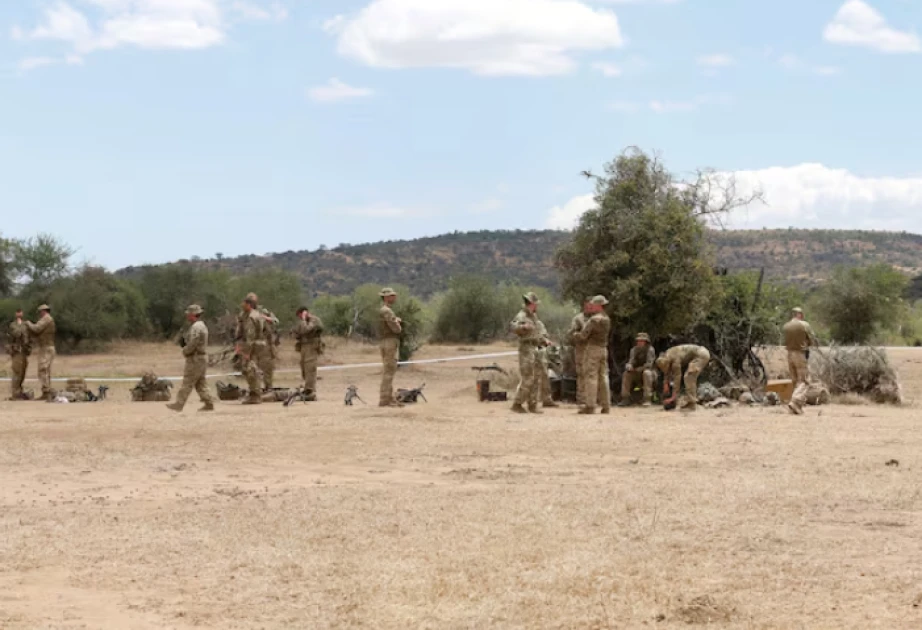
Soldiers are seen during a training session under the British Army Training Unit Kenya (BATUK), at a camp in Laikipia, Kenya September 30, 2018. Picture taken September 30, 2018. Photo: REUTERS

Audio By Vocalize
The ratification of a Defence Cooperation Agreement signed between Kenya and the United Kingdom in 2021 has stalled, with a coalition of human rights activists, victims' families, and local leaders now submitting a formal petition that sets stringent conditions for any renewed deal.
The petition, which emerged from a public meeting in Nanyuki
on June 20, 2026, has been presented to Parliament, state agencies, BATUK, and
the UK Ministry of Defence.
Amidst this tension, the United Kingdom has cancelled a
planned military training exercise in Laikipia after the Kenyan government
failed to issue the required licences, adding to the uncertainty surrounding
the bilateral defence relationship.
The contentious issues of legal jurisdiction over British
troops operating in Kenya and historical injustices have become the main
impediment to finalising the deal.
The United Kingdom has consistently resisted proposals that
would subject its military personnel to local courts, even for serious offences
committed in the country.
Kenyan legislators have insisted that any new arrangement must
reflect the country's constitutional sovereignty and address longstanding
concerns about accountability, with the dispute now reaching the highest levels
of government in both countries.
The petition outlines core demands that the coalition
considers non-negotiable. These include ending the impunity enjoyed by British
soldiers accused of crimes, subjecting them to Kenyan courts, and conducting
full independent investigations into all historical offences including the
unresolved murder of Agnes Wanjiru in 2012.
The group is also demanding immediate compensation for victims
and their families, formal recognition and child support for children fathered
and abandoned by British service members in the Laikipia region, and a
comprehensive environmental audit of training grounds with a ban on activities
that contaminate soil and water.
The petitioners insist that the final agreement be opened to
public scrutiny before any deal is concluded.
The petition has attracted significant political backing. Bob
Njagi, a human rights defender and presidential candidate for the 2027
elections, has underscored the ultimatum, stating that if Britain does not
agree to these terms, BATUK must withdraw from Kenya.
Boniface Mwangi, leader of the Ukweli Party and also a
presidential candidate for 2027, is among the signatories.
Other signatories include lawyer Kevin Kubai, who represents
some of the affected families, Booker Omole of the Communist Party Marxist, and
Boniface Mirikwa Wafula, a Member of the County Assembly from Trans Nzoia.
The demands are rooted in a documented history of alleged
abuses linked to the British military presence dating back to Kenya's
independence.
The killing of Agnes Wanjiru, whose suspected killer has not
been extradited from the UK, remains a powerful symbol of the failure to
deliver justice.
Local residents have repeatedly complained about environmental
damage and fires caused by British military exercises, including incidents at
the Lolldaiga Conservancy, alongside cases of sexual abuse and child
abandonment.
Under the current framework, British soldiers are primarily
subject to UK jurisdiction for acts committed on official duty, a loophole that
has effectively shielded them from local prosecution.
At the height of this public opposition, the United Kingdom
cancelled a planned military training exercise in Laikipia after the Kenyan
government failed to issue the required licences.
The exercise, codenamed ‘Haraka Storm’ and scheduled for September
to November 2026, will now be conducted at an alternative location outside
Kenya.
In a statement, a UK Ministry of Defence spokesperson
described the decision as regrettable and acknowledged the economic impact on
communities that would have benefited from the deployment.
The development comes just weeks after the Nanyuki public
meeting and the subsequent petition, which have intensified scrutiny of British
military activities in the region.
The cancellation does not affect BATUK's broader presence in
Kenya, but the UK has said it will continue engaging the Kenyan government to
support the resumption of training in the country at the earliest opportunity.
The coalition is leveraging Parliamentary support that has
emerged in recent years. In November 2025, the Departmental Committee on
Defence, Intelligence and Foreign Relations recommended amendments to grant
Kenyan courts greater jurisdiction over crimes committed by foreign troops in
the country.
This recommendation was consistent with an earlier Parliamentary
report that described a troubling pattern of misconduct by BATUK personnel and
recommended legal changes to ensure accountability.
The government's own efforts to ratify the 2021 agreement,
which was signed by both governments but never passed by Parliament, have been
stalled by such concerns.
Without meaningful concessions from the British government,
the coalition has made it clear that any renewed agreement will face fierce
opposition.
Their demands have gained support in Parliament, where legislators
who once supported the DCA with reservations are now aligning with the
petitioners' position.
National Assembly Defence Committee Chair Nelson Koech has
publicly backed the call for an end to immunity for British troops, reflecting
a growing consensus among MPs.
With the general election approaching in August 2027,
political pressure is intensifying, and the British government must now decide
whether to accept the conditions laid out in the petition or risk the
withdrawal of BATUK from Kenya.
Join the Discussion
Share your perspective with the Citizen Digital community.
No comments yet
This discussion is waiting for your voice. Be the first to share your thoughts!