
UK Army Chief admits historical abuse in Kenya, but offers no accountability plan
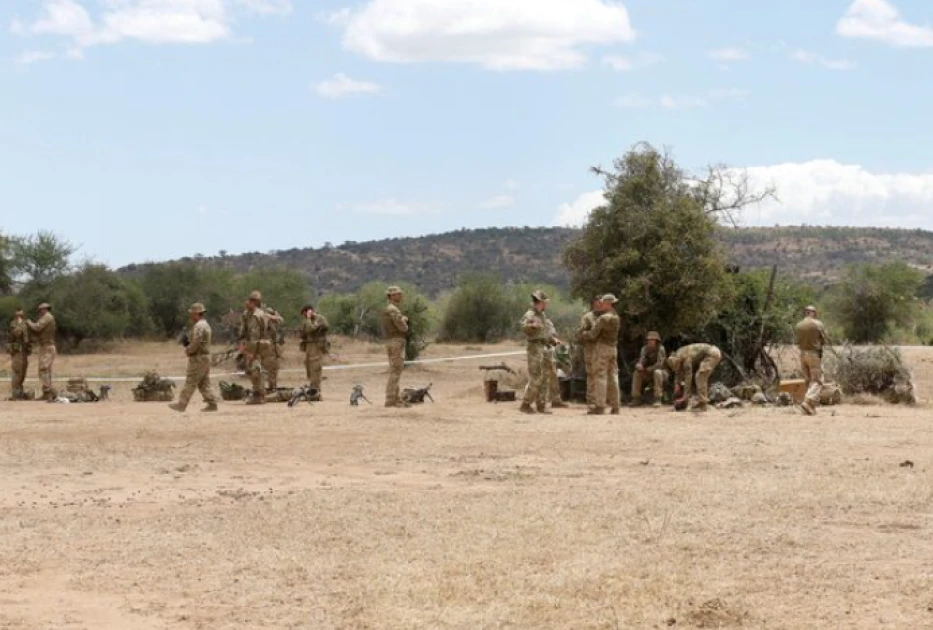
Soldiers are seen during a training session under the British Army Training Unit Kenya (BATUK), at a camp in Laikipia, Kenya September 30, 2018. REUTERS/Thomas Mukoya/File Photo

Audio By Vocalize
General Sir Roly Walker, Chief of the General Staff of the British Army, has acknowledged that British soldiers stationed in Kenya have previously harmed local communities through abuse, loss of life, and environmental damage, but stopped short of outlining concrete accountability measures.
Speaking
during a visit to the British Army Training Unit Kenya (BATUK) in Nanyuki on
March 19, 2026, Walker said the UK military takes allegations of misconduct
seriously.
However,
he emphasized the importance of maintaining the long-standing defence
partnership between the UK and Kenya.
“I recognize there are historical cases where we have let people down,
where individuals have been abused or harmed, where lives have been lost, and
where the environment has been damaged. We take these allegations and events
very seriously,” he said.
Walker’s
remarks come at a sensitive time, with the UK-Kenya Defence Cooperation
Agreement (DCA) set for renegotiation in mid-2026.
The
timing has raised concerns among Kenyan lawmakers and observers, particularly
following fresh allegations from three women in Nanyuki who recently came
forward with claims of abuse involving British soldiers.
Critics
argue that while the British Army has acknowledged past wrongdoing, it has not
proposed mechanisms to prevent recurrence or ensure justice for victims.
A 2025
report by Kenya’s parliamentary Committee on Defence, Intelligence and Foreign
Relations documented serious allegations linked to BATUK operations, including
sexual assault, deaths caused by unexploded ordnance, and environmental
degradation.
The
committee concluded that the incidents demonstrated disregard for Kenya’s laws
and sovereignty.
Under the
current DCA framework, the UK retains primary jurisdiction over offences
committed by its personnel while on duty, limiting the ability of Kenyan courts
to prosecute such cases.
Kamukunji
MP Yusuf Hassan Abdi, a member of the committee, has criticized Kenyan state
institutions for failing to act on the report’s recommendations months after
its release.
He noted
that key agencies, including the Office of the Director of Public Prosecutions
(ODPP) and the Directorate of Criminal Investigations (DCI), have yet to
provide updates on investigations or implement reforms.
MP Yusuf warned
that continued inaction risks eroding public trust and reinforcing a pattern
where serious allegations lead to reports but little tangible follow-through.
“I have little reason to be satisfied with how state bodies are
handling the issue of the British Army Training Unit Kenya. It has been four
months since a Parliamentary Committee’s report came out with damning
allegations and binding recommendations, and the response from key institutions
has been marked more by silence and limited transparency than by decisive
action,” he said.
“What has changed, however, is the level of public scrutiny. The
Committee’s findings have drawn greater attention to BATUK’s operations and
raised expectations for accountability. But without visible follow-through by
state bodies, that momentum risks fading, reinforcing a broader pattern where
serious allegations generate official reports but limited concrete action.”
The
emergence of new abuse claims in March has intensified scrutiny on both
governments and strengthened calls for reform ahead of the DCA renegotiation.
Lawmakers
are pushing for Kenyan courts to have jurisdiction over crimes committed on
Kenyan soil by foreign troops, alongside proposals for victim compensation,
legal aid, and stricter oversight of military activities.
However, MP
Yusuf expressed doubt that the UK would accept such changes, noting that
similar reform efforts in 2021 failed after Britain rejected amendments
removing legal immunity for its soldiers.
As
diplomatic engagements between Kenya and the UK continue ahead of the DCA
renewal, the debate is increasingly shifting toward issues of sovereignty,
accountability, and equality in defence partnerships.
While
General Walker’s statement acknowledged past harm, critics maintain that
without binding legal reforms, such admissions carry little weight for affected
communities seeking justice.
Join the Discussion
Share your perspective with the Citizen Digital community.
No comments yet
This discussion is waiting for your voice. Be the first to share your thoughts!