
Two Tanzanians reportedly killed fighting for Russian army
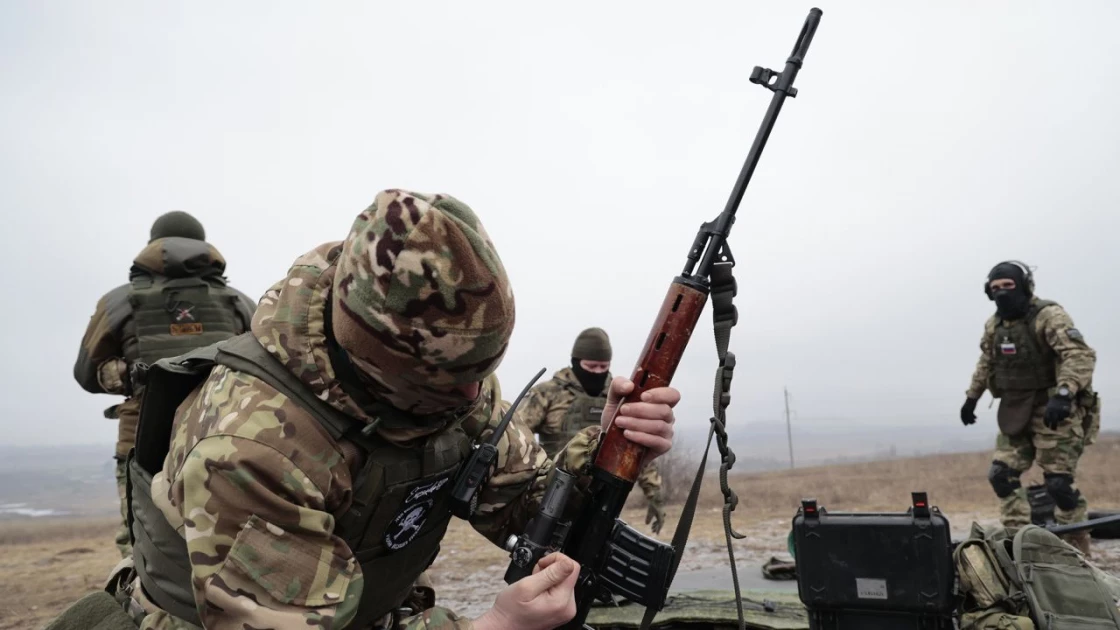
Russian army soldiers training in eastern Ukraine on January 31. PHOTO/COURTESY: CNN

Audio By Vocalize
Two Tanzanian nationals have reportedly been killed while serving in the Russian Armed Forces, prompting opposition calls for an investigation into recruitment networks suspected of luring young Africans into the Russia-Ukraine war.
The two men,
identified as Mosha Elikunda Elibapiki, 22, and Samimik Samveli Peter, 32,
reportedly died in July 2025, according to Tanzanian newspaper The Citizen and StopRussianRecruiters.org.
The disclosures
have renewed scrutiny of how Tanzanians are recruited into Russia’s military,
with opposition party ACT-Wazalendo urging the government to establish the
circumstances surrounding the deaths and seek answers from Moscow through
diplomatic channels.
Shangwe Ayo, the
party’s Deputy Secretary for Information, Publicity and Public Relations, said
Tanzania’s diplomatic relations with Russia should not prevent authorities from
investigating reports of citizens dying in the conflict.
Ayo urged the
government to establish how the two men were recruited and investigate whether
agents used false or misleading employment offers to persuade Tanzanians to
travel abroad.
She also called
for public warnings against suspicious overseas job offers, tighter monitoring
of recruitment agencies and a system allowing job seekers to verify employment
opportunities before travelling.
According to
StopRussianRecruiters.org, a database launched in May 2026 by Ukraine’s
Ministry of Foreign Affairs and the Coordination Headquarters for the Treatment
of Prisoners of War, at least 10 Tanzanians have reportedly signed contracts
with Russia’s Ministry of Defence.
The database also
records 485 African casualties linked to the conflict.
Human trafficking
concerns
Tanzanian human
rights activist Fulgence Massawe warned that recruiting citizens through false
promises of civilian employment before deploying them to a foreign battlefield
could amount to human trafficking and deceptive recruitment.
“This is not
normal labour migration,” Massawe said, arguing that exploiting young people’s
vulnerability through misleading job offers could constitute trafficking
through fraud and deception.
He cited
Tanzania’s Anti-Trafficking in Persons Act of 2008 and international agreements
ratified by the country as relevant legal frameworks.
Massawe urged the
government to investigate the reported deaths, establish whether wrongdoing
occurred and pursue accountability where evidence supports prosecution.
He also called for
consular and legal assistance for Tanzanians who may still be caught up in
similar circumstances, alongside support for families seeking information about
missing or deceased relatives.
Earlier case of
Nemes Tarimo
The reports have
revived memories of Nemes Tarimo, a 37-year-old Tanzanian student who was
killed while fighting for Russia’s Wagner Group in Ukraine in October 2022.
Tarimo had been
serving a seven-year prison sentence after being convicted in a case involving
drug-related offences when he was recruited by the Wagner Group, reportedly on
the promise of payment and a reduced sentence or pardon.
His family had
advised him against joining the fighting, but he proceeded in the hope of
securing his freedom.
Recruitment
concerns spread across Africa
The concerns
extend beyond Tanzania, with reports from other African countries indicating
that some job seekers have travelled to Russia after receiving offers of
employment in factories, agriculture, hospitality and logistics.
Some are
reportedly presented with military contracts after arriving in Russia, raising
questions about whether they fully understand the terms of the agreements they
sign.
In Zimbabwe,
authorities have reportedly arrested nine people in connection with six human
trafficking investigations launched in late March, with Russian nationals and
local accomplices among those charged.
In Kenya, Labour
Cabinet Secretary Alfred Mutua has cancelled the licences of 23 recruitment
agencies over suspected irregularities.
The developments
have intensified calls for African governments to strengthen oversight of
international recruitment, improve public awareness of the risks associated
with suspicious overseas employment offers and establish mechanisms to assist
citizens who may have been deceived into joining foreign armed forces.
Join the Discussion
Share your perspective with the Citizen Digital community.
No comments yet
This discussion is waiting for your voice. Be the first to share your thoughts!