
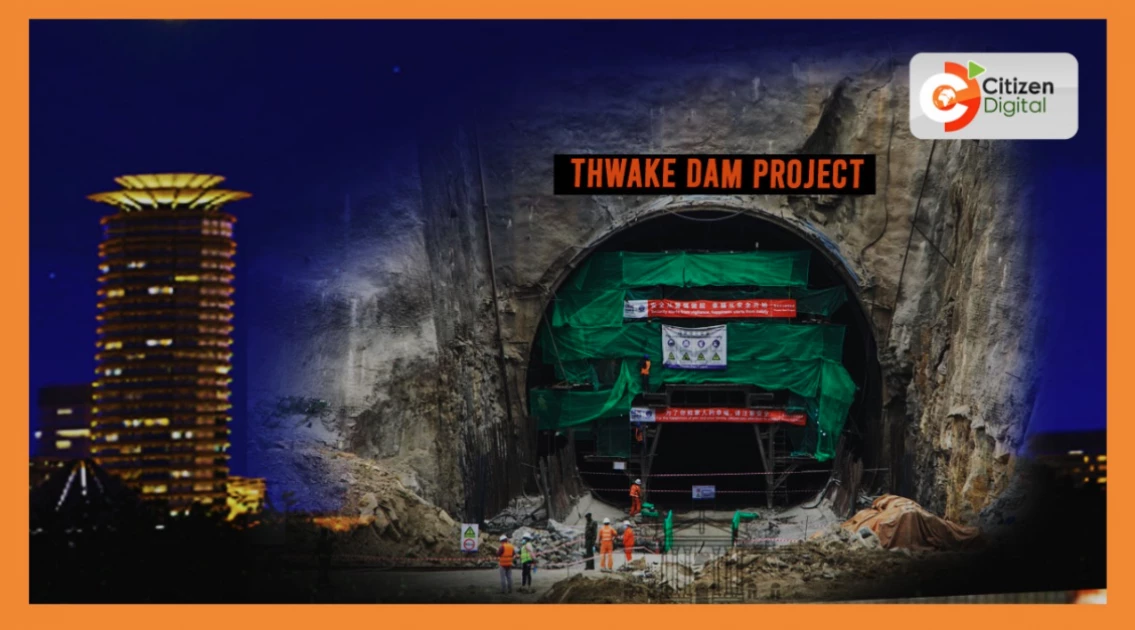
Thwake Dam reaches 94% completion, impoundment set for April 2027

Audio By Vocalize
The project, located at the confluence of the Athi and Thwake rivers along the Makueni-Kitui border, is expected to transform water access, boost agricultural production and stimulate economic growth across Kenya’s Lower Eastern region.
Water and Sanitation Principal Secretary Julius Korir told the National Assembly Departmental Committee on Blue Economy, Water and Irrigation that the remaining construction works were being accelerated to meet the impoundment target.
Once operational, the dam is expected to supply 150,000 cubic metres of treated water daily to approximately 1.3 million people in Makueni, Kitui and Konza Technopolis.
The project will also support irrigation across 40,000 hectares of agricultural land and generate 20 megawatts of hydropower.
Residents have defended the project against opposition, saying it offers an opportunity to address decades of water scarcity and unlock the region’s agricultural potential.
“Ukambani is fertile. Water has been the biggest impediment to the realization of our agricultural potential. Thwake Dam water is the clear solution to this,” said Martin Kimeu, a resident of Wote.
Jacob Mwanzia, a resident of Madangi Village, said most households in his area had been compensated and were satisfied with the process.
“My home is closer to the project. Most people in my area were well compensated and are satisfied,” he said.
However, some residents in Mavindini Ward have alleged that controlled blasting during construction damaged their houses and community facilities. The households, organised under the Thwake Dam Blasting-Affected Community Committee, have sought an independent review of property assessments and compensation.
Following the complaints, Agile Consulting was selected to assess properties potentially affected by blasting within a two-kilometre radius. The exercise covered 330 households.
Consultant Ben Mwongela said the assessment followed established procedures and considered whether blasting had contributed to structural damage.
“The assessment involved reviewing blasting records, vibration data and compliance with regulatory standards,” he said.
An African Development Bank assessment dated October 21, 2026, placed the project’s progress at approximately 94% and urged households with unresolved grievances to follow established procedures.
With a planned storage capacity of 688 million cubic metres, the 80.5-metre-high dam is expected to reduce dependence on unreliable rainfall, improve food security and create opportunities for agro-processing and investment across Lower Eastern.
Join the Discussion
Share your perspective with the Citizen Digital community.
No comments yet
This discussion is waiting for your voice. Be the first to share your thoughts!