
This workshop is helping Kenyan women reclaim their bodies, one conversation at a time

Audio By Vocalize
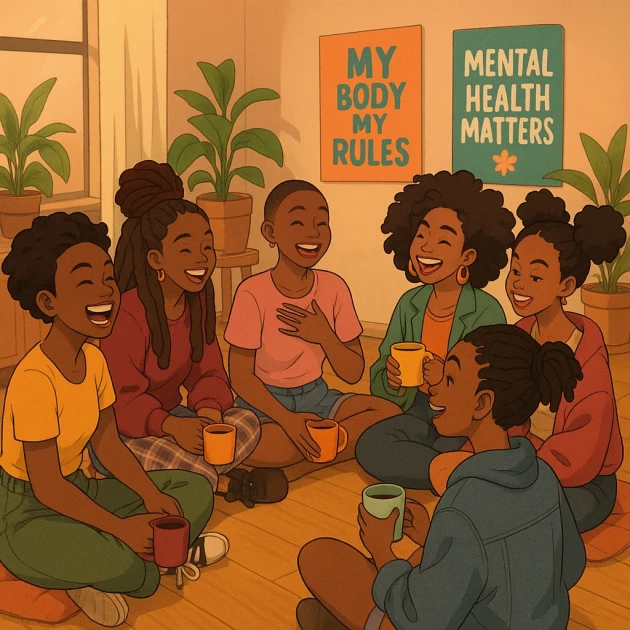
In a small, softly lit room in the heart of Nairobi, women are gathered in a circle; laughing, crying, listening. Some are here to learn about menstrual health. Others are here to talk, perhaps for the first time, about what it means to live in a body that’s often politicized, sexualized, and silenced. Together, they are part of a growing movement challenging deep-seated taboos in Kenyan society: the Vagina Worldshop.
At first glance, the name may raise
eyebrows. But what’s unfolding beneath it is far more profound than
provocation. In a culture where many aspects of female experience - from menstruation
to pleasure to trauma - are hidden behind euphemism or silence, the Worldshop
offers something rare; open conversation, safety, and sisterhood.
“It was the first time I said the word
‘vagina’ out loud in a public space,” says Angela, a 23-year-old university
student who attended one of the workshops. “And I didn’t feel ashamed. I felt
heard. That doesn’t happen often, especially for girls growing up here.”
Founded by Esther, a Nairobi-based
creative and community organizer, the Worldshop was born out of personal
frustration with societal norms that often restrict women’s self-expression.
“So much of how we express femininity
is met with policing or projection,” she says. “I wanted to create a space
where women could define that on their own terms, where we could just be,
without fear.”
From curated wellness workshops to
bold storytelling circles and art-inspired events like ‘Tit for Tat,’ a
women-led DJ night reclaiming nightlife as a safe space, the initiative stands
out not just for its content but for its atmosphere.
It is educational without being
clinical, radical without being alienating and most importantly, it is fun.
But this is more than just a trend. It’s
part of a deeper cultural reckoning in Kenya, especially among young women. The
days of whispering about periods or shaming bodies into silence are, slowly,
giving way to a new era of openness - one rooted in bodily autonomy, informed
choice, and community support.
“For a long time, I felt like my body
wasn’t mine. Like it was always being judged, sexualized, or controlled,” says
Faith, 27.
“At the Worldshop, I learned to map my
body, understand it, and talk about it without fear. That’s a kind of freedom I
didn’t know I needed.”
While the name might suggest a single
event, the Vagina Worldshop functions more like a sanctuary; a space to gather,
reflect, and recover. In a country where gender-based violence remains a pressing issue, such spaces are
more than helpful; they’re essential.
“We talk a lot about fighting back,”
Esther says. “But what happens after the fight? Where do women go to exhale, to
celebrate, to reconnect with ourselves and each other? That’s the gap I wanted
to fill.”
This sentiment resonates deeply with
attendees, many of whom describe the Worldshop as a place of personal healing
and collective transformation.
“After my assault, I didn’t know how
to talk about my body again,” says Wambui, 30. “But sitting in that room,
hearing other women speak their truths, something inside me softened. I stopped
blaming myself. I started to heal.”
The impact isn’t limited to those who
attend in person. Through digital content, educational series, and community
partnerships, the ripple effects of the Worldshop are reaching far beyond
Nairobi.
Young women, particularly the Gen Zs,
are rejecting inherited shame and exploring their identities with more
confidence and complexity than ever before.
“You can see the shift,” Esther says.
“In fashion, in online conversations, in how women show up in public spaces, there's
more audacity, more joy, and less apologizing. It’s powerful to witness.”
But the work isn’t without pushback.
In a conservative society, public conversations about the female body still
spark discomfort and criticism. Yet, that’s precisely the point.
“We need to feel discomfort before we
grow,” says Angela. “And for too long, that discomfort was ours alone to carry.
Now, we’re asking others to carry it too, to listen, to learn, to let us
speak.”
Ultimately, the Worldshop is not about
branding or controversy. It’s about transformation
of minds, bodies, relationships, and the cultural landscape itself. It reminds
us that freedom doesn’t always come in the form of protest signs or policy
reform.
Sometimes, it looks like a circle of
women, speaking boldly, laughing loudly, and reclaiming space in the quietest
and loudest ways possible.
“When women feel safe, we thrive,”
Esther says. “And when we thrive, we raise whole communities with us.”
Join the Discussion
Share your perspective with the Citizen Digital community.
No comments yet
This discussion is waiting for your voice. Be the first to share your thoughts!