
The Kipipiri script: How Ol Kalou by-election revived memories of KANU's defeat in 1995

Audio By Vocalize
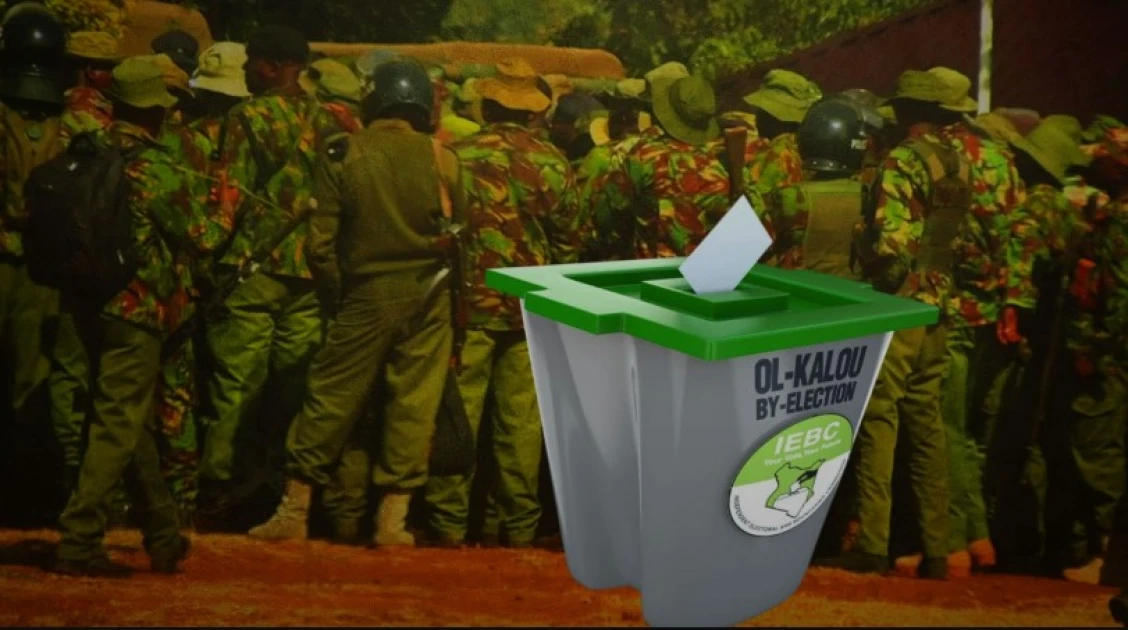
DCP's emphatic win over UDA, despite an unprecedented government spending spree, has revived memories of a Moi-era by-election in Kipipiri constituency, and the subsequent defeat.
The results have raised hard questions about state resources, voter bribery and the shrinking room for incumbency in Mt Kenya
The numbers alone tell a brutal story. When the Independent Electoral and Boundaries Commission (IEBC) returning officer Antony Njiraine climbed the podium at Ol Kalou Senior School on Friday morning, he handed Sammy Kamau Ngotho Waweru of Rigathi Gachagua's Democracy for the Citizens Party (DCP) 35,440 votes.
His nearest rival, Samuel Muchina Nyagah of President William Ruto's United Democratic Alliance (UDA), the party of the sitting government, managed only 5,450. It was not a win. It was an annihilation! The DCP candidate got nearly seven votes for every one cast for the ruling party, in a constituency the government had spent weeks trying to woo over!
For a governing party that walked into the Nyandarua County constituency with the full machinery of the state, cabinet secretaries, principal secretaries, a revived rail line, boats, gas cylinders, mattresses, electricity poles and a promised Ksh.10 billion in development cash, the scale of the defeat has stunned even seasoned political watchers.
It has also revived a very specific memory in Kenya's political folklore: the 1995 Kipipiri by-election, fought in the same Nyandarua landscape, where Daniel arap Moi's KANU state machinery opened the taps of the scarce national resource and still walked away humiliated.
Other analysts have said, “what more could you expect out of a constituency that was curved out of Kipipiri Constituency?” It is becoming a Nyandarua thing, they do not bend to power nor bow to material…
A very deliberate echo
The parallels are almost too neat to be coincidental, and Kenyans on social media and in newsrooms this week have not resisted drawing them.
In 1995, in the first real multiparty test after 1991, Moi's government poured resources into Kipipiri constituency to defeat Mwai Kibaki's Democratic Party.
Kenya Power was ordered to plant electricity poles across the constituency in the days before voting, dangling the promise of a national grid connection the area had waited decades for.
Graders were dispatched to pave roads that had been neglected for years. It was patronage politics at its most theatrical, and it failed. DP's Mwangi Githiomi trounced the KANU candidate.
In the most telling coda of that episode, Kenya Power reportedly returned almost immediately to uproot the very poles it had just planted, and the graders that had rolled in to pave Kipipiri's roads were hurriedly recalled. The political analysts of that era capped it with "Moi aonja pilipili Kipipiri."
Three decades later, in the same county, the choreography has repeated itself with eerie precision, only with a modern soundtrack.
Instead of graders and poles alone, Ol Kalou got a relaunch of the long-dormant Gilgil-Nyahururu railway line days before the vote, two fishing boats worth roughly Ksh.5 million donated to Gwa Kiongo Dam, two motorized speedboats delivered barely two weeks before polling, 20,000 subsidized six-kilogram LPG gas cylinders sold at Ksh.1,500 apiece, government-branded mattresses distributed by the truckload, boreholes sunk, and electricity poles sprouting along footpaths residents say they never imagined would be electrified.
Cabinet secretaries and principal secretaries became a near-permanent fixture in the constituency, in what one commentary described as a level of state urgency that should be "reserved for national disasters."
The result was the same as it was in 1995: overwhelming rejection at the ballot. Whether the boats and gas cylinders will now be quietly withdrawn, as the Kipipiri poles were, remains to be seen, but the symbolism of history repeating itself in the same county, against the same pattern of transactional politics, has not been lost on analysts, opposition politicians or ordinary Kenyans.
Did the government break the rules — or just bend them?
The central controversy of the campaign was never really in doubt on the ground; it was whether it was illegal. A coalition of allied opposition leaders, accused the government outright of voter bribery under Section 9 of the Election Offences Act, and of misusing public resources and deploying public officers in violation of electoral law.
Murang'a Senator Joe Nyutu went further, publicly calling on the IEBC to disqualify Muchina Nyagah altogether, citing the mattresses, the speedboats and the Sh10 billion development pledge as "a coordinated scheme to influence voters."
Kiharu MP Ndindi Nyoro similarly questioned what he called an unusually heavy deployment of government resources for a single parliamentary seat.
Gachagua, for his part, adopted a cheekier tactic on the issue, telling voters to take everything on offer, the gas cylinders, the mattresses, the transformers, the water tanks, but to "not give away your voting right" in return.
The IEBC's own posture through the campaign vacillated between alarm and ambiguity. IEBC chairman Erastus Ethekon publicly flagged voter bribery, night-time campaigning, gang mobilization, violent confrontations between rival camps and the conspicuous presence of cabinet and principal secretaries on the trail, at one-point warning that the commission could be forced to take "the most unfortunate and drastic step of postponing the elections in Ol Kalou" if conditions did not improve.
Yet when it came to drawing a firm legal line, the commission stopped short. IEBC commissioner Anne Nderitu, addressing the bribery allegations directly, drew a distinction in Kenyan electoral law between outright bribery and what she termed "voter treatment" arguing that distributing government-branded mattresses or rolling out development projects during a campaign period is not automatically an electoral offence unless a direct link can be shown between the handout and an explicit demand for a vote.
It is a distinction that critics say is almost impossible to enforce in practice, and one that effectively gave the state's campaign of largesse a legal shield even as it fueled public outrage.
The IEBC did open at least one formal probe, summoning Nakuru Town East MP David Gikaria over video evidence allegedly showing him handing out cash to voters in Mirangine, but no candidate was disqualified, and polling proceeded on July 16 as scheduled, with a 57 percent turnout among the constituency's 73,480 registered voters.
An expensive lesson in diminishing returns
What makes the UDA defeat especially stinging is the sheer scale of the spend relative to the return. By any conservative estimate, the government's Ol Kalou campaign, boats, cylinders, mattresses, rail relaunch, electricity infrastructure and the promised Ksh.10 billion in projects.
It ranks among the most expensive by-election interventions in recent Kenyan history, arguably rivalling or exceeding the state spending seen in other recent 2025-26 mini-polls across 22 constituencies, where similar patterns of GOK-branded mattresses and blankets, cash handouts from government vehicles, and even allegations of military aircraft deployment by UDA candidates were documented by observers in areas like Malava and Mbeere North.
If that pattern is now a repeated national playbook rather than a one-off tactic, Ol Kalou suggests it is a playbook with steeply diminishing electoral returns, at least in Mt Kenya.
What it means for 2027
The DCP has demonstrated it can outfox even the state machinery in its backyard. This is DCP's second consecutive show of strength in Ol Kalou, having already dominated turnout at its own nomination exercise in May, when DCP's primary drew visibly larger crowds than UDA's parallel nominations in the same constituency.
For UDA, the loss ends what had been a recent run of dominance in competitive by-elections and is likely to intensify an uncomfortable internal debate about the party's standing in a region it needs to win convincingly in 2027.
UDA member of parliament Oscar Sudi, moved quickly into damage-control mode, publicly congratulating the winner and pivoting attention to what one message framed cryptically as the "Final Match" of August 2027, an implicit acknowledgment that Ol Kalou, however costly, was ultimately a dress rehearsal, not the main event.
But dress rehearsals matter. If the government's response to a single parliamentary vacancy is a multi-billion-shilling mobilization of state machinery, and that mobilization still fails decisively, the strategic question hanging over State House is not whether it can outspend the opposition in Mt Kenya, evidently it can.
But whether spending of that kind can ever again convert into votes in a region where the fallout between Ruto and his former deputy has apparently hardened into schismatic political alignment. Kipipiri's poles came down within days of that 1995 defeat.
Whether Ol Kalou's boats, gas cylinders and transformers stay standing, and whether the lesson of 1995 is heeded any more seriously in 2026 than it evidently was the first time, will be one of the more telling subplots of the long road to 2027.
Join the Discussion
Share your perspective with the Citizen Digital community.
No comments yet
This discussion is waiting for your voice. Be the first to share your thoughts!