
The human faces of GBV: Stories of resilience, tragedy, and the fight for Justice
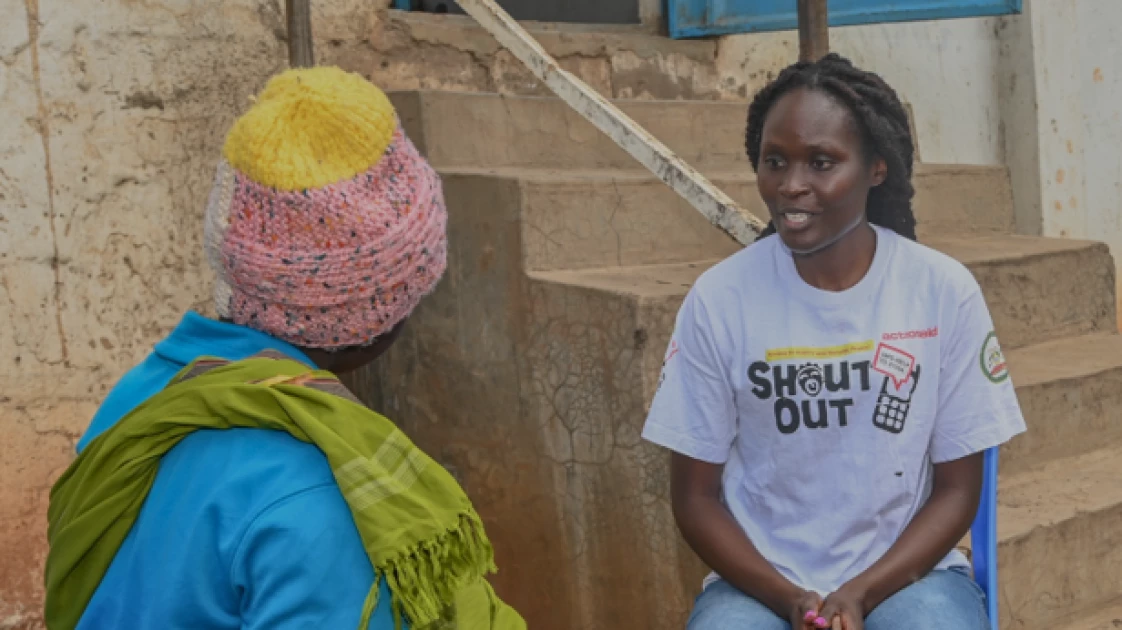
Mercy, holding her baby, engages in a discussion with Teresa Monchari from Africa Youth Trust in Mukuru Slums.

Audio By Vocalize
At 16, Mercy*, a determined young girl with dreams of becoming a journalist, faced an ordeal that changed her life. In Form One last year, she was attacked by three men on her way to her brother’s house. One defiled her, but a passerby intervened and rescued her.
“I didn’t tell my parents because I was afraid of my father’s strictness,” she shared.
Through the encouragement of a school mentor, Mercy* found the courage to tell her mother, who chose to support her. Counselling gave Mercy the strength to return to school, holding onto her ambition of breaking her family’s cycle of poverty.
“When I look at my daughter, I have no ill feelings,” she says of the child born from her assault. “Raising her is hard, but I know my story will change for the better.”
While Mercy's resilience offers hope, Joy’s story highlights the devastating consequences of GBV. Joy, also from Mukuru Kwa Njenga, was defiled and murdered by her stepfather this August.
“By the time we got her to the hospital, all her dreams and ambitions had died with her,” recalled her grieving aunt, Mary Gacheri.
These stories underline the urgent need for action as the 16 Days of Activism Against Gender-Based Violence approaches.
Organizations like Africa Youth Trust (AYT), supported by ActionAid Kenya through the Access to Justice and Security Project, are working to build safety nets for survivors in Mukuru Kwa Njenga. The project’s SMS-based platform, "21094," allows survivors to report incidents by texting "HELP." This triggers an immediate response from a dedicated team that provides legal, medical, and psychosocial support.
“This system allows us to connect survivors to the right services based on their needs,” said Teresa Monchari, an AYT project officer.
Since its inception in 2016, the initiative has supported over 3,000 survivors. However, significant challenges persist, including delayed justice and a shortage of safe houses.
“We need a more structured exit plan for survivors once they leave safe spaces,” Monchari emphasized.
Despite the project’s efforts, the scale of the challenge remains daunting. Fransisca Katua, a psychosocial counselor at AYT, reported over 20 new GBV cases each month. However, limited resources hinder their ability to respond effectively. She called for greater investment and awareness to ensure survivors receive the support they need.
Village elder Onsoti Mogire highlighted poverty’s role in perpetuating GBV. He noted that families sometimes withdraw cases or seek “alternative justice,” further complicating the fight against GBV.
Michael Odhiambo, a paralegal, is advocating for better case documentation and urging the judiciary to fast-track GBV cases, especially those involving minors.
Mercy’s story of survival offers a glimmer of hope, while Joy’s tragic death underscores the cost of inaction. Together, they amplify the pressing need for systemic change.
As the 16 Days of Activism Against GBV draws near, the call to action is clear: strengthen support systems, improve access to justice, and tackle the root causes of GBV. Only then can we ensure that survivors like Mercy thrive and tragedies like Joy’s are prevented.
*Name changed to protect identity.
Join the Discussion
Share your perspective with the Citizen Digital community.
No comments yet
This discussion is waiting for your voice. Be the first to share your thoughts!