
The fall of Thika United
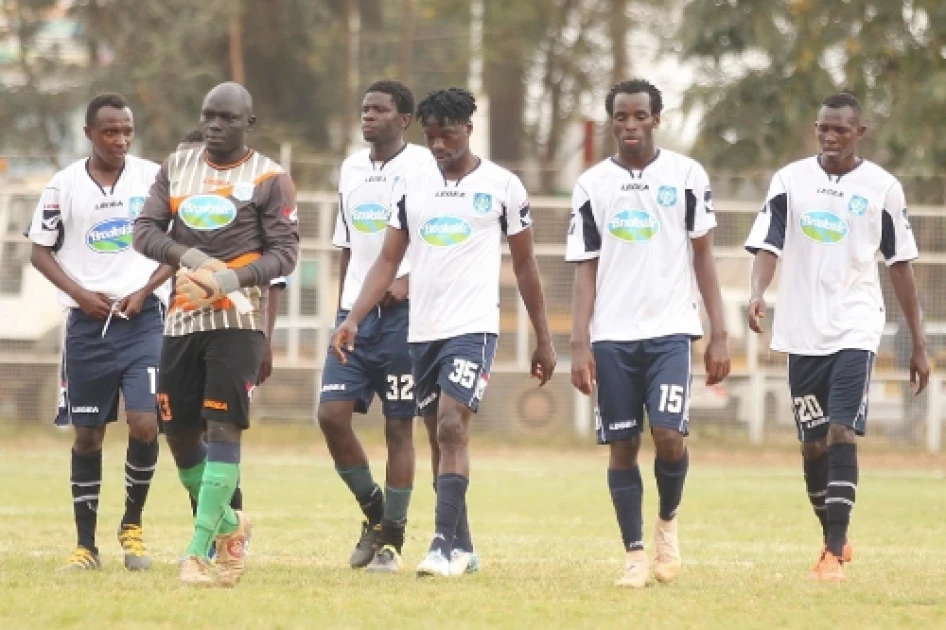
FILE: Thika United players leave the pitch during a previous match. The club was dissolved in 2019. (PHOTO/Sportpicha)

Audio By Vocalize
It has been roughly two years since the dissolution of Thika
United FC, an event that marked an unfortunate end to one of the country’s most
exciting football clubs.
The club had been in existence for two decades during which
it become one of the top FKF Premier League teams before a series of events that
began six years ago set it up to fall.
As a new Football Kenya Federation (FKF) administration took
office in 2016, it made sweeping changes in the running of clubs with the implementation
of FIFA club licensing requirements.
Among those requirements were for clubs to prove they could
indeed sustain themselves as business outfits by opening up its books for
scrutiny.
The entire process is designed to improve club football by
targeting key areas such as best practices in club governance and youth
football.
Most clubs, among them Thika United, failed to meet the
threshold and were demoted to the lower leagues.
That proved to be the unfortunate single moment that sparked
the demise of the team as its long term shirt sponsor pulled the plug on their
15-year partnership and forced club founder Michale Muriuki to begin dipping
into his own pockets to keep it afloat.
According to Muriuki, the club licensing requirements had
been weaponised by the FKF president Nick Mwendwa to punish teams which he felt
were opposed to his new administration.
“The club licensing was a political move to axe football
clubs that refused to dance to the tune of the then FKF leadership. That killed
our club,” Muriuki told Citizen Digital.
John Njogu, who coached Thika United during her last season
in the KPL, confirms that there were rumors about a conflict between the club’s
management and the federation.
“We heard that the relationship between the club secretary
general and the federation leaders was very cold but I believe the club went
down following the exit of the sponsor. I regret that the club is no more,
football stars were born in Thika United including Michael Olunga, Francis
Kahata, Cliffton Miheso and Dennis Odhiambo among many others.
“Thika United was like a powerhouse, producing great talents
who could later be poached by other clubs,” Njogu who is now an elected Member
of County Assembley in Kiambu County regrets.
At the time sponsor left the club, Thika finished the 2017
season ranked 16th in an 18-team-table with 38 points in 34 matches, winning
eight, drawing 14 times and losing 12 matches.
The signs of decline had been written on the walls of Thika
municipal stadium, Thika United’s home ground, and the club survived relegation
by one place and just by a one-goal goal difference!
In the following season, 2018, Muriuki had to use his savings
to fund the club with the hope of inking another deal with another sponsor but
that was not forthcoming.
His move of funding a club in a top flight league using his
personal resources was unsustainable and did not last.
“I was forced to use what I had saved and it reached a point
that the burden was too heavy for me, paying salaries of at least Sh 18,000 per
month to 25 players was not easy. I got drained,” he said.
Players went for months without salaries and allowances,
leading to frustrations and demotivation among the playing unit who went on to
record extremely poor results.
Samuel Chege, a former player at Thika United who now works
at construction site as a casual laborer, hates to remember the glorious
moments when the club used to run a budget of over Sh15 million per season.
“Thika United took me to school, they paid for my education
and I chose football as my career. Everything went south when the sponsor left
and we went for months without pay. Some of us were locked out of our rental
houses and it was really bad. We had to look for other ways to survive,” Chege
narrates.
Right at the middle of the 2018 season, 13 top players left
the struggling club on a free transfer forcing the club to turn to its
youthful, inexperienced and cheap squad, the likes of Chege who graduated to
the first team.
The good times for Thika United were over. They struggled to
get a point and it is in this year (2018) that the relegation axe finally fell
on them after finishing last with 23 points out of possible 102, suffering 21
defeats, managing eight draws and beating five teams in the entire season. It
was terrible.
They carried that abysmal form into the National Super League
(NSL) and as a result dropped one tier lower again to Division One in 2019
after losing 23 matches, drawing eight and winning just seven.
However, there is still hope that the club may resurrect and
come back to footballing life. Muriuki, who now owns a printing and jersey shop
in the busy Thika town, reveals that he still receives calls from players
wanting to join the club.
“We had laid a very strong foundation of nurturing and
developing young talents but someone shattered our dream. If we can get a
sponsor today, Thika United will be back like we never left. Our website is
still active.” Muriuki said.
His views were echoed by Njogu who blames the region’s big
companies and its millionaire owners who just watched as the club fell apart.
“In Ruiru for instance, there are tens of big companies but
none bothers to invest in football, it is sad,” Njogu offered.
The newly elected MCA Gitothua Ward in Kiambu County runs a
football academy in Ruiru town.
In their last quest to try and win at least a point in the
last days in NSL, Thika United suffered a humiliation at home after going down
7-1 to Kisumu All Stars who finished the league in style with a point adrift of
the then NSL Champions, Wazito FC.
Join the Discussion
Share your perspective with the Citizen Digital community.
No comments yet
This discussion is waiting for your voice. Be the first to share your thoughts!