
Sweet gold: How Wire Forest beekeepers are turning night-time harvests into millions
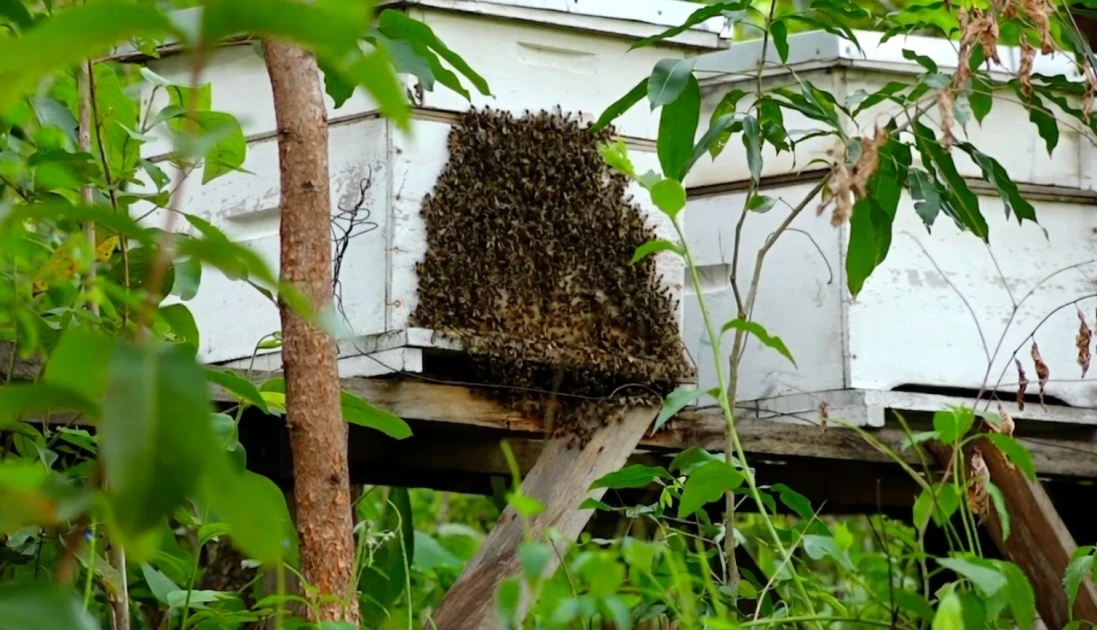
350 local farmers were trained in modern apiculture, and 600 modern beehives were distributed to help remedy the low yields. The overarching goal: elevate the local community into a regional powerhouse.

Audio By Vocalize
Under the pitch-black canopy of Wire Forest in Homa Bay County, when the rest of the world is asleep, a quiet transformation unfolds. Dressed in protective coveralls, heavy boots, and thick gloves, local farmers venture into the dense thicket, not to hunt, but to harvest liquid gold from thousands of aggressive honeybees.
"We are at
the site where farmers do beekeeping," explains Eric Owino, a beekeeper in
Wire Forest. "We are going to do harvesting. The harvesting is always done
at night, because at night all the bees have resided back, so it creates no interference
within farm villages, it can't harm animals or interfere with the
farmers."
For years,
apiculture in the region was defined by unrealized potential. Despite managing
over 1,200 hives across the community, harvests consistently underperformed.
"Last year
around July, after Madaraka Day, we received a courtesy call from a team from
LBDA who came here for a fact-finding mission," says Chrispine Osunga,
Chairman of the Wire Forest Management Association (WIFOMA).
"After they
reviewed the concept note, we received approval to enter into a collaboration.
That partnership with LBDA has really helped us. Our production had been very
low, even with a total of 1,200 hives. One hive is supposed to produce a
maximum of 10 kilos or even more, but our production was below 5 kg per
hive."
Through the
initiative, 350 local farmers were trained in modern apiculture, and 600 modern
beehives were distributed to help remedy the low yields. The overarching goal:
elevate the local community into a regional powerhouse.
"We need to
make WIFOMA the leading apiculture producer in the region," notes Aggrey
Otore, Lake Basin Development Authority (LBDA) Deputy Director for Resource
Mobilization.
"Lake Basin,
as we speak, is installing a modern honey refinery in Ndhiwa, which will be
used to process all this crude honey from the region. We don't want Wire,
WIFOMA, to be left out. As we procure crude honey from Trans Mara and other
regions, we also want WIFOMA to be part and parcel of the leading producers
supplying crude honey to the LBDA modern refinery in Ndhiwa."
Once the raw
honeycomb is gathered under cover of darkness, it is transported to the
facility in Homa Bay County to be refined, packaged, and labeled for the
consumer market.
"We have a
packaging unit," explains an LBDA processing official. "This is where
we pour the good honey after separation of the wax. When labelling, we also
have to stamp the processing date, the packaging date, and the expiry
date."
Designed to
process up to 10 tonnes of honey every quarter, the Ndhiwa facility transforms
the raw forest harvest into retail-ready jars of Lake Basin Gulf Honey, selling
at market prices starting from Ksh.350 and securing a sustainable livelihood
for local farmers.
Join the Discussion
Share your perspective with the Citizen Digital community.
No comments yet
This discussion is waiting for your voice. Be the first to share your thoughts!