
Kenyan banks tap into rings, watches and wristbands for payments

Audio By Vocalize
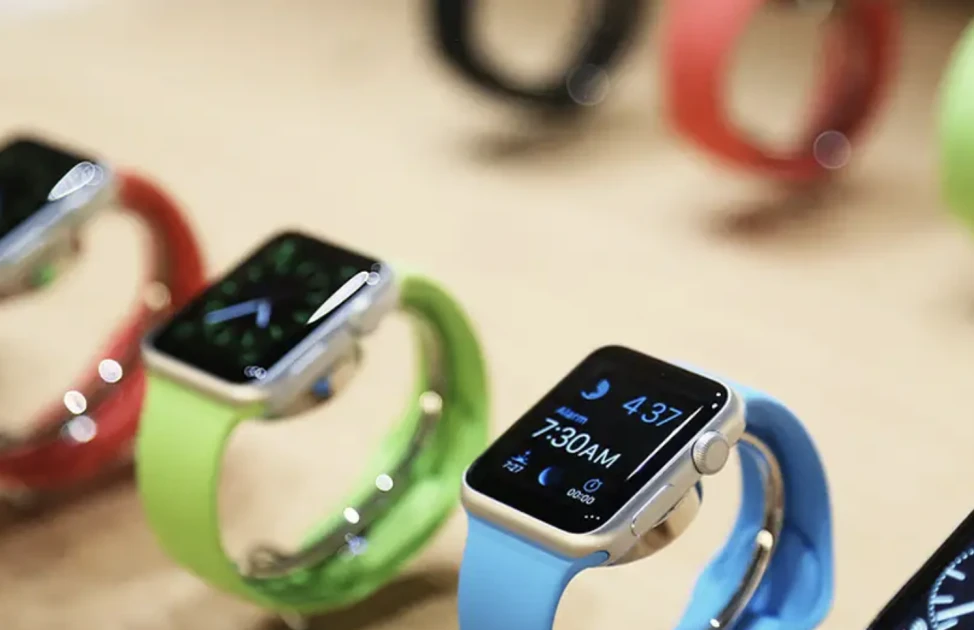
These gadgets with smart sensors can not only be worn as accessories, but also act as devices connected to the internet to transmit, log, or analyze user data. Prominent names, including Apple, Google, Samsung, Huawei and Garmin, dominate the smartwatch space, while Meta commands the glasses field.
Today, watches, rings, and bands are not just accessories to show a sense of fashion, but also valuable add-ons that support health and wellness and also support connectivity.
For years, smartwatches have served their purpose in providing personalised insights for health monitoring, music control or the convenience of instant notifications for messages and calls.
But more capabilities of wearables are beginning to gain popularity in Kenya, including the use of wearables for contactless payments.
Style and convenience in payments
Banks in Kenya are now tapping into wearable technology, embedding style and technology in contactless payments.
Smartwatches, rings and wrist bands are now part of payment solutions offered by Kenyan banks. ABSA Bank, DTB Bank and Premier Bank are among the pacesetters in these tap and pay solutions.
Imagine not having to walk without a wallet full of debit and credit cards, because your smartwatch, ring or wristband could get you a cup of coffee.
These wearables can be scanned on major Point of Sale (POS) terminals in supermarkets, coffee shops or fuel stations, offering seamless payment experiences.
This is your usual debit card that has been integrated into a wearable, either directly by the bank or using an app that supports Near Field Communication (NFC) features.
Once your bank enables the tokenised wearable, it sends encrypted payment details to the POS terminal within a range of about 4 centimetres. Contactless payments can be supported by passive or active wearables, where the former can operate with no battery, but the latter needs to be charged to maintain a connection.
These devices operate after a one-time setup by the banks, which link the wearable to a customer’s debit or credit cards.
In the case of Absa bank, its contactless payments are integrated into smartwatches, including Garmin, Samsung, Apple and Fitbit watches.
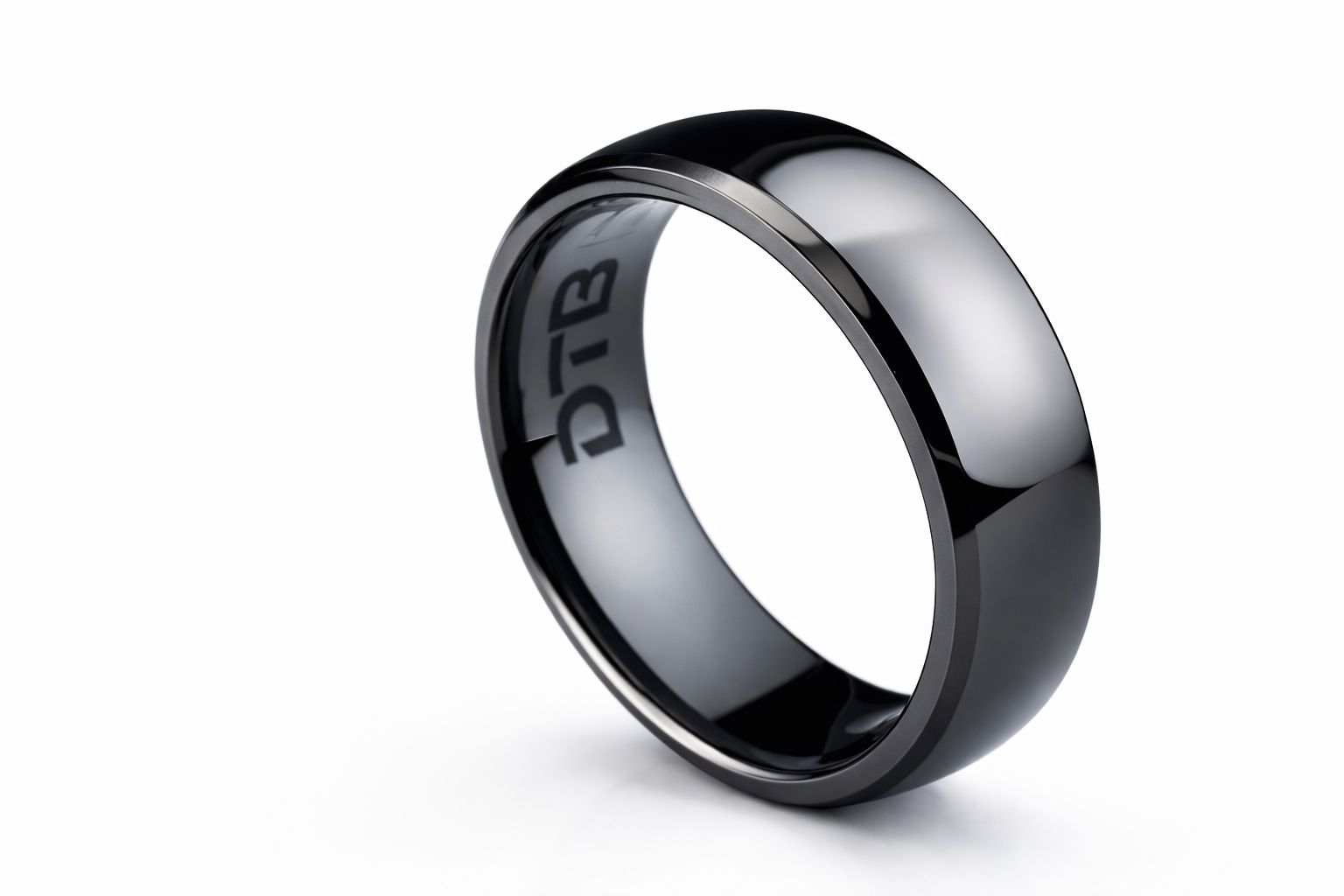
On the other hand, DTB bank chose to custom-make its rings and wristbands that support contactless payments. This includes a waterproof silicon wristband, a carbon fibre ring, and a ceramic ring.
Both banks have linked wearables to their debit cards.
Currently, there are wearables that have to be linked to a primary device (smartphone) for them to operate.
Others can exist independently of mobile devices once an account has been linked to the wearable.
Why wearables?
When banks began adopting tap-to-pay solutions, it was enabled in physical cards and mobile phones. Now, wearables have become a target for financial institutions as they target gadgets that are frequently used by their customers.
“We are trying to integrate payment into everyday customer lifestyle,” Linda Kimani, the Head of Card Payments at Absa Bank Kenya, says.
Kimani adds that the contactless payments are faster as they involve fewer procedures.
“We have removed the nuance and friction of a customer removing their card from the wallet and then tapping it on the POS terminal, putting in a PIN. Or in another case, where you have to go into your phone, log into your bank application, then scroll down to card payment, your card has been saved, and then you do the transaction.
This was the same thought when DTB Bank integrated payments into wearables. They were seeking convenience and flexibility in payment methods.
“We wanted to focus on convenience, security and innovation,” says Azra Thobani, Head of Customer Experience at DTB.
Thobani adds that the wearables integration was made after benchmarking with customers to establish the type of wearables they would like to use in payments.
“We wanted to design something that our customers could relate to,” Thobani says on DTB’s wristband wearables with a Kenyan flag theme.
In the spirit of the widely practised patriotism, DTB incorporated its chips on these wristbands and rings, specifically where the shield is.
According to Kimani, Absa’s goal was to meet customers at their usual routine, including sporting activities and health monitoring.
“We have added a payment capability onto that Garmin to enable the customer to use the same Garmin they use for their health and sports monitoring for payments,” she says.
Both banks have partnered with other companies to outsource the wearables hardware, leaving them with only the software integration for their debit cards.
For Absa, Kimani notes that production of wearables is not a priority at the moment, as the bank focuses more on seamless contactless payments.
Both banks have taken their tap-to-pay solutions beyond Kenya, enabling customers to use their wearables in global markets supported by Mastercard and Visa.
"There is somebody out there…where it's their core business, they have the expertise, they can even innovate within that space,” she says, arguing that the merchant would rather have partnerships to improve its payment solutions.
This contactless technology is not new to Kenyans, as years ago, M-Pesa supported tap-to-pay solutions, which were phased out. Safaricom would later phase out the M-PESA 1Tap wristband.
Outside banking halls and cashier counters, contactless payment is used in the Food for Education programme rolled out in a number of countries. Here, learners with NFC-enabled wrist bands tap their wearable device on POS terminals to be served meals in selected schools.
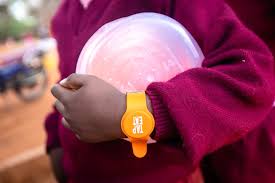
The Tap2Eat wristband is issued to the children, who wear it on their wrists and meal payments are deducted once they tap on a terminal in schools.
The safety dilemma
While wearables promise better usability in tap-to-pay solutions, there are concerns over the safety of these contactless payments.
Most wearables in the market use minimal authentication to verify the identity of users. They operate without multi-factor authentication, which is the most recommended method to secure online platforms.
Here, 2-factor authentications are commonly used by institutions such as banks, providing two distinct forms of identification to access an account. The most common ways this security is achieved are using authentication apps, SMS codes or biometric verifications.
However, most wearables are yet to integrate such levels of multi-factor authentication.
This poses risks for customers, who could suffer losses if their wristbands, rings or smartwatches are stolen, misplaced or involuntarily tapped on a terminal.
To address these security risks, DTB and Absa Bank have put in place measures, including capping transactions.
In the case of DTB, a single transaction is limited to Ksh. 5,000, and also set its daily limit at Ksh. 10,000.
“In the event it gets stolen, the customer will be notified that the wearable has been used. They can then block it,” says the Head of Customer Experience at DTB.
Additionally, customers using the tap-to-pay solutions can also get additional security when the POS terminal requires them to provide a PIN to complete transactions.
For instance, DTB has minimised risks when setting up the wearable by releasing it to the customers after validation at its branches.
In Absa’s case, the wearable has to be linked to a primary device (smartphone) when a transaction is made. The bank has also capped the transaction value for PINless payment.
“We'll ask the customer to put in a PIN. And it's just for purposes of authenticating that it is the customer who's actually done that transaction,” says Kimani.
When a debit card is linked to a wearable, the customer does not lose total control of it when it is stolen or lost, as they can unlink it from their bank apps. Alternatively, they can notify the banks to disable the wearables.
“From the app, you can not only track your transactions, but also block the wearable in case you lose it or if it gets stolen. It acts as a self-service platform for the customer to block and unblock the wearable at their convenience,” says Thobani.
However, just like physical cards, the ultimate responsibility is on the customer in the event they lose their wearable.
In addition to these measures, financial institutions have also put in place security measures, including the use of Machine learning and AI technologies, to detect suspicious transactions. This is not unique to wearables, but also applicable to cards and mobile money payments.
Using these technologies, Absa has set velocity parameters to detect unusual transactions that could point to possible fraud.
“When we find that they are a bit elevated, an alert will be sent to the system, and it will temporarily block that card until we verify that it's actually the customer who's doing those transactions, then we can open it up for subsequent transactions,” says Kimani.
In the case of smartwatches, additional security features include a requirement to input a PIN on the wallet to unlock a card for transactions.
The banks explore more security features to combat fraud in their tap-to-pay solutions.
The future of contactless payments
While wristbands, smartwatches and rings are gaining popularity in Kenya, the market also looks into a future of incorporating more wearables.
Smart glasses stand out as the next frontiers in contactless payments, as long as they are NFC-enabled. This will see more users make payments just by tapping their glasses on terminals.
Globally, merchants such as Alipay have adopted smart glasses-enabled payments, which are backed up by augmented reality technologies.
These NFC-enabled smart glasses could also use voice and gestures as controls.
Thobani sees Kenya as a market leader in payment solutions, hence the possibility to tap more into the convenience needs of customers.
“As we head to a cashless economy. I believe wearables will play a big part in payment convenience,” she says.
On her part, Kimani wearables are a game-changer in payments, and foresees a future where the market would explore other innovations such as voice validation and the use of biometrics in contactless payments.
Join the Discussion
Share your perspective with the Citizen Digital community.
No comments yet
This discussion is waiting for your voice. Be the first to share your thoughts!