
Street photography, Gen Z dances turn Nairobi's streets into a tourist attraction
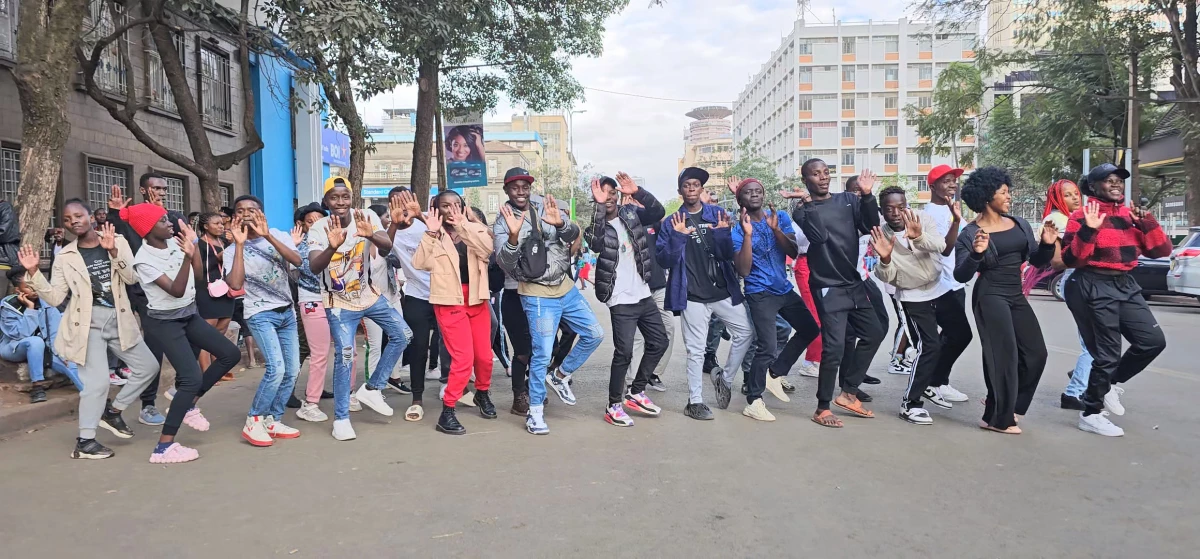
Street dancers in Nairobi CBD. Photo/Courtesy.

Audio By Vocalize
Street photography in Nairobi is no longer just a passing fad. The trend has now found its way into the must-do bucket list for most international and local tourists visiting the capital.
Also on the list are street dances, common with Nairobi’s young people who troop to the CBD on weekends to shake their legs, as they create content.
These two youth ‘inventions’ are beginning to warm the hearts of tourists who visit Nairobi, and looking for other beautiful things the city has to offer, apart from the neighbouring National Park.
“Tourists come here to take pictures and interact with us regarding the art of street photography. They seem to like the fact that youths in Kenya are filling up streets doing meaningful creative work."
"I think some of these things are exclusively Kenyan, and they love it,” says Steve Mwangi, a street photographer in Nairobi.
Steve says that many tourists come to the CBD especially on weekends, with their guides, who are Kenyans, and they take them through their day as street photographers.
According to Steve, many local and international tourists are eager to be part of the city's vibrant architecture, culture, fashion and everyday life, something only street photography can give in full measure, while creating employment for hundreds of young photographers.
Also, rather than snap with their smartphones, some of the visitors are engaging street photographers to document their experiences in Kenya, capturing the bustling streets and popular landmarks in Nairobi.
The growing demand and focus have transformed what was once a hobby into a reliable source of income and now a tourist attraction.
Dancer Mary Wambui notes that things have changed for the better.
“Kenyans and international visitors are increasingly coming to watch us dance every weekend,” says Wambui.
“Some of them even take part in our dances, and at the end of it all, they give us something small as a token of appreciation. This is our little way of contributing to this economy through content creation,” she says, adding that CBD has become an important element of urban tourism.
Wambui notes that the challenge many of them face is monetisation.
“Some of the visitors will come, watch and leave without offering any form of monetary appreciation. Others offer monetary support and it’s great,” she says – but adds that they don’t outrightly ask for money, unless one makes a special request. She notes that it is not easy to monetise street acts.
Many local and international tourists enjoy capturing Nairobi's changing skyline, colourful street art, walkways, beautiful pavements, statues and historic buildings.
According to Freelance tour guide David Odhiambo, Nairobi street photography has brought a new layer to urban tourism.
"Tourists coming to Nairobi are suddenly learning that the capital itself is a beautiful attraction," says Odhiambo who spends a lot of time taking tourists around the capital.
As these innovations continue to shape tourism, hundreds of young men and women involved in street photography and street dance want stakeholders to develop a structure that will support young talent while promoting tourism.
Join the Discussion
Share your perspective with the Citizen Digital community.
No comments yet
This discussion is waiting for your voice. Be the first to share your thoughts!