
Stakeholders back bill to criminalize match-fixing in Kenya

Audio By Vocalize
The Departmental Committee on Sports and Culture has
commenced stakeholder consultations on the Sports (Amendment) Bill, 2026,
sponsored by nominated legistator Irene Mayaka, with key sports sector
institutions expressing support for the proposed law while recommending several
amendments to strengthen its implementation.
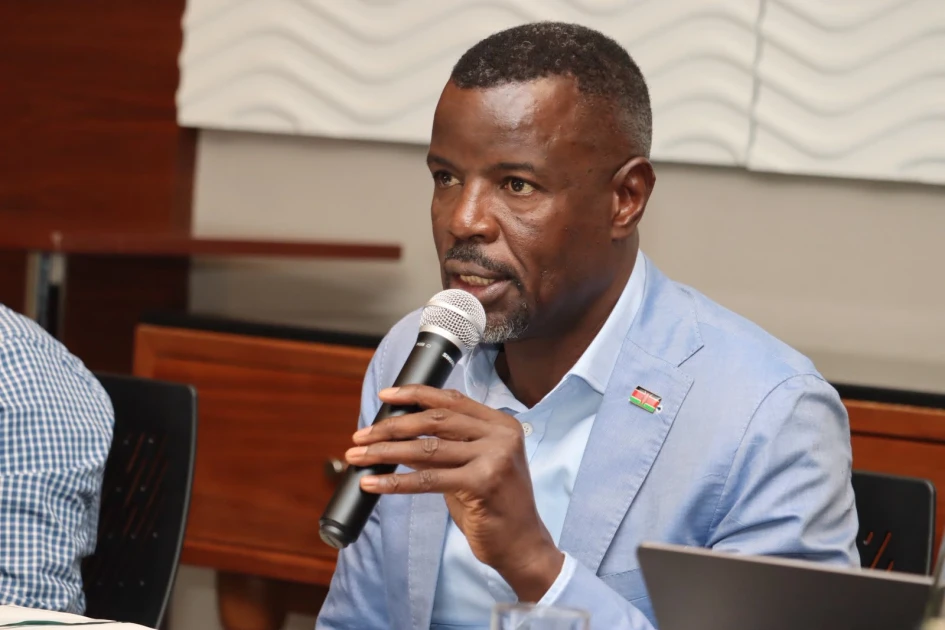
The session, chaired by Committee Chairperson Dan
Wanyama, brought together representatives from the Office of the
Attorney-General and Department of Justice, the State Department for Sports,
Kenya Academy of Sports, Football Kenya Federation (FKF), the National Olympic
Committee of Kenya (NOCK), the Anti-Doping Agency of Kenya (ADAK), the
Association of Gaming Operators Kenya, the Sports Disputes Tribunal and
Athletics Kenya.
The Bill seeks to amend the Sports Act, Cap. 223,
primarily to prohibit and criminalize the manipulation of sports competitions,
a growing concern globally due to its impact on the integrity and credibility
of sporting events according to Mayaka.
Stakeholders unanimously supported the proposed
legislation but urged Parliament to broaden its scope to address emerging
threats to sports integrity beyond match-fixing.
The National Olympic Committee of Kenya noted that
threats such as doping, corruption, fraud and other unethical practices also
undermine confidence in sport and should be captured within the proposed
framework.
A key proposal from stakeholders was the expansion
of the mandate of the Anti-Doping Agency of Kenya.
ADAK representatives argued that the agency already
possesses the investigative structures, intelligence systems and technical
expertise required to handle sports integrity matters.
They proposed that the agency be transformed into a
broader National Sports Integrity and Anti-Doping Agency to oversee
investigations, intelligence gathering and enforcement related to competition
manipulation and other integrity violations.
Stakeholders further recommended amendments that
would empower the agency to initiate investigations independently without
waiting for formal complaints. According to the submissions, this would enable
timely intervention in cases where sports integrity is threatened but no report
has been lodged.
On dispute resolution, participants observed that
the Bill’s provisions on appeals relating to competition manipulation are too
narrow and should be expanded to cover a wider range of sports integrity
disputes.
However, stakeholders noted that existing provisions
under the Anti-Doping Act already provide a robust appeals mechanism through
the Sports Disputes Tribunal.
The Kenya Academy of Sports also called for a
clearer delineation of responsibilities in talent identification and
development, cautioning against duplication of roles between sports
institutions.
Stakeholders emphasized the need for stronger
collaboration among sports organizations to ensure coordinated talent nurturing
and development.
Further recommendations focused on international
participation and athlete support, with submissions proposing that sports
federations take a leading role in preparing teams for international
competitions while Sports Kenya provides logistical support.
Stakeholders also urged that matters relating to
work permits, visas and tax exemptions for athletes remain within the mandates
of relevant government agencies to avoid institutional overlap.
The Committee is expected to consider the views
presented before preparing its report on the Sports (Amendment) Bill, 2026,
ahead of further consideration by the House.
Join the Discussion
Share your perspective with the Citizen Digital community.
No comments yet
This discussion is waiting for your voice. Be the first to share your thoughts!