
Sifuna questions government's model on cushioning fuel price hikes
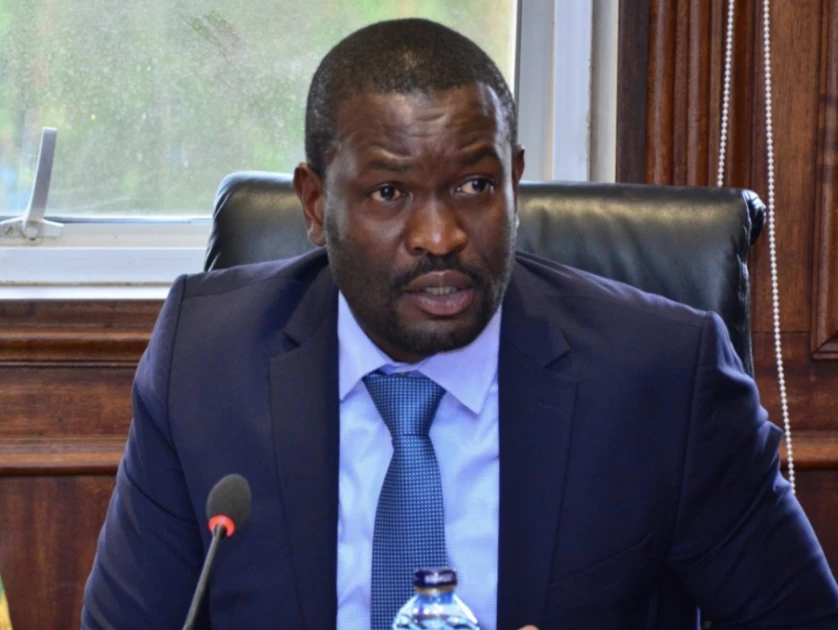
Nairobi Senator Edwin Sifuna during a past party function. PHOTO | COURTESY

Audio By Vocalize
Sifuna was reacting to a statement made by Treasury Cabinet Secretary John Mbadi, who revealed that the recent fuel price hikes have been mainly informed by the ongoing war in the Gulf region but the State will convene to deliberate on how they can introduce reliefs.
"We will seat again when the President comes back (from Azerbaijan) and see what we can do but let us not be emotional about this," he told NTV on Monday.
"I am not saying nothing can be done I am just saying there is always a balance of scale."
In his rejoinder, Sifuna argued that the government is always privy to possible fuel price alterations and timely necessary interventions can be prepared early.
He faulted President William Ruto's administration for what he terms a pattern of allowing the nation to be affected by global shocks only to damage control after the crisis balloons.
"Fuel pricing is a predictable monthly event! Every single month we know the price will be reviewed! Shouldn’t you “protect Kenyans” when conducting the review in the first instance?" he posed.
"We are seeing a pattern here where Kasongo throws us pain first then “reconvenes” to give us Panadol."
This comes amid a nationwide strike by public service transporters over the new fuel prices, paralysing businesses and movement of people across major parts of Nairobi.
In the interview, CS Mbadi further noted that the prices will not change until the next review cycle on June 14, 2026, but the government is keen on adopting temporary measures to prevent the crisis.
"We will look at the subsidy kitty that we have and if that is not going to be sufficient we will see what to do. We will then look at the fuel levy especially the VAT. And we will check on what to cut in terms of expenditure," he said.
The Treasury CS further termed the strike "uncalled for" saying that it will destabilize the economy and resources to cushion the market will be limited.
"I don't think a strike is the solution. The price of petroleum products has increased everywhere in the world," he argued.
"It is now like biting the finger you want to hear. The economy will be hit further and we will have no resources to further subsidise. I am not happy to see Kenyans walking."
While announcing this month's adjustments, the Energy and Petroleum Regulatory Authority (EPRA) said the changes were prompted by exchange rate fluctuations and the application of statutory taxes under the Value Added Tax (VAT) framework.
This pushed the cost of Super Petrol and Diesel up by Ksh.16.65 and Ksh.46.29 per litre, respectively, while the price of Kerosene remains unchanged.
In Nairobi, Super Petrol, Diesel and Kerosene now retail at Ksh.214.25, Ksh.242.92 and Ksh.152.78 effective midnight for the next 30 days.
In Mombasa, Super Petrol, Diesel and Kerosene retail at Ksh.211.09, Ksh.239.64 and Ksh.149.49, respectively.
In Nakuru, Super Petrol is selling at Ksh.213.15, Diesel at Ksh.242.33 and Kerosene at Ksh.152.21.
The Transport Sector Alliance has announced that the shutdown will involve passenger transport, cargo and logistics, ride-hailing services, motorcycle transport, tourism transport, driving schools, school buses and private motorists.
Join the Discussion
Share your perspective with the Citizen Digital community.
No comments yet
This discussion is waiting for your voice. Be the first to share your thoughts!