
Shakahola victims' families demand preservation of DNA evidence before mass burial
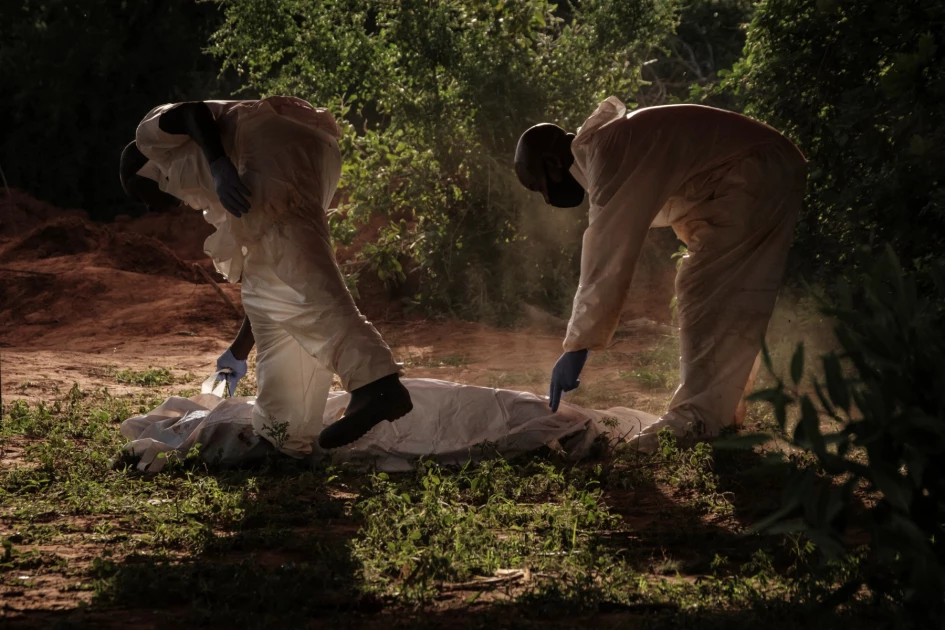
Workers carry a body bag to the mortuary after exhuming bodies at the mass-grave site in Shakahola, Kilifi County on April 25, 2023. (Photo by AFP)

Audio By Vocalize
For more than three years, hundreds of
families across the country whose kin died in the Shakahola massacre have
waited for one thing: to bury their dead.
Now, Kilifi County says that the wait
is almost over, with authorities having set December as the deadline for a mass
burial of unclaimed bodies.
But for families who lost multiple
relatives in the cult killings, the timeline is bringing back fear, not relief.
They want one guarantee before any burial happens: that the DNA evidence
keeping the door open to future answers will not be buried with the bodies.
Rose Asena has, for the last
three years, been pounding the streets of Nairobi and Malindi in a desperate
search for answers and justice for her five nieces and nephews, part of the
more than 400 people who died in the Shakahola massacre.
Rose says victims' families have
learnt of the planned closure to that tragedy through the media.
"This has caused some tension for
us. I have written a petition to find out why the government is not
communicating to us; the responsible authorities have been silent all through,
they have not given us any documents concerning the reports we made about our
missing people,” Asena said.
The county government of Kilifi says
it will be disposing of the unidentified and unreclaimed bodies by the end of
the year, but that plan has not been embraced by all of the families affected
by the tragedy.
Matrona Mangoji lost eight family
members; her sister, her brother-in-law and their six children.
"We cannot allow this; these are
our family members, these are sisters, our brothers, our children who died in
that massacre. We wanted to know why they gave those directions, why they
wanted a mass grave, and yet we have a lot of questions, unanswered questions,”
said Mangoji.
The families say the silence from the
government over the processes that have surrounded the handling of the bodies
of their loved ones since they were retrieved from Shakahola and preserved at
the Malindi mortuary is disturbing.
Today, 443 bodies and body parts
remain preserved at the Malindi Sub-County Hospital, and only 14 have so far
been positively identified through DNA matching.
Kilifi County now says investigations
are complete and has given families 21 days to come forward and identify their
relatives before proceeding with the burial.
"The question is what happens
after the burial? Should the burial bury our questions also, or is there a
communication to tell us, listen before we bury, this is what we have set aside
as the results from the DNA that we are going to keep, and this is the
custodian of these particular documents,” Asena noted.
Mangoji added, "We want closure,
we want answers, we want to know. We are not going to bury our people unless
the government answers these questions."
The families say the burial site
should be turned into a monument for them to visit in the future as they seek
closure to this very painful, tragic period of their lives and start their
journey to healing from the impact of one of the most tragic religious-inspired
killings in the country.
Join the Discussion
Share your perspective with the Citizen Digital community.
No comments yet
This discussion is waiting for your voice. Be the first to share your thoughts!