
Shakahola trial: Witness tells court deaths were called 'weddings'
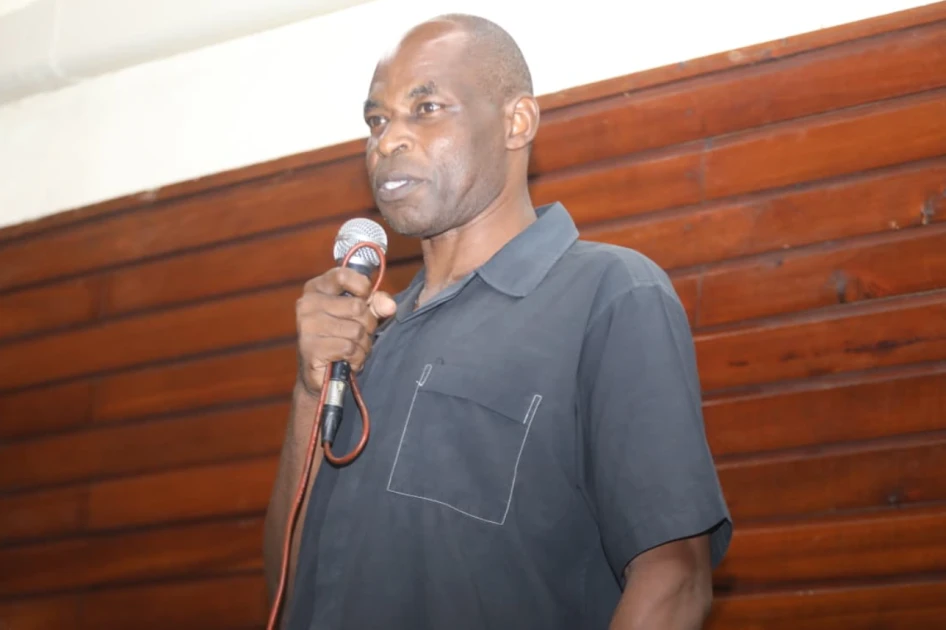
Steven Ngugi, one of the accused persons, appears before the before the Mombasa High Court on April 21, 2026. PHOTO | COURTESY

Audio By Vocalize
A defence witness
in the trial stemming from the Shakahola massacre has admitted to taking part
in burial activities within the forest settlement, telling the court he
believed he was acting in line with the group’s spiritual teachings.
Testifying before
the Mombasa High Court, Steven Ngugi, one of the accused persons, said he
helped dig graves and bury individuals who died in Shakahola, insisting his
actions were carried out in “good faith” as a member of the religious
community.
Appearing before
Justice Diana Kavedza, Ngugi was cross-examined by prosecutors from the Office
of the Director of Public Prosecutions (ODPP), where he acknowledged he could
not establish the exact causes of death of those he buried.
Ngugi told the
court that his adherence to the group’s teachings led him to abandon his
university studies and relocate to Shakahola in 2023, where he purchased land
for Ksh.1,500.
He described a
rigid belief system that discouraged formal education, medical care and aspects
of modern life, which were considered incompatible with their spiritual
doctrine.
He further
testified that prolonged fasting was widely practiced within the group, adding
that he personally participated and at one point required hospital treatment
after suffering dehydration due to extended periods without food or water.
According to his
testimony, deaths within the settlement were referred to as “weddings,”
reflecting a belief that followers did not die but transitioned spiritually.
He also explained
that coded terms such as “kupanda mlima” and “kushuka mlima” were used to
describe the beginning and end of fasting periods.
Join the Discussion
Share your perspective with the Citizen Digital community.
No comments yet
This discussion is waiting for your voice. Be the first to share your thoughts!