
Rwandan genocide suspect Félicien Kabuga dies
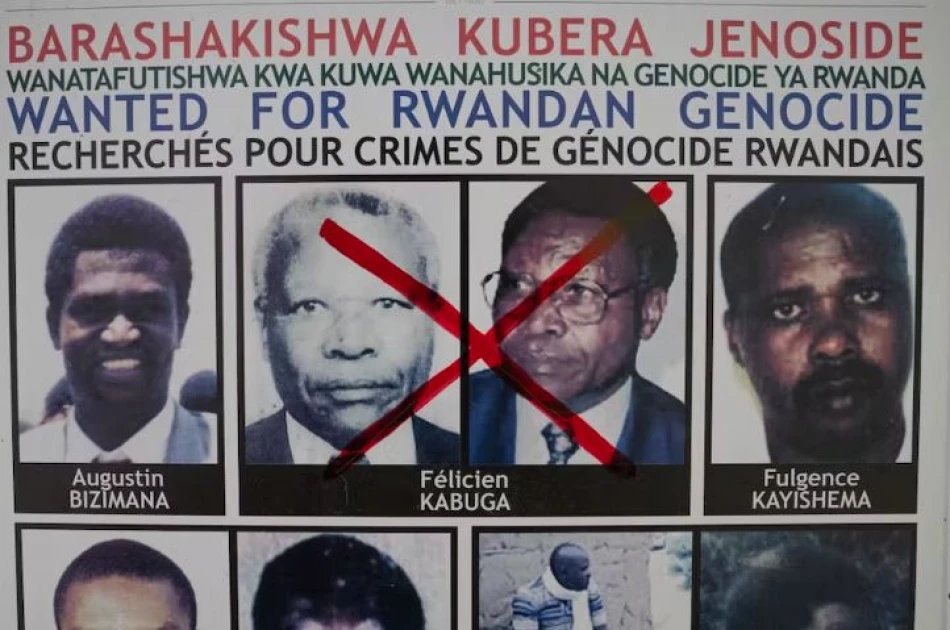
A red marks the face of Felicien Kabuga, one of the last key suspects in the 1994 Rwandan genocide, on a wanted poster at the Genocide Fugitive Tracking Unit office in Kigali, Rwanda. Photo by SIMON WOHLFAHRT/AFP

Audio By Vocalize
In a statement, the Mechanism said the Medical Officer of the United Nations Detention Unit (UNDU) was immediately notified following Kabuga’s death, adding that Dutch authorities have since commenced standard procedures and investigations in line with national law.
The President of the Mechanism, Judge Graciela Gatti Santana, acting under the Statute of the International Residual Mechanism for Criminal Tribunals and its Rules of Detention, has ordered a full inquiry into the circumstances surrounding his death. The inquiry has been assigned to Judge Alphons Orie.
Kabuga, a Rwandan businessman, had been facing charges including genocide, conspiracy to commit genocide, incitement to genocide, and crimes against humanity, among them persecution, extermination, and murder, in relation to the 1994 genocide against the Tutsi in Rwanda.
An arrest warrant for Kabuga was issued by the International Criminal Tribunal for Rwanda (ICTR) in April 2013. He was arrested in France in May 2020 and later transferred to The Hague branch of the Mechanism in October 2020. His trial formally began in September 2022.
However, in September 2023, proceedings were indefinitely stayed following an Appeals Chamber decision, after the Trial Chamber found Kabuga unfit to stand trial due to health reasons.
He remained in detention at the UN Detention Unit pending a decision on possible provisional release to a state willing to accept him.
At the time of his death, Kabuga was still awaiting a decision on his potential release.
The Mechanism, established by the United Nations Security Council in 2010 through Resolution 1966, was created to continue the jurisdiction and functions of the International Criminal Tribunal for Rwanda (ICTR) and the International Tribunal for the former Yugoslavia (ICTY) after their closure.
It began operations in 2012 in Arusha, Tanzania, and in 2013 in The Hague, Netherlands, and continues to handle remaining legal functions of the defunct tribunals.
Join the Discussion
Share your perspective with the Citizen Digital community.
No comments yet
This discussion is waiting for your voice. Be the first to share your thoughts!