
Ruto praises devolution, says it has improved Kenyans' lives
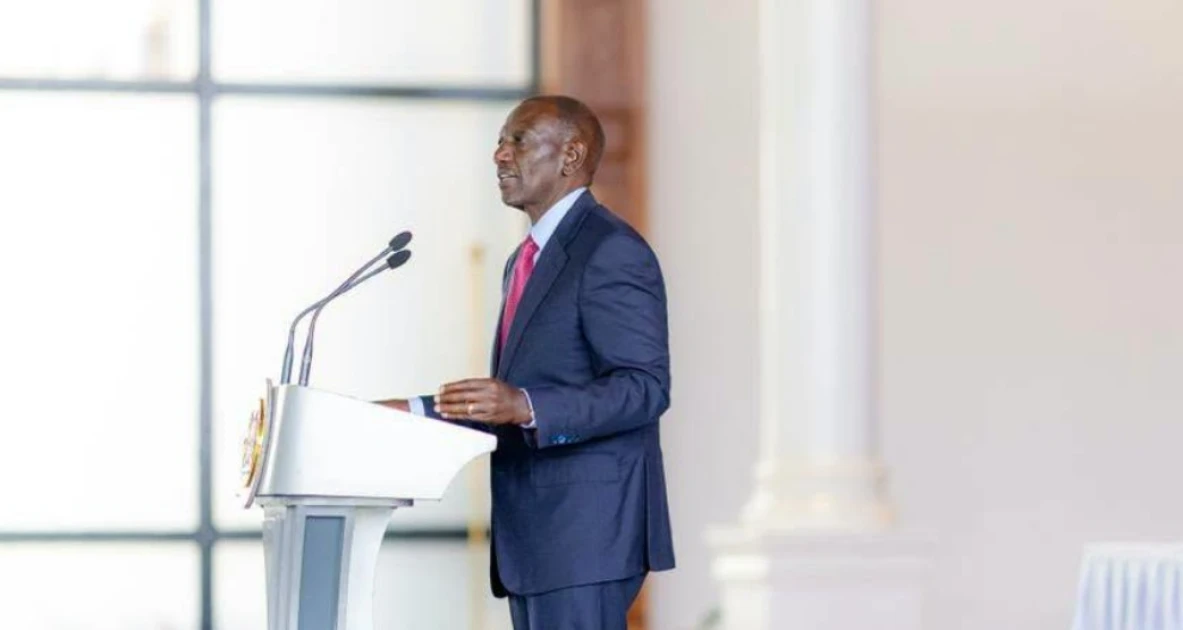
President William Ruto chairs the National and County governments at State House, Nairobi on September 8, 2026. Photo/PCS

Audio By Vocalize
The President said the closer partnership between the two levels of government has enabled counties to make progress in healthcare, agriculture, industrial development and digital systems while strengthening service delivery.
Speaking during the 13th National and County Government Coordinating Summit at State House Nairobi on Tuesday, he said devolution has brought decision-making closer to the people and enabled counties to emerge as centres of innovation, investment and responsive governance.
He noted that the ultimate measure of the success of devolution is the quality of services delivered to citizens.
“Devolution has done more than transfer functions from the centre to the counties. It has brought decision-making closer to the people, strengthened local accountability and enabled counties to become centres of innovation, investment and responsive service delivery,” he said.
The President added that counties have strengthened healthcare delivery under the Social Health Authority, expanded agricultural value chains, accelerated the establishment of County Aggregation and Industrial Parks, and embraced digital systems to improve record-keeping, planning and revenue collection.
President Ruto said such progress demonstrates the importance of close cooperation between the two levels of government.
“When the National and County governments work together, Kenyans receive better services, public resources deliver greater value and our country moves forward faster,” the President pointed out.
The summit was attended by Deputy President Kithure Kindiki, Prime Cabinet Secretary Musalia Mudavadi, Council of Governors Chair Ahmed Abdullahi, Cabinet Secretaries, Principal Secretaries and governors.
President Ruto said the Government has undertaken fiscal and structural reforms aimed at making disbursements to counties more predictable while strengthening monitoring, planning and implementation of decisions made by the summit.
He welcomed the completion of the delineation, unbundling and gazettement of devolved functions, including responsibilities relating to electricity and gas reticulation, energy regulation, sporting activities and facilities, fisheries, and soil and water conservation.
The President said the clarification of responsibilities will reduce duplication, strengthen accountability and improve service delivery.
He, however, emphasised that the transfer of functions must be accompanied by the resources required to perform them effectively.
“Devolution cannot succeed when functions move but resources remain behind; when responsibilities are assigned without capacity; or when expectations are created without the means to meet them,” he said.
The President explained that recommendations from the verification of the previous interim allocation of Ksh.65.9 billion will be submitted to the National Treasury for consideration in the 2027/28 financial year, with the aim of facilitating the transfer of the requisite resources to counties.
On county financing, the President said county governments have been allocated Ksh.503.5 billion for the 2026/27 financial year, comprising Ksh.428 billion in equitable share - up from Ksh.415 billion in the previous year - and Ksh.75.5 billion in conditional allocations.
However, President Ruto cautioned that strengthening devolution is not simply about transferring more money to counties. The focus, he said, must be on ensuring that public funds translate into tangible improvements in the lives of citizens.
“Kenyans do not experience devolution through budget figures or institutional structures. They experience it through medicine in hospitals, water in their homes, accessible roads, productive farms, cleaner towns and responsive public services,” he said.
The President said the National Government will continue working with counties in healthcare, agriculture, urban development, climate action, infrastructure, digital systems, public financial management and local economic development.
On pending bills, President Ruto warned that the debts were hurting businesses, destroying jobs and weakening public confidence in government.
He called on the Office of the Controller of Budget and the Office of the Auditor-General to support counties in verifying pending bills, developing credible payment programmes and facilitating their settlement.
“For many enterprises, especially small and medium businesses, an unpaid Government bill is not merely an accounting entry. It is working capital withheld, salaries delayed and livelihoods placed at risk,” he said.
Shifting to disagreements between the two levels of Government, President Ruto said the growing use of Alternative Dispute Resolution (ADR) is an encouraging development in managing inter-governmental conflicts.
He noted that disputes over roads, water, infrastructure, land and health are increasingly being resolved through ADR rather than lengthy court processes.
The President urged closer cooperation between the Intergovernmental Relations Technical Committee (IGRTC) and the Judiciary to facilitate the referral of suitable intergovernmental disputes to ADR.
“Consultation must come before confrontation, coordination before litigation and resolution before disruption,” he said.
He also called for the full operationalisation of Intergovernmental Sector Forums under the leadership of the Deputy President, saying they should serve as the first line of consultation, coordination and joint problem-solving.
To further strengthen inter-governmental relations, President Ruto outlined five immediate priorities.
These are: Operationalisation of Intergovernmental Sector Forums, strengthening ADR, establishing credible mechanisms for verifying and settling pending bills, expediting performance evaluation of both levels of government and accelerating the legal transfer and registration of gazetted assets to county governments.
The President said the priorities are aimed at creating a devolved system in which responsibilities are clearly defined, functions matched with resources, disputes resolved efficiently and public institutions held accountable for results.
President Ruto urged the National and County governments to maintain consultation and cooperation, particularly where national programmes intersect with county mandates.
“Neither level of Government can succeed by acting in isolation. Our mandates may be distinct, but the citizen we serve is the same; our responsibility is shared; and our objective is one: To improve the lives of the people of Kenya,” he said.
Seven nominees to the IGRTC were presented for ratification at the summit and, upon approval, sworn into office.
President Ruto said the officials will have the responsibility of strengthening the IGRTC as a capable and responsive institution, promoting harmonious relations between the two levels of government.
Join the Discussion
Share your perspective with the Citizen Digital community.
No comments yet
This discussion is waiting for your voice. Be the first to share your thoughts!