
Ruto: Health reforms pay off as SHA enrolment hits 32.3 million, Ksh.178B paid to hospitals
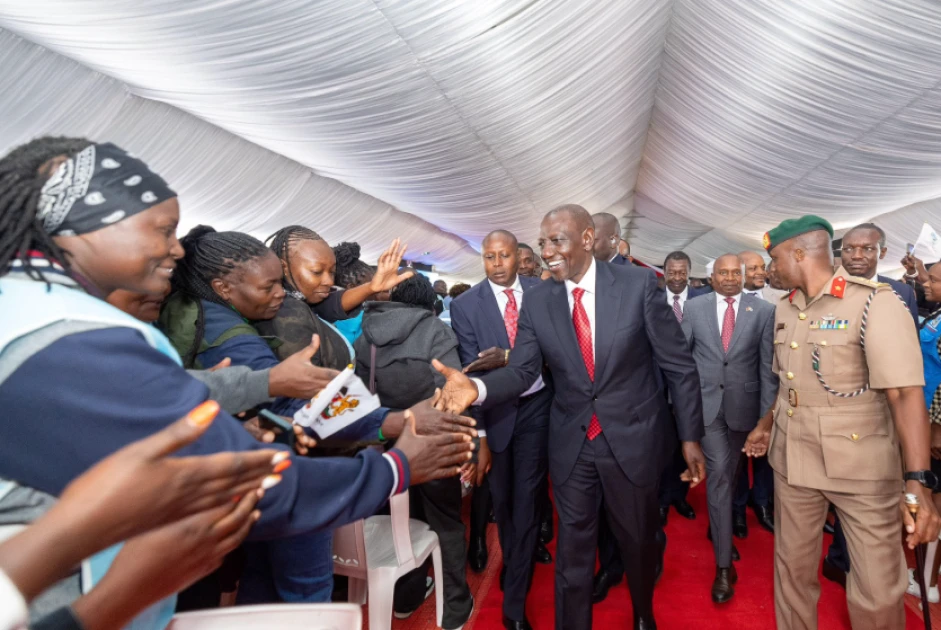
President William Ruto after opening the Kenya Health Summit 2026 at KICC on August 18, 2026. PHOTO | PCS

Audio By Vocalize
The extensive reforms the government has undertaken in Kenya's
health sector over the past three years have finally paid off, President William
Ruto has said.
The President said statistics of the changes and growth in the
sector confirm that more Kenyans now enjoy access to free healthcare under the
Social Health Authority (SHA), which came into effect in October 2024.
He noted that 32.3 million Kenyans have registered with the
Social Health Authority (SHA), up from 8 million under the defunct National
Hospital Insurance Fund (NHIF).
Additionally, he said SHA has treated over eight million
people over the past two years, fulfilling the government's pledge in the
run-up to the 2022 presidential election to deliver universal health coverage.
"For the first time since Independence, Kenya has put in
place a comprehensive legal, financial, institutional, community and digital
architecture for Universal Health Coverage built and sustained by the
contributions of Kenyans themselves. We have crossed an historic
threshold," he said.
He made the remarks when he opened the two-day Kenya Health
Summit at the Kenyatta International Conference Centre (KICC), Nairobi, on
Tuesday.
The meeting brought together all players in the health sector
to take stock of the progress of the reforms that have been implemented in the
past three years, and review pending challenges to make healthcare truly
accessible to all Kenyans.
Present were Deputy President Kithure Kindiki, Prime Cabinet
Secretary Musalia Mudavadi, National Assembly Speaker Moses Wetang'ula, Health
Cabinet Secretary Aden Duale, and United Nations Resident Coordinator Garry
Conille.
Since October 2024, President Ruto said SHA has received more
than Ksh.209 billion and paid more than Ksh.178 billion to contracted
facilities across all 47 counties.
He said that, in partnership with county governments, 107,800
Community Health Promoters have been employed. Since, they have reached more
than 9 million households, helping to identify medical dangers early and
connecting families to treatment.
"For the first time, we have built a nationwide health
network whose first point of contact is not necessarily a hospital bed, but the
doorstep of a Kenyan home," he said.
Additionally, through the Primary Health Care Fund, the government
has disbursed Ksh.23.3 billion to support more than 20 million outpatient
visits, benefiting over 15 million Kenyans while Ksh.17 billion has supported
maternal healthcare, including deliveries.
Under SHA, the President noted that the government has
facilitated more than 500,000 surgeries across the country and provided
treatment to more than 50,000 cancer patients compared to just 7,000 under
NHIF.
Moreover, he said, the government has expanded access to
healthcare by increasing the number of health facilities covered by SHA to more
than 10,700, bringing quality healthcare closer to where Kenyans live, work and
raise their families.
Through the National Equipment Services Programme, he
explained, 850 modern medical equipment units worth Ksh.9.7 billion have been
delivered to hospitals in 44 counties that have signed agreements for the
equipment.
These include digital X-ray, dialysis and MRI machines, CT
scanners, ultrasound equipment and other critical medical technologies.
Thanks to digitisation efforts, the President pointed out, the
rate at which Kenya Medical Supplies Agency (KEMSA) is refilling medicine has
significantly improved to 90 per cent, up from 40 per cent three years ago,
ensuring health facilities are sufficiently stocked.
President Ruto termed health reforms not only a pillar of the
Bottom-Up Economic Transformation Agenda, but also one of the most
consequential social transformations in Kenya's history.
"I consider it one of the greatest privileges of my
public service to have been entrusted, in our time, with helping turn that
national aspiration into reality," he said.
He called on Kenyans to safeguard the gains so far made in the
sector from policy disruptions brought about by changes in governments.
"Universal healthcare must become part of our national
covenant; not an achievement of a government, a party or a President but of the
people and of the Republic," he said.
DP Kindiki said the government has lived up to its promise and
commitment to pull the people of Kenya from disease so that they can play their
rightful role in national development.
Council of Governors (CoG) Chairman Ahmed Abdullahi, who is
also the Governor of Wajir, said SHA has benefited hospitals even in the
remotest parts of the country.
"I have heard some politicians say they will do away with
SHA. Then replace it with what? That, to us, is akin to stripping off tarmac
from a paved road," he said.
Dr Connile said the United Nations will continue partnering
with Kenya in building capacity and strengthening institutions to deliver
universal healthcare.
Also present were Cabinet Secretaries, Principal Secretaries,
MPs and members of the diplomatic corps.
Join the Discussion
Share your perspective with the Citizen Digital community.
No comments yet
This discussion is waiting for your voice. Be the first to share your thoughts!