
Ruto: Electoral mandate must operate within constitutional limits
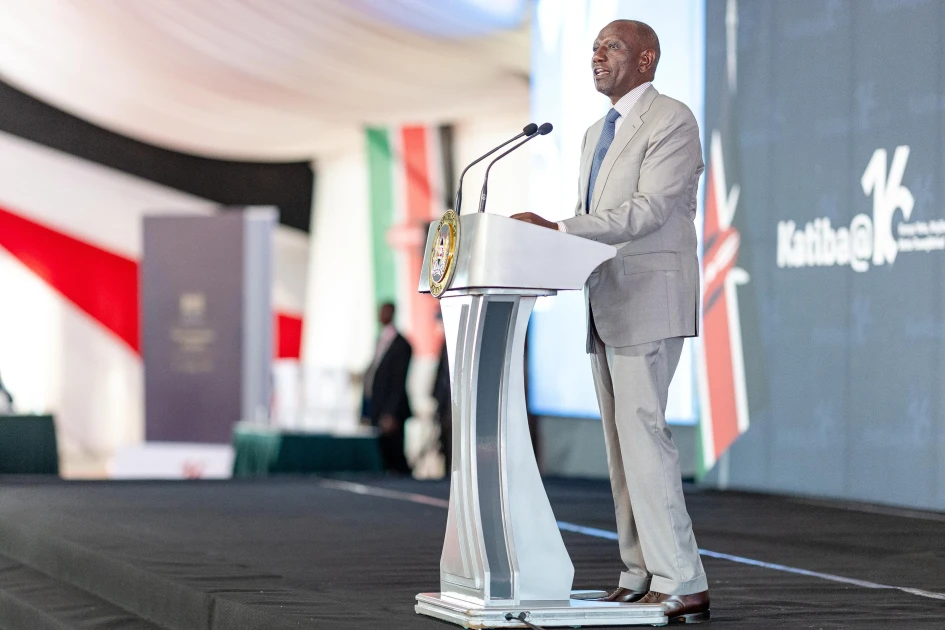
President William Ruto speaks during Katiba @16 celebrations at KICC. Photo: PCS

Audio By Vocalize
President William Ruto has defended the democratic mandate
of elected governments while stressing that the authority won at the ballot box
must be exercised within the limits of the Constitution.
Speaking during the 2026 Katiba Day Symposium, President Ruto
said an electoral mandate gives an elected government the legitimacy and
responsibility to implement the programme on which it was elected, but
acknowledged that such authority must coexist with constitutional checks,
judicial independence and the protection of fundamental rights.
“Political parties present manifestos to the people,
citizens consider competing visions and elect a government; that mandate carries
democratic legitimacy and imposes a responsibility on leaders to keep their
word and deliver on their promise,” he stated.
He further posed a broader constitutional question, how much
space should an elected government have to implement the programme on which it
campaigned, particularly when its policies are challenged in court?
“When a court finds that a policy violates a constitution,
how should the executive and parliament respond promptly and constructively?” he
asked.
Ruto noted that the question should not be interpreted as an
attack on any institution, maintaining that judicial independence remains
essential to Kenya's constitutional order.
“These questions do not constitute any attack on any
institution or infringement of any institution. Judicial independence is non-negotiable. Courts must remain free to interpret the constitution, protect
rights and invalidate unlawful actions,” he said.
He, however, argued that the constitutional authority of
elected institutions must also be respected where government policy falls
within the law.
“Where a government acts unlawfully, it must obey the courts
and correct its course; where lawful policy choices fall within the
constitutional authority of elected institutions, that democratic space must
also be respected,” he said.
The president’s remarks come against the backdrop of Kenya's
recent experience with mass protests, particularly the demonstrations that
began in 2024, which brought questions of government accountability, citizens'
rights and the limits of state power to the centre of national debate.
“During the protest of 2024 and those that followed, young
Kenyans and other citizens excised their constitutional freedom to speak,
assemble, demonstate, picket and petition public authorities, their message was
clear, they wanted to be heard, they demanded greater accountability, better
government and a meaning place in shaping the future of their nation,” he said.
Ruto acknowledged the pain arising from the events,
including allegations of human rights violations, and called for credible
claims to be independently investigated.
“I recognize the pain that remains from the events of that
period, some families lost loved ones, serious allegation were made concerning
unlawfull arrests enforced disappearance and excessive use of lethal force,” he
acknowledged.
“Every credible allegation of human rights violation must be
investigated independently, thoroughly and transparently. Where wrongdoing is
established, those responsible must held accountable in accordance with the law,”
he added.
At the same time, Ruto distinguished between
constitutionally protected protest and criminal conduct committed during
demonstrations.
“The constitution protects peaceful and unarmed assembly. It
does not protect arson, looting, lawlessness, violence, intimidation, attacks on
citizens, or destruction of public and private property,” he said.
He said the distinction was necessary to protect both
citizens’ constitutional freedoms and the rule of law.
“We must therefore distinguish carefully between a citizen
exercising a constitutional right and an individual committing a criminal offence,
we must neither criminalise protest because of the action of a few nor
legitimize criminal conduct merely because it occurs in the course of a
protest. Rights and responsibilities are not enemies,” he said.
Join the Discussion
Share your perspective with the Citizen Digital community.
No comments yet
This discussion is waiting for your voice. Be the first to share your thoughts!