
Russia fires hypersonic missile at target in Ukraine near NATO border
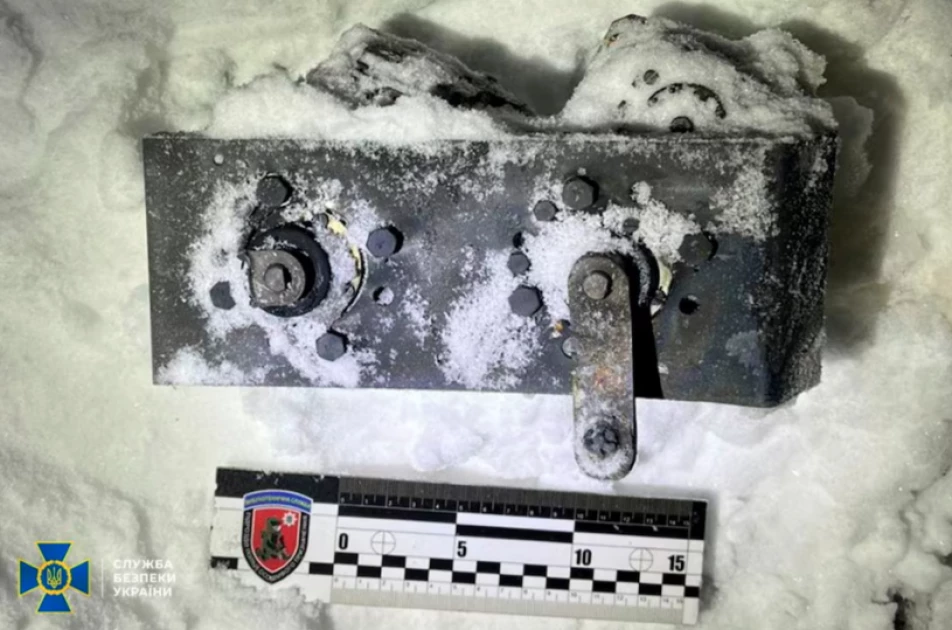
A part of Russian nuclear-capable hypersonic Oreshnik missile system at the site of the Russian missile strike, amid Russia's attack on Ukraine, in Lviv region, Ukraine January 9, 2026. Security Service of Ukraine/Handout via REUTERS

Audio By Vocalize
Russia fired a powerful hypersonic missile overnight at a
target in Ukraine near
the border with NATO-member Poland, in what Kyiv's European allies on Friday
described as an attempt to intimidate them from supporting Ukraine.
It was only the second time Russia has fired the Oreshnik at Ukraine, and came amid a night of air attacks that Ukrainian authorities said also killed four people in Kyiv, knocked out power in the capital and damaged the Qatari embassy there.
The Oreshnik, an intermediate-range ballistic missile (IRBM)
designed to project power across Europe and which Moscow says is impossible to
intercept, can carry nuclear warheads although there was no suggestion it had
done so. A senior Ukrainian official said it appeared to be carrying inert
"dummy" warheads.
The strike appeared aimed at cowing Ukraine at a crucial
juncture in talks to end the war, analysts
said. It happened after a week of setbacks for Russia, including the U.S.
capture of Venezuelan President Nicolas Maduro, a close ally of Russian
President Vladimir Putin.
Moscow said it fired the Oreshnik missile
in response to what it calls an attempted drone attack on one of Putin's
residences last month, which Ukraine denies and the United States has said did
not happen.
"Such a strike close to EU and NATO border is a grave
threat to the security on the European continent and a test for the
transatlantic community,” Ukrainian Foreign Minister Andriy Sybiha said on X.
"It is absurd that Russia attempts to justify this
strike with the fake 'Putin residence attack' that never happened," he
added. "Putin uses an IRBM near EU and NATO border in response to his own
hallucinations — this is truly a global threat. And it demands global
responses."
It took place days after a summit where European
countries pledged
to offer troops for Ukraine in the event of a ceasefire and Washington
backed giving security guarantees for Kyiv.
"Russia’s reported use of an Oreshnik missile is a
clear escalation against Ukraine and meant as a warning to Europe and to the
U.S.," EU foreign policy chief Kaja Kallas said on X.
"EU countries must dig deeper into their air defence
stocks and deliver now. We must also further raise the cost of this war for
Moscow, including through tougher sanctions."
Germany's Chancellor Friedrich Merz, who had a call with the
leaders of France and Britain, said: "Threatening gestures are intended to
instil fear, but they will not work. We stand with Ukraine."
The senior Ukrainian official said the missile had struck the
workshop of a state enterprise in the western city of Lviv near the Polish
border. Impact from several submunitions caused "minor penetrations of
concrete structures" at the workshop and made craters in the forest area,
the official told Reuters.
Separately, the SBU state security service said Russia had
attempted to destroy civilian infrastructure in the surrounding region amid
"rapidly deteriorating weather conditions".
Moscow said it hit energy infrastructure and a factory that
made drones used in the attack on Putin's residence.
Kyiv has called Moscow's allegation that it attacked Putin's
residence in the Novgorod region of northern Russia on December 29 "an
absurd lie" to sabotage peace talks. U.S. President Donald Trump has said
he does not believe it happened, although something else happened in the area.
Russia fired a total of 242 drones and 36 missiles,
including the Oreshnik, to hit infrastructure in the western Lviv region and in
and around Kyiv, Ukraine said.
One of the four people killed in Kyiv was Serhiy Smoliak,
56, an emergency medic who came to help survivors at a suburban apartment hit
by a drone and was killed in a follow-up strike. His body lay covered on snowy
ground near a road. Four other medics and five rescuers were wounded there.
Authorities said more than 20 people were injured in the
capital and electricity was knocked out to more than half a million homes. Amid
heavy snow and temperatures of about -10 Celsius (14°F), water and heat were
cut off. Residents sheltered underground on mattresses and chairs, some wrapped
in blankets.
As of Friday afternoon, more than half of the city had
heating again but 5,800 buildings still did not, officials said.
Qatar confirmed that its embassy was damaged and said no one
was hurt there. The country has occasionally acted as a mediator in the
conflict.
The Oreshnik was fired just before midnight, according to
Lviv regional officials. The Ukrainian military said the missile was moving at
a speed of 13,000 km per hour.
Moscow first fired an Oreshnik – Russian for "hazel
tree" - against what it said was a military factory in Ukraine in November
2024. Ukrainian sources said that missile carried dummy warheads, not
explosives, and caused limited damage.
On Tuesday, Britain and France announced plans to deploy
troops in Ukraine in the event of a ceasefire - prompting Moscow to respond
that it would view foreign soldiers as legitimate combat targets. The British
defence minister, John Healey, was in Kyiv to discuss a potential future
deployment.
Join the Discussion
Share your perspective with the Citizen Digital community.
No comments yet
This discussion is waiting for your voice. Be the first to share your thoughts!