
Rironi-Mau Summit: Government announces plans to introduce cable cars at the Great Rift Valley Viewpoint

Audio By Vocalize
Under government plans tied to the ongoing Rironi-Mau Summit highway project, the scenic stopover will reportedly feature cable cars, modern curio shops, and high-end hotels designed to convert it into a world-class tourism destination.
During an inspection tour of the highway construction, the Roads and Transport CS outlined the ambitious vision for the site, noting that it will connect the A8 highway corridor to the A8 South through cable cars.
"It will be world-class, with cable cars connecting the A8, the corridor which we are in now, to the A8 South, the escarpment corridor. It will be a magnificent tourism site,” CS Davis Chirchir said.
The upgrade aims to move beyond treating the escarpment as a standard roadside stopping point, utilizing a motorised cable system to carry passenger cabins across steep slopes and valleys.
Highlighting the need to better capitalize on the location, Chirchir noted: "We are going to leverage on the God-given tourist attraction of the Rift Valley, and so we are going to do a lot of work at that viewpoint.”
The Cabinet Secretary also pointed out that the current facility falls short on safety standards, making a redesigned layout necessary.
“At the moment, the viewpoint is a good place, but the safety aspect of the design and the way it has been developed is not properly done,” he added.
To keep travellers lingering longer, the government plans to welcome private investors while reorganizing local retail spaces.
"We are going to do curio shops that will encourage tourists to stop and want to spend time. We will probably get investors putting up hotels,” Chirchir stated.
While the multi-million shilling upgrade promises long-term economic gains, it arrives amid heavy disruption for local vendors.
The expansion of the Rironi-Mau Summit highway has already led to the demolition of traditional curio stalls, leaving hundreds of traders who relied on selling Maasai shukas, carvings, soapstone goods, and beads facing uncertain livelihoods.
Traders have urged authorities to ensure they are integrated back into the completed project, noting that close to 300 individuals—including employees and small-scale vendors—depended on commerce around the attraction.
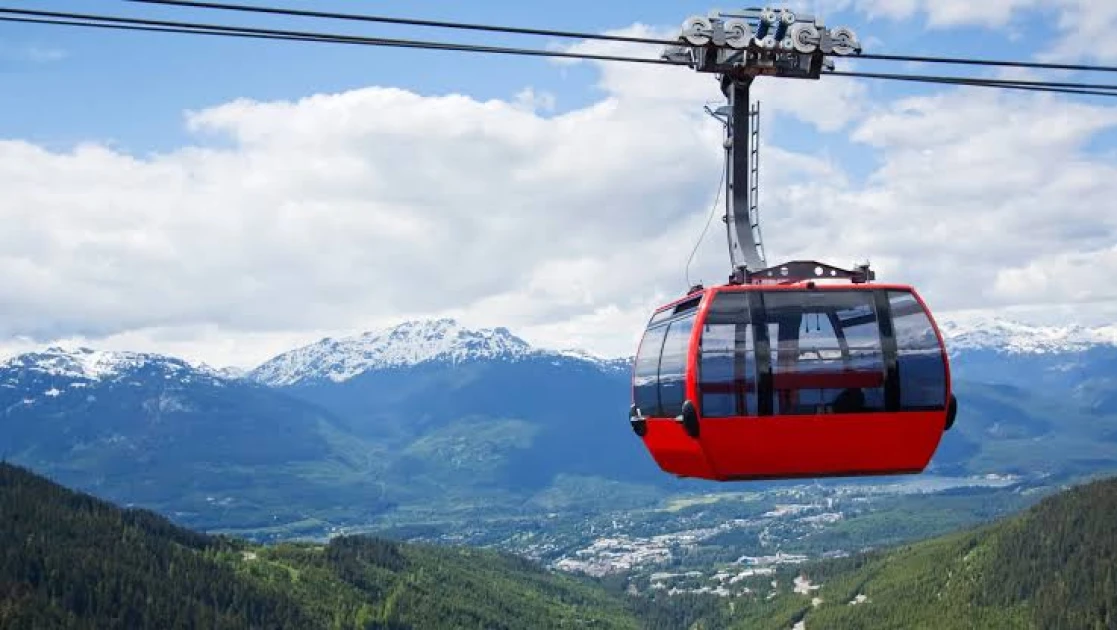
Cable cars are passenger cabins suspended from strong overhead steel cables and moved between stations using a motorised cable system.
They transport people across valleys, mountains and steep slopes without requiring roads to be built along the terrain.
The system allows tourists to enjoy aerial views of the surrounding terrain while connecting destinations that would otherwise require longer journeys by road.
Nations across Latin America have spearheaded the adoption of these massive urban ropeway networks, most notably Bolivia with the expansive "Mi Teleférico" system linking La Paz and El Alto, Colombia with its integrated lines in Medellín and Bogotá, and Mexico with installations in Mexico City.
The technology is also well-established and expanding globally, with systems operating across Europe (including Italy, France, Germany, and Spain), Asia and emerging projects in countries like India and Madagascar.
The viewpoint overhaul forms a core component of the broader Rironi-Mau Summit highway expansion, a major infrastructure project covering the A8 route between Rironi and Mau Summit and the A8 South section linking Rironi to Naivasha through Mai Mahiu.
Launched by President William Ruto in November 2025 under a public-private partnership, the project targets completion by June 2027.
It encompasses both the A8 route from Rironi to Mau Summit and the A8 South corridor linking Rironi to Naivasha via Mai Mahiu, aiming to drastically cut traffic congestion and boost regional safety and trade connectivity.
Join the Discussion
Share your perspective with the Citizen Digital community.
No comments yet
This discussion is waiting for your voice. Be the first to share your thoughts!