
REREC to commission 120 solar mini-grids across 14 underserved counties
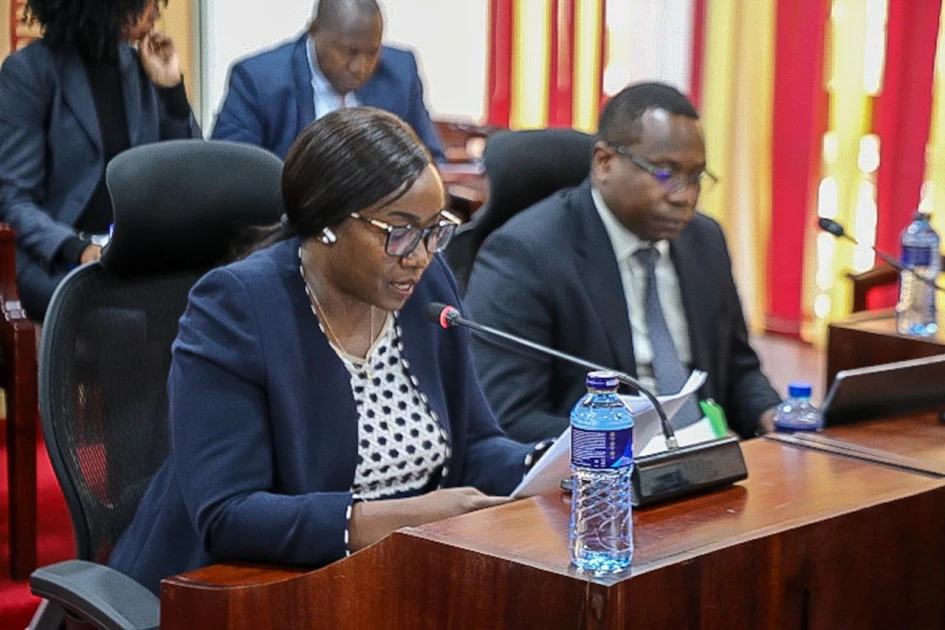
REREC Chief Executive Officer Dr. Rose Mkalama appears before the Senate Standing Committee on Energy, chaired by Elgeyo Marakwet Senator William Kisang, to present an update on the implementation of the Kenya Off-Grid Solar Access Project (KOSAP) at Bunge Towers, Nairobi, on Tuesday, August 4, 2026.

Audio By Vocalize
Tens of thousands of residents across 14 underserved counties are set to transition to clean energy and water by September 30, 2026, as the Rural Electrification and Renewable Energy Corporation (REREC) prepares to hand over 120 newly constructed solar mini-grids.
This USD 150 million World Bank-funded initiative directly targets 5,390 households for new borehole water connections alongside high-capacity mini-grids engineered to serve between 75 and 1,835 active users per site.
Appearing before the Senate Energy Committee, led by Elgeyo Marakwet Senator William Kisang, REREC CEO Dr Rose Mkalama confirmed that she had personally visited 31 implementation sites.
Responding to concerns raised by Tana River Senator Danson Mungatana that the works might be delayed, Dr Mkalama expressed confidence that the multi-component Kenya Off-Grid Solar Access Project (KOSAP) remains on schedule for its September commissioning deadline.
The project addresses critical infrastructure gaps through four main components: localized solar mini-grids; standalone solar home systems paired with clean cooking solutions; solar photovoltaic pumping systems for community facilities; and implementation support driven by consumer education and community awareness campaigns.
The project's footprint spans several counties. Turkana County has the highest number of active mini-grid construction sites at 15, followed by Marsabit, Isiolo, and Samburu. On the water infrastructure front, Isiolo and Tana River lead with 57 solarised boreholes under construction. Narok follows with 35 sites, while Taita Taveta and Lamu have 34 each. West Pokot and Turkana each have 33 sites, while additional installations are underway in Kwale, Garissa, Wajir, and Mandera.
Across 256 completed and handed-over borehole sites, the project targets 5,390 household water connections, averaging 21 households per borehole. Connection density varies depending on settlement patterns, with Isiolo recording the highest average at 26 households per borehole, followed by Narok at 25, Kwale at 24, Mandera at 23, and Wajir at 22.
The Senate committee emphasized the need for prudent utilization of public funds to ensure value for money. Responding to constitutional land acquisition concerns raised by Kakamega Senator Boni Khalwale, Dr. Mkalama clarified that contract awards are free from political interference.
To ensure host communities directly benefit from the projects, REREC has allocated KSh 1 million per site for Corporate Social Responsibility (CSR) initiatives, allowing beneficiary communities to determine their own priority development projects.
Join the Discussion
Share your perspective with the Citizen Digital community.
No comments yet
This discussion is waiting for your voice. Be the first to share your thoughts!