
PS Oluga outlines Kenya's four-pillar UHC plan at UNGA sidelines

Audio By Vocalize
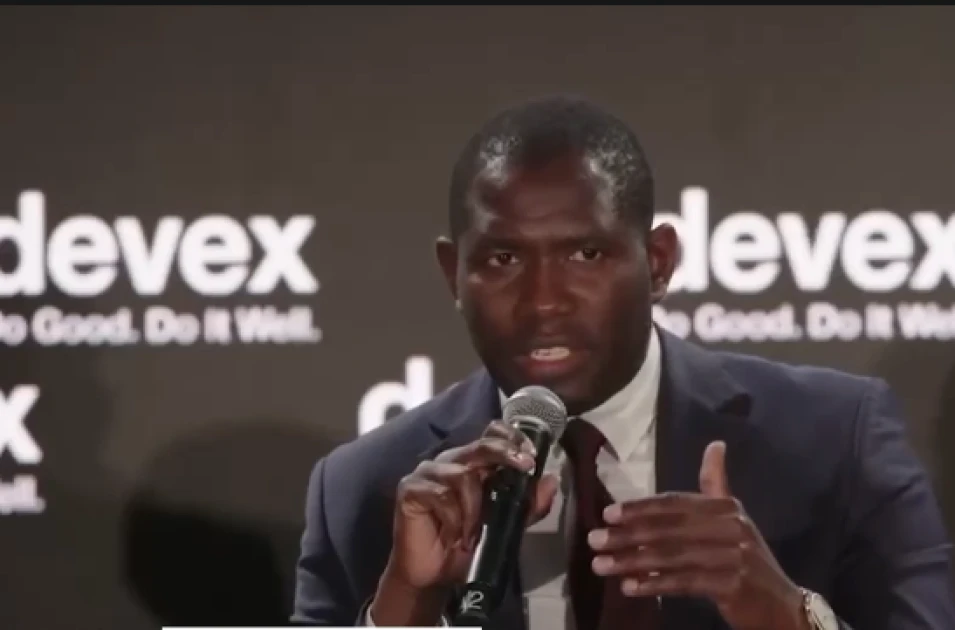
Speaking during a session on the Accord for a Healthier World hosted by Pfizer at Devex Impact House, on the sidelines of the United Nations General Assembly (UNGA), Oluga said the government's health reforms are built on four pillars: domestic health financing, a strengthened health workforce, reliable access to medical commodities and the digitisation of the health system.
"We are looking at health from a lens of economic development," the PS said. "Health does not make people poorer, so that they have to choose between selling their property and going to hospital, or they have to get income that only goes to dialysis or treatment of cancer or treatment of chronic disease, and therefore miss the opportunity to participate in economic growth."
He added that the government also wants the health sector to serve as a foundation for economic prosperity, positioning it as a source of business opportunities and jobs for Kenyans.
On financing, Oluga said Kenya is prioritising domestic resource mobilisation over reliance on external funding.
"Why domestic? Because we want a stable, predictable, sustainable mechanism of financing our own health care system, and financing it based on the priorities of population needs," he said.
He described health workers as the backbone of the reform agenda, noting that the success of any investment in the sector ultimately depends on the people delivering care.
"The point of interaction and the point where investment rubber meets the road is on the health workforce," Oluga said, calling for a workforce that is capable, compassionate and fit for the system the country is building.
The third pillar, access to critical health commodities, is where Kenya's partnership under the Accord for a Healthier World comes in, according to the PS.
He explained that a financing commitment means little if the medicines it promises to pay for are not on the shelves.
"If you have a health care system where the finances are available, you are saying that if you have cancer in this country, I'm going to pay for you. It means that then the products for treating that cancer should also be available," he said.
The final pillar, digitisation, is expected to give the government a constant flow of data to guide decisions on resource deployment, policy changes and future innovations.
Oluga said Kenya signed the Accord last year and renewed it this year, adding that the partnership featured in a recent meeting with President William Ruto on the breakthroughs the country hopes to bring into its health system.
Pfizer's Accord for a Healthier World, launched in 2022, makes the company's patent-protected medicines and vaccines available on a not-for-profit basis to lower-income countries.
The remarks come as the government continues to roll out its UHC reforms, anchored on the Social Health Authority (SHA), which replaced the National Health Insurance Fund (NHIF) in 2024.
Join the Discussion
Share your perspective with the Citizen Digital community.
No comments yet
This discussion is waiting for your voice. Be the first to share your thoughts!