
President Ruto's post-Vision 2030 address comes under scrutiny
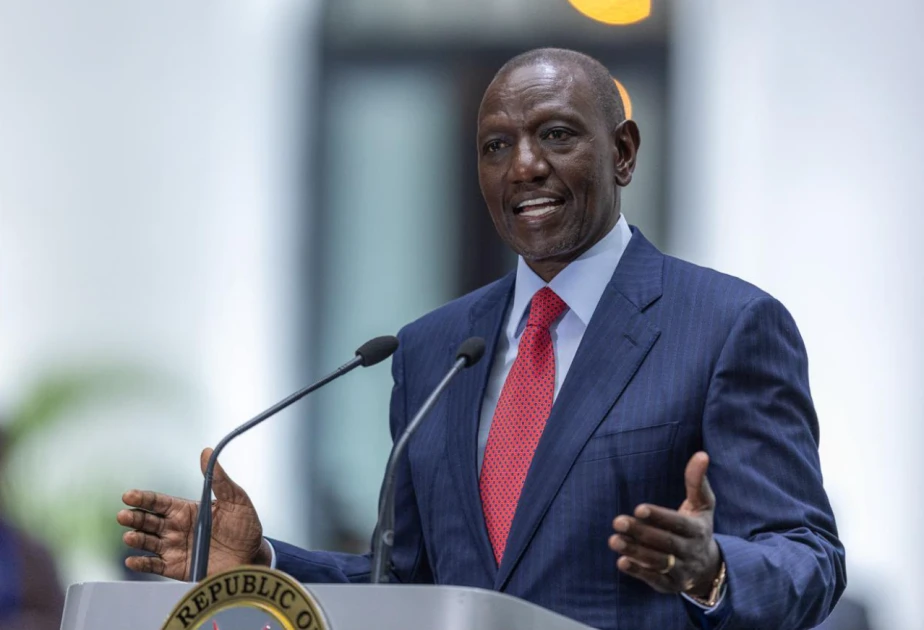
President William Ruto addresses the nation at State House, Nairobi, on July 30, 2026. PHOTO | PCS

Audio By Vocalize
However, the speech was met with swift skepticism and pushback from opposition figures, political leaders, and ordinary Kenyans online, many who cited high living costs and heavy taxation.
During the televised address, President Ruto framed the current period as a pivotal moment for Kenya's economic direction, comparing the nation's economic trajectory to the rapid historical development of East Asian economies like South Korea and Vietnam.
President Ruto emphasized that having stabilized the macroeconomic environment after years of debt pressure, Kenya must now transition from short-term recovery to aggressive long-term growth.
Ruto also urged the country to cast off a 'mindset of being content with the average' and emphasized recent government stabilization efforts, citing a stabilized exchange rate at KSh 129 to the US dollar, falling inflation figures, and expanding foreign reserves.
He also highlighted ongoing initiatives in affordable housing, the Hustler Fund, and healthcare restructuring under Universal Health Coverage.
"This national conversation must rise above politics, transcend electoral cycles, and unite us around a shared destiny," Ruto stated, announcing a nationwide public engagement campaign scheduled to launch on August 12.
Despite the optimistic tone from State House, the speech triggered immediate public outcry across social media and media channels, with many citizens dismissing the address as disconnected from ground realities.
A widespread sentiment among citizens on social media was that macro-economic numbers do not reflect daily household struggles.
Many Kenyans expressed anger over persistent high costs of food, fuel, electricity, and the expanding tax burden.
Critics labeled the address as repetitive rhetoric arguing that futuristic 30-year plans offered no immediate relief to families struggling to make ends meet today.
Opposition leaders and political commentators too issued sharp rebukes following the address.
Critics pointed out that while the administration touts foreign direct investment and reserve figures, aggressive revenue collection policies and housing levies continue to drain disposable income from civil servants and business owners.
Others argued that while Ruto highlighted progress in Universal Health Coverage through the Social Health Authority (SHA), ongoing operational hitches, hospital claim delays, and out-of-pocket costs still burdened patients across the country.
Political rivals also questioned the launch of a new long-term vision when foundational promises from the 2022 manifesto - such as lowering the overall cost of living and reducing public borrowing - still remain contested.
Linda Mwananchi leader Edwin Sifuna led the onslaught, writing: "Ruto just spent 40 minutes trying to create a false equivalence between our national values set out in the Constitution and his so called “development”. Kenyans, please trust me when I tell you there is a reason the Preamble comes before Article 43. You don’t get to the “development “ clauses until and unless you have taken into account the reasons we passed this constitution in the first place. Democracy, Human Rights, Freedom, Equality, Rule of Law and Social Justice."
Martin Peters Owino, MP for Ndhiwa said: "What the president talked about, unfortunately, is about processes... Right now we were expecting outcomes which target what the people are going through on the ground. We want tangible measures so that people can see something that gives them hope."
Someone else said, "I would summarize the speech as a summary of promises—a report on process indicators that do not reflect the immediate needs of citizens who are eager for actual results."
On his part, former Nandi Hills MP Alfred Keter wrote: "Mr out-going president! Just relax and forget about the next election! Kenyans including our community the Kalenjin nation, have made a resolve to take you home! Wantam Is Wantam!"
X influencer Shoba Gatimu also reacted, saying: "A Kenya where people are not abducted, maimed, shot and killed for speaking. A Kenya where development and empowerment of mwananchi is done through useful programs not petty cash handouts. A Kenya without state militia goons. Not a flashy Kenya with a rotten underbelly."
As the administration prepares to launch its national stakeholder dialogue on August 12, the government faces a steep climb in building public trust.
While the Ruto administration insists that tough fiscal decisions were necessary to prevent economic default and lay the foundation for rapid industrial development, the immediate challenge will be convincing a skeptical citizenry that long-term transformation can deliver tangible relief to their daily lives.
Join the Discussion
Share your perspective with the Citizen Digital community.
No comments yet
This discussion is waiting for your voice. Be the first to share your thoughts!