
Police: June 25 roadblocks in Nairobi were lawful response to security threats
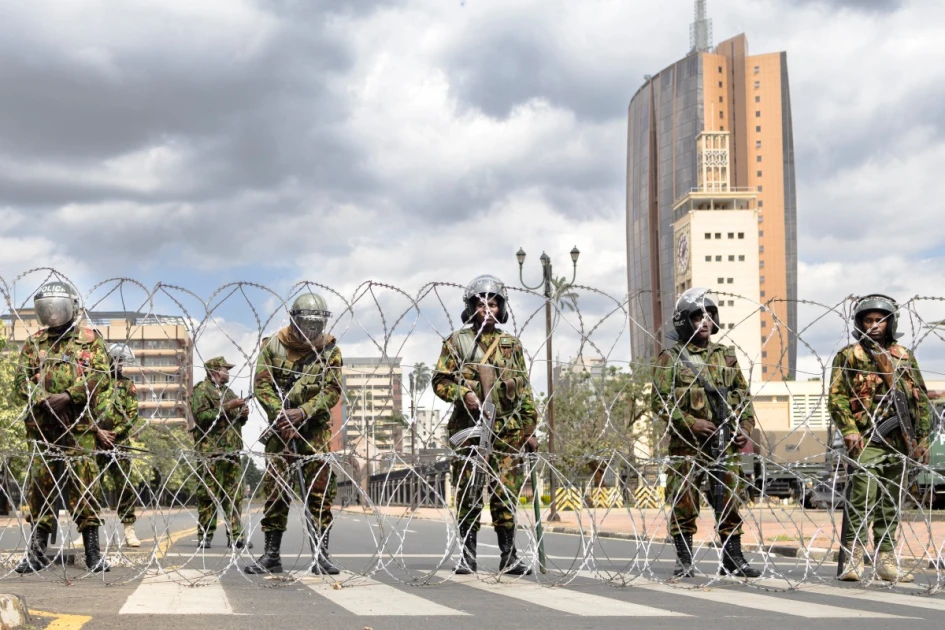
Police take position behind a temporary barricade erected outside parliament buildings in anticipation of anti-government protests to commemorate the struggle against government oppression on annual day of protest known as Saba-saba in Nairobi on July 07, 2026. TONY KARUMBA / AFP Photo by TONY KARUMBA / AFP

Audio By Vocalize
In an affidavit filed in response to an application by Katiba Institute seeking contempt proceedings, Nairobi Regional Police Commander Issa Mohamed Mohamud argues that the conservatory orders issued by the High Court in July 2025 did not impose an absolute ban on police roadblocks, checkpoints or traffic diversions.
Mohamed, also an Assistant Inspector General, says the court orders only required police to issue prior public notices where there were pre-planned and structural road closures, particularly during demonstrations, to enhance transparency and public predictability.
The police maintain that the June 25 security deployments were neither pre-planned nor ordered from the Office of the Inspector General, but were spontaneous decisions made independently by area commanders in response to real-time security assessments on the ground.
The police further state that no organizers of the June 25 protests submitted the mandatory three-day notification to area police commanders as required under Section 5 of the Public Order Act, leaving officers to respond to evolving security situations without prior planning.
The Assistant Inspector General's office argues that any traffic disruptions experienced on the day were unavoidable consequences of reactive policing and not deliberate attempts to prevent peaceful demonstrations.
The affidavit adds that genuine protesters and members of the public were allowed to move freely, with the temporary checkpoints intended only to identify and stop individuals suspected of intending to engage in violence, vandalism or other unlawful acts.
The police also contend that the checkpoints were lawful operational measures permitted under the National Police Service Act, the Public Order Act and the National Police Service Standing Orders, and did not amount to blanket road closures or violations of the constitutional right to assemble.
The Inspector General has asked the court to dismiss the contempt application, describing it as speculative, legally flawed and an attempt to interfere with field-level operational decisions made by police commanders responding to changing security circumstances.
The police further insist they operate within the Constitution and have not wilfully disobeyed any court orders.
Join the Discussion
Share your perspective with the Citizen Digital community.
No comments yet
This discussion is waiting for your voice. Be the first to share your thoughts!