
Player welfare takes centre stage at FIFPRO Africa Summit in Nairobi
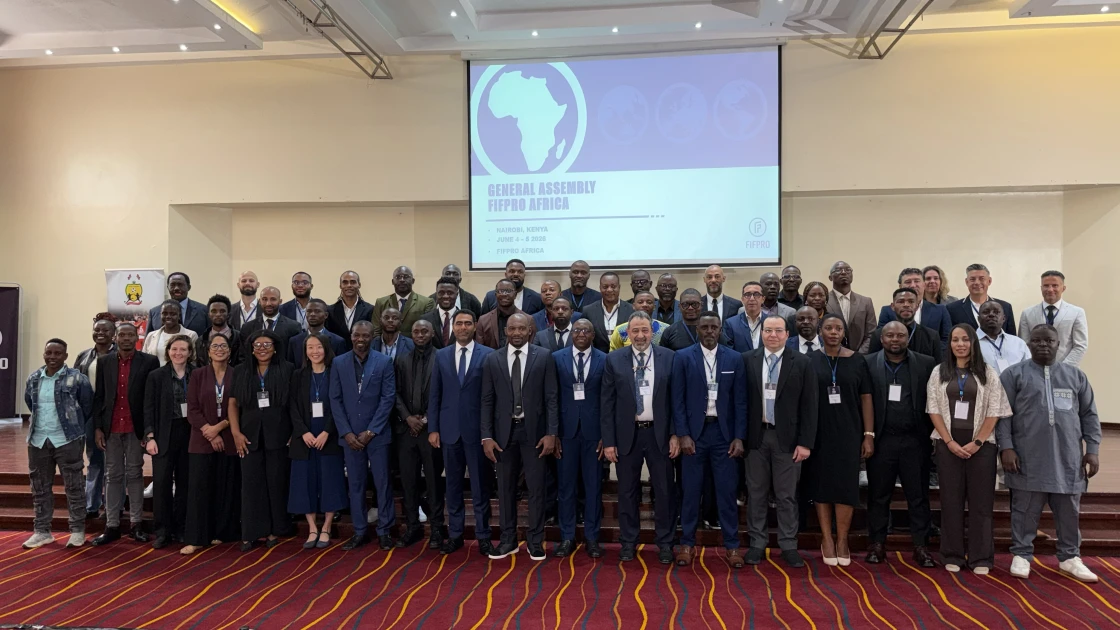
The 2026 FIFPRO Africa General Assembly brought together 30 player unions, CAF, in Nairobi for two days of discussion and strategic planning.

Audio By Vocalize
As thousands of fans pack stadiums every weekend, their eyes fixed on dazzling goals, significant victories and the best players on the pitch, few stop to consider what happens when the final whistle blows.
The player is the face of the game, the very reason
fans fill stadiums, sponsors invest millions and broadcasters beam matches into
homes across the continent.
Yet despite being the industry's most valuable
asset, many players navigate careers without adequate financial security,
health protection or a clear plan for life after football.
Speaking at the FIFPRO Africa Summit in Nairobi on
Friday, Football Kenya Federation (FKF) President Hussein Mohammed called for a
shift in priorities, arguing that the future of African football depends not
only on developing talent, but also on protecting the people behind it.
"Football begins and ends with players. They
are the most important stakeholders in the game," Mohammed said.
His message resonated throughout the summit, which
brought together player unions, football administrators and stakeholders from
across Africa to discuss the future of the footballers and the protection of
their rights.
“Every fan fills a stadium because of the player on
the pitch. Every sponsor, broadcaster and administrator derives value from the
talent and dedication of the player,” he noted.
“For football to thrive, players must operate in an
environment that allows them to perform at their best and develop throughout
their careers.”
For Mohammed, the issue is personal. Long before
becoming FKF president, he launched the Super 8 League, a competition designed
not only to nurture football talent but also to prepare players for life beyond
the game.
"Twenty years ago, I started an initiative
called the Super 8 League. This is way before I was president," he
recalled. "One of the most important fundamental objectives of the Super 8
League was to ensure that we do capacity building for our players."
He added that the initiative taught players skills
that extended beyond football. Mohammed said management quickly realized that
footballers needed preparation for challenges they would face after retirement.
"We realized earlier that beyond football, we
need to also build the capacity of football players to understand the
importance of financial literacy, which will help them post their
careers," he said.
"We need to help them understand the importance
of governance so that it can help them also in matters of administration after
or during their careers."
Since assuming office, Mohammed said FKF has sought
to strengthen engagement with stakeholders across the football ecosystem,
including the Kenya Footballers Welfare Association (KEWA).
"We recognize the importance of maintaining
open and constructive dialogue with players and their representatives," he
noted.
"We believe that football is strongest when all
voices are heard and when challenges are addressed through collaboration rather
than confrontation."
Mohammed insists that stakeholders should never lose
sight of the game's most valuable asset. “I want us to always keep in mind that
without the footballer there is no football.”
“I want to reaffirm FKF’s commitment to putting
players at the heart of football development and this will continue throughout
my tenure,” he promises.
Join the Discussion
Share your perspective with the Citizen Digital community.
No comments yet
This discussion is waiting for your voice. Be the first to share your thoughts!