
Outrage as Nairobi's mature trees fall to chainsaws in the name of 'development'

Audio By Vocalize
Across key corridors and ecologically sensitive zones - stretching from the historic reaches of Karura Forest along Kiambu Road, down the bustling transport spine of Waiyaki Way, and into the quiet residential avenues surrounding State House - decades-old mature trees are being felled at an alarming rate.
The widespread tree destruction, driven by road expansion projects, infrastructure development, and institutional land clearing, has sparked intense public outrage and drawn fierce condemnation from environmentalists and everyday Kenyans, who accuse authorities of betraying the nation's ecological heritage and senselessly ruining the once-beautiful Nairobi greenery.
The onslaught against Nairobi's urban forest has hit close to home for conservationists who fought to protect these sanctuaries.
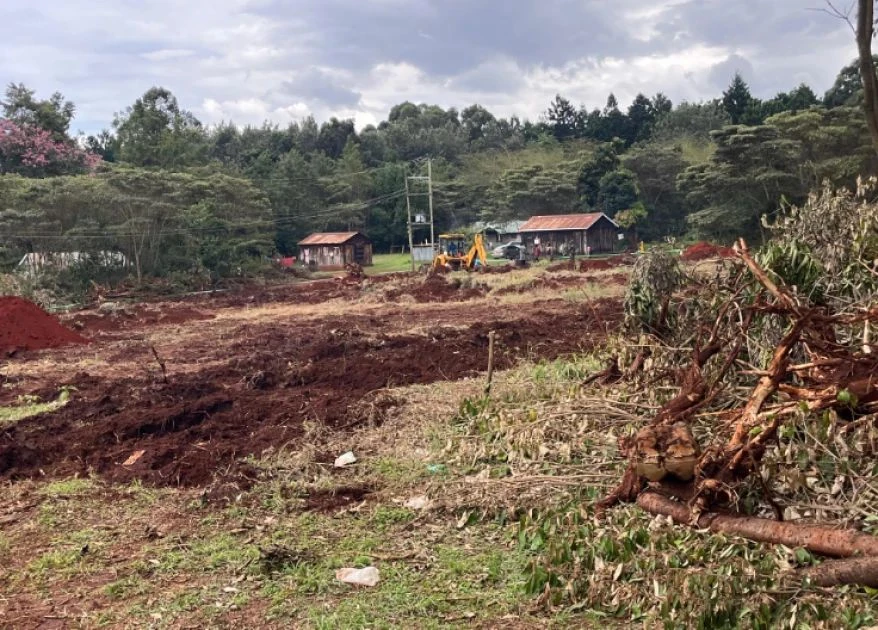
Inside Karura Forest - a iconic sanctuary saved from grabbers in the 1990s by the late Nobel laureate Prof. Wangari Maathai - alarm bells rang after heavy equipment moved in to clear land for government seedling propagation units and temporary worker barracks.
Further south along the Waiyaki Way artery and the neighborhoods flanking State House Road and Dennis Pritt Road, ancient trees that provided essential shade, clean air, and urban biodiversity have been reduced to sawdust to accommodate road widenings and utility line relocations.
Outraged Kenyans and a coalition of environmental organizations, led by the Friends of Nairobi’s Forests and Green Spaces and, have vocally denounced what they describe as a flagrant disregard for environmental protections.
According to Friends of Nairobi’s Forests and Green Spaces, Ngong Road Forest was also singled out as one of Nairobi's most threatened indigenous forests, citing multiple ongoing and proposed developments within the protected area.
According to the lobby group, the projects include a proposed luxury tented camp, the Riruta-Ngong Town Meter Gauge Railway line, a road linking Talanta Stadium to the Bomas International Conference Centre, a contractor's construction camp and the proposed Talanta Sports City.
"Individually, each of these developments fragments the forest ecosystem; collectively, they pose a serious threat to one of Nairobi's most important ecological assets," they said.
"Development and environmental protection are not mutually exclusive. Engineering solutions exist that preserve mature trees while improving transport infrastructure."
Citizens taking to social media and civil society leaders alike have pointed out the glaring contradiction between the government's ambitious global promise to plant 15 billion trees by 2032 and the simultaneous destruction of living, mature forest canopies.
Environmental advocates emphasize that saplings planted elsewhere cannot simply replace century-old indigenous ecosystems that take generations to develop and perform vital microclimate cooling and carbon sequestration functions for the capital city.
The escalating crisis has forced local leaders to respond, with Nairobi Governor Johnson Sakaja publicly issuing a stern warning to state agencies, road contractors, and private developers against unauthorized tree felling.
Reminding agencies that no individual or institution is legally permitted to cut down trees without written approval from the county's environmental authority, city leadership warned that while power lines and road layouts can be re-engineered, a mature tree lost to a chainsaw cannot be easily recovered.
Despite the Sakaja warning, no action appears to have been taken, and the reckless felling of trees doesn't appear to have stopped, anyway.
Taking to his X account, conservationist Onjolo Kenya also lamented the felling of old acacia trees at Kenyatta National Hospital.
He wrote: "They cut down the acacia trees this week at Kenyatta National Hospital. The marabou storks that had nested there for decades didn’t have anywhere to go. Some died. Some got injured. All because nobody thought to check what was living in those branches first."
"This is what happens when “development” skips the wildlife-sensitivity conversation entirely. Nairobi keeps growing, but does it have to keep growing over everything else that was already here?"
Though state agencies have issued clarifications claiming that certain land clearings are meant for nursery expansions rather than private development, pressure continues to build as conservationists demand full compliance with court orders, strict environmental impact assessments, and a complete halt to the destruction of Nairobi's remaining green heritage.
Join the Discussion
Share your perspective with the Citizen Digital community.
No comments yet
This discussion is waiting for your voice. Be the first to share your thoughts!