
OPINION: Why your sustainability report could become your biggest risk
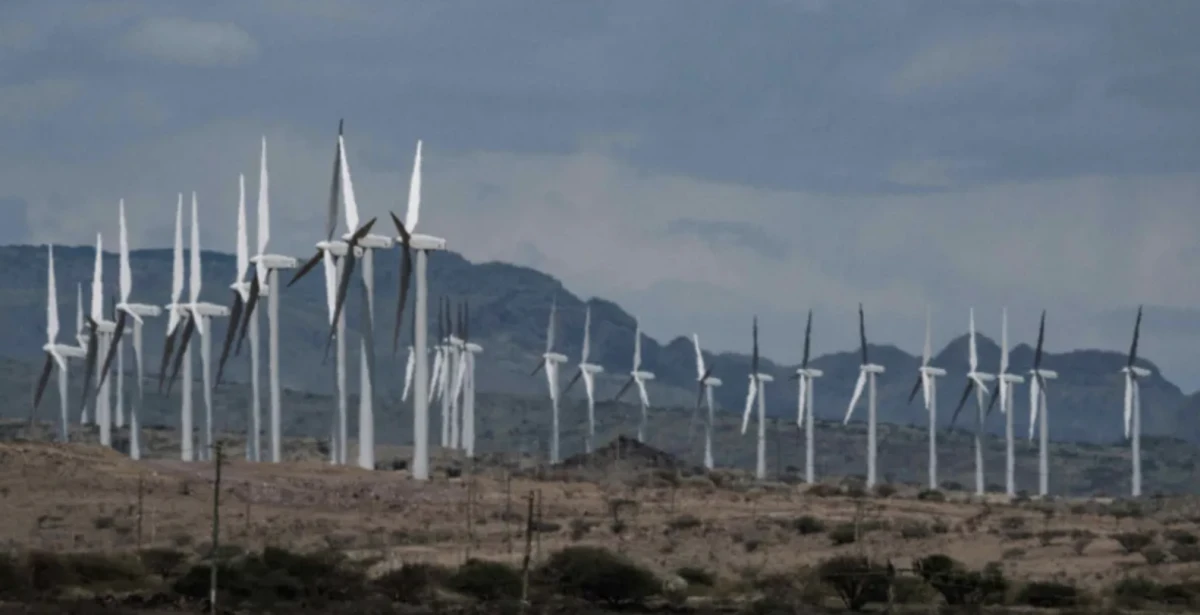
Wind turbines from the Lake Turkana Wind Power project (LTWP) in Loiyangalani district, Marsabit County, northern Kenya. (AFP Photo)

Audio By Vocalize
Across Kenya, companies are increasingly marketing themselves as “green”, “eco-friendly”, “climate-smart” or “sustainable”.
Banks now advertise green finance products. Real estate developers speak of eco-estates. Manufacturers highlight recyclable packaging.
Even fuel-intensive industries increasingly frame themselves as champions of sustainability.
On the surface, this appears encouraging. It signals that environmental, social and governance (ESG) issues are finally entering mainstream business conversation.
But beneath the glossy sustainability reports, tree-planting photos and carbon-neutral slogans lies a growing risk that many companies would rather avoid discussing: greenwashing.
Greenwashing occurs when an organisation exaggerates, selectively presents or outright misrepresents its environmental performance to appear more sustainable than it truly is.
Put simply, it is sustainability communication without equivalent sustainability substance.
Globally, regulators and investors are increasingly cracking down on misleading sustainability claims. In Kenya, however, the issue remains largely under-discussed despite rapidly growing ESG expectations from investors, lenders, development partners and consumers.
Yet the reality is becoming increasingly difficult to ignore: greenwashing is no longer merely a reputational issue. It is steadily becoming a governance, regulatory and financial risk.
In practice, greenwashing in Kenya rarely appears as outright fraud. More often, it emerges in subtle and sophisticated forms that can easily go unnoticed by consumers and even investors.
One common example is selective disclosure, where companies heavily publicise a single environmental initiative while remaining silent about larger sustainability concerns elsewhere within their operations.
A company may showcase a nationwide tree-planting campaign while avoiding discussion around pollution, waste management failures or unsustainable sourcing practices.
Another may celebrate installing solar lighting in its offices while its broader business model remains highly carbon-intensive.
The sustainability initiative itself may indeed be genuine. The problem is that stakeholders are only presented with one carefully selected part of the story.
Equally common is the growing use of vague sustainability language. Terms such as “green”, “eco-friendly”, “planet-conscious” and “sustainable” are increasingly appearing across advertising campaigns, annual reports and product packaging.
Yet many of these claims are unsupported by measurable targets, independent assurance or transparent methodologies.
A property developer may market apartments as “eco-living spaces” because they include landscaped gardens and energy-saving bulbs.
A manufacturer may label products “environmentally friendly” simply because packaging is recyclable, even where production processes remain environmentally intensive.
Without evidence and measurable backing, sustainability language risks becoming little more than marketing theatre.
Perhaps the least discussed yet fastest-growing form of greenwashing is the use of green imagery and sustainability branding to create environmental impressions that may not reflect operational reality.
Across Kenya, consumers increasingly encounter products packaged in earthy colours, leaves, forests, wildlife imagery and phrases such as “natural”, “clean”, “green” or “planet-friendly”.
The visual messaging is often powerful. Consumers subconsciously associate environmental imagery with responsible corporate behaviour even where little evidence exists to support the impression being created.
A plastic-heavy product may suddenly adopt green packaging aesthetics without changing its underlying environmental footprint.
A high-emission business may redesign its marketing around nature, clean-ups and community environmental campaigns while making minimal operational transition.
In such cases, sustainability becomes less about transformation and more about perception management.
Closely linked to this is the growing use of misleading environmental labels and claims. Terms such as “100% natural”, “biodegradable”, “sustainably sourced” and “environmentally friendly” frequently appear without clear definitions, scientific backing or independent certification.
For instance, a product labelled “biodegradable” may only decompose under specialised industrial conditions that barely exist within Kenya’s waste management infrastructure.
A company may advertise packaging as “recyclable” even where practical recycling systems remain limited or inaccessible to most consumers.
Technically, such claims may not always be false. But they can still be materially misleading because consumers are left with the impression that purchasing the product contributes significantly to environmental protection when the actual environmental benefit may be marginal or unclear.
Globally, regulators are increasingly scrutinising vague environmental marketing claims precisely because of the widening credibility gap between sustainability branding and operational reality.
Fast-fashion giant Shein, for instance, faced a €40 million (approximately KSH 6 billion) fine in France in 2025 over misleading commercial practices, including unsupported environmental claims, while Italy separately imposed a €1 million (approximately Ksh.150 million) fine over what regulators described as vague and misleading sustainability messaging.
The cases signalled a broader global shift where regulators are no longer satisfied with companies merely sounding sustainable; they increasingly demand credible evidence behind environmental claims.
Another sophisticated form of greenwashing that is likely to grow is overreliance on carbon offsets. Increasingly, organisations announce ambitions to become “carbon neutral” primarily through offset purchases rather than actual operational emissions reduction.
In principle, carbon offsets can support climate strategies. However, they become problematic when organisations use them as substitutes for meaningful operational transition.
A logistics company, for example, cannot continue operating inefficient fleets indefinitely while branding itself sustainable merely because it financed a forest project elsewhere.
Investors are increasingly asking a deeper question: whether the underlying business model itself is genuinely transitioning toward sustainability.
This conversation matters greatly for Kenya because the country is actively positioning itself as a regional sustainability leader.
Kenya has made significant progress in renewable energy adoption, climate policy positioning, green finance discussions and sustainable agriculture initiatives.
Financial institutions are increasingly integrating ESG considerations into lending decisions, while development finance is becoming more sustainability-linked.
Multinational companies operating locally are also facing rising disclosure obligations from parent jurisdictions abroad.
As a result, the cost of misleading sustainability claims is steadily rising. International investors increasingly demand credible ESG data rather than inspirational sustainability narratives.
Sustainability reports are now scrutinised for consistency, measurable targets, governance oversight and independent assurance.
Companies that treat ESG primarily as a communications exercise rather than a strategic transformation risk future investor distrust, reputational damage and eventual regulatory scrutiny as local frameworks continue maturing.
More importantly, greenwashing undermines genuinely responsible businesses. When exaggerated sustainability claims flood the market, organisations making authentic environmental investments struggle to differentiate themselves from competitors relying largely on branding and perception.
One uncomfortable reality is that many organisations are pursuing sustainability visibility faster than sustainability capability.
The pressure is understandable. Boards want ESG success stories. Investors increasingly ask for climate disclosures.
Consumers are becoming more ethically conscious. Regulators are paying closer attention and mandating disclosures such as IFRS S1 and S2.
Yet sustainability maturity cannot be manufactured overnight.
Real sustainability transformation is operationally difficult and often commercially uncomfortable. It requires supply chain changes, governance reforms, emissions measurement systems, capital expenditure, internal controls and long-term accountability.
It is far easier to redesign packaging in green colours than to redesign a carbon-intensive business model.
Ironically, some of the most credible sustainability performers globally are often cautious in their claims. They understand that credibility depends less on sounding perfect and more on demonstrating measurable progress while openly acknowledging existing gaps and challenges.
For Kenyan companies, the path forward is becoming increasingly clear. Sustainability claims must become evidence-based and measurable.
If a company claims products are environmentally friendly, stakeholders should be able to see recognised standards, certifications, independently verifiable metrics or measurable transition plans supporting the claim.
Boards must also begin treating ESG as a governance issue rather than purely a marketing function. The era where sustainability reporting sits exclusively within public relations departments is rapidly ending.
Investors increasingly expect board oversight, risk integration and internal controls around sustainability disclosures.
At the same time, organisations may need to prioritise transparency over perfection. Stakeholders do not necessarily expect businesses to have solved every environmental challenge immediately.
What they increasingly demand is honesty, measurable progress and consistency between sustainability messaging and operational reality.
Professional bodies, regulators and market institutions in Kenya will also need to strengthen sustainability assurance and disclosure frameworks.
As ESG reporting grows, the market will increasingly require standardisation, accountability and assurance mechanisms capable of distinguishing genuine sustainability performance from sophisticated marketing.
The sustainability conversation in Kenya is clearly maturing. In the early stages, visibility alone was often enough. Today, credibility matters far more.
The companies that will ultimately earn long-term investor confidence are unlikely to be those with the loudest sustainability campaigns.
They will be those capable of demonstrating measurable transition, transparent reporting and alignment between sustainability promises and operational behaviour.
In the ESG era, stakeholders are no longer asking whether a company talks about sustainability. They are asking whether the numbers, governance and actions genuinely support the story.
CPA Moenga Elvis is the Manager, Professional Standards & Sustainability, ICPAK
Join the Discussion
Share your perspective with the Citizen Digital community.
No comments yet
This discussion is waiting for your voice. Be the first to share your thoughts!