
OPINION: Why the Kenya-UK defence partnership should adapt to current needs, concerns

Audio By Vocalize
Sometime in April 1945 – towards the end of the Second World War – then British Prime Minister Winston Churchill made the profound statement, that “There is only one thing worse than fighting with allies, and that is fighting without them.”
At the time, Churchill was furious at then US General Dwight Eisenhower, for unilaterally issuing a tactical order that saw his troops bypass the City of Berlin; leaving it to be captured by the Soviet Union’s Red Army.
General Eisenhower – who later became US President – had made the decision arguing that Berlin was not militarily worth the risk of the 100, 000 American casualties that it was estimated it would take to capture the city.
Churchill on the other hand firmly believed that the final capture of the city would be the priciest political prize for ending the war.
The British Prime Minister was perhaps vindicated after the Soviet’s capture of Berlin, as the city became the epicenter of the Cold War that came to define the subsequent and eventually present-day world order.
That classic statement by Churchill stills bears immense symbolism and tremendous relevance to the dilemmas that confront most present-day diplomatic alliances and strategic defence and security cooperation among modern day states.
Today, a situation akin to this confronts Kenya and the United Kingdom in the wake of recent divergent views across board on the Defence Cooperation Agreement (DCA) between the two Nations, and the operations of the British Army Training Unit in Kenya (BATUK).
Inevitable public debate has recently emerged on these two subjects in the wake of recommendations made by the National Assembly on the Kenya-UK DCA which is due for renewal.
At the same time, the UK recently postponed a military training exercise in Kenya for the Duke of Lancaster’s Regiment that was scheduled for September this year, over delayed processing of the necessary licenses by the Kenyan Government.
The two might sound like very complex diplomatic issues; but I to the contrary believe that they offer perhaps the best opportunity for the two Nations to analyse, reassess, redefine and enhance our diplomacy and defence cooperation for posterity.
Our armed forces have undertaken joint trainings for over six decades; and in so doing exchanged expertise, and enhanced our interoperability thus strengthening our collective ability to tackle existing and evolving threats such as terrorism, violent extremism, cross border crime, humanitarian emergencies and regional instability.
However, every enduring partnership needs to be periodically reviewed to adapt to emerging needs of our dynamic society and the legitimate expectation of both partners.
Such is where Kenya and the UK find themselves with regard to the DCA and Batuk operations in the Country.
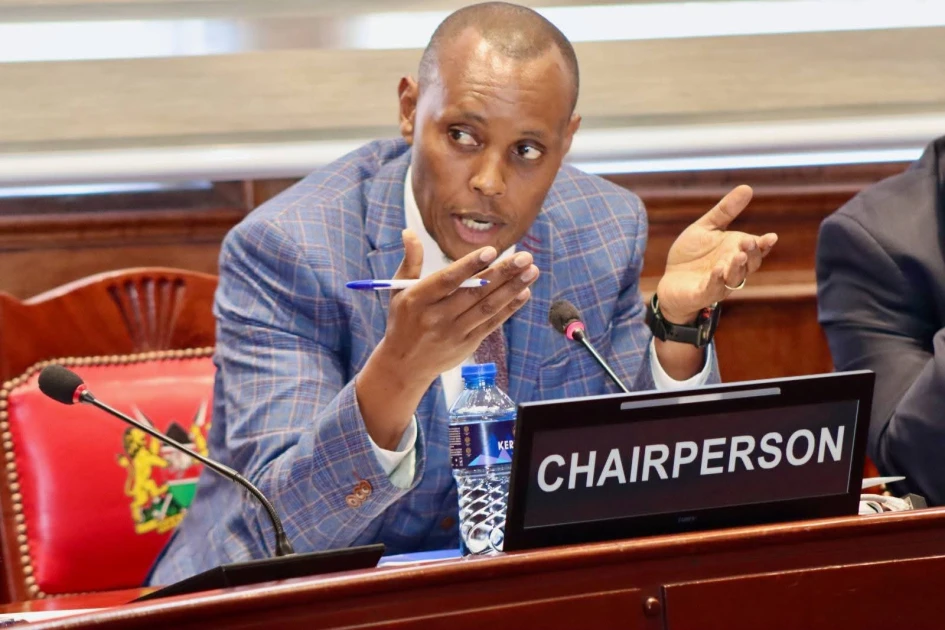
As Chairperson of the National Assembly Departmental Committee on Defence, Intelligence and Foreign Relations, I firmly believe that Kenya's objective must be to enhance this relationship for mutual benefit and shared responsibility for posterity.
That is the principle that guided my Committee's comprehensive inquiry into the conduct of BATUK in Kenya, as part of our constitutional oversight mandate.
During the inquiry preceding our Committee Report, that was eventually adopted by the House, we listened to diverse stakeholders including Kenyan Government officials, affected local communities, environmental experts and representatives of the British High Commission.
This inquiry acknowledged the extremely strategic value of Batuk but also identified genuine concerns, that as a matter of urgency need to be addressed as we review the Kenya-UK DCA.
Local communities spoke to us about environmental degradation, the risks posed by unexploded ordnance, damage to grazing lands, delayed compensation and insufficient consultation regarding some Batuk activities.
Concerns of legal accountability for crimes alleged to have been committed by British personnel within Kenya soil were also raised.
These realities do not in any way diminish the importance of the partnership.
On the contrary, they provide the basis to strengthen it.
Kenya as an independent democratic Country governed by the rule of law, guarantees equal protection before the law and affirms the sovereignty of our judicial institutions.
The DCA thus needs to reflect clear mechanisms for legal redress against serious criminal offences committed on the Kenyan territory; even as we preserve operational effectiveness of military cooperation.
A proper agreement should balance defence exchanges with respect for domestic legal systems, and on this Kenya is no exception.
The unresolved case of Agnes Wanjiru – alleged to have been murdered by a Batuk soldier in June 2012 – clearly demonstrates why accountability matters.
Public confidence in bilateral defence cooperation is measured on operational success against the perception that justice is accessible, timely and impartial whenever such serious allegations arise.
Likewise, military training is inherently demanding on natural ecosystems; and responsible defence cooperation requires comprehensive environmental impact assessments, systematic restoration programmes, independent monitoring and effective compensation mechanisms where legitimate losses occur.
Communities hosting the Batuk have expressed concerns that this has not been adequately addressed in the past as captured in our Report.
Drawing wisdom from Churchill’s words, this is a momentous opportunity for two allies to build consensus for posterity.
Kenya and the UK are strong allies that need each other.
The author is the MP for Belgut and the Chairperson of the National Assembly Departmental Committee on Defence, Intelligence and Foreign Relations.
Join the Discussion
Share your perspective with the Citizen Digital community.
No comments yet
This discussion is waiting for your voice. Be the first to share your thoughts!