
OPINION: Why the Gen Z movement failed to consolidate the gains of its struggle
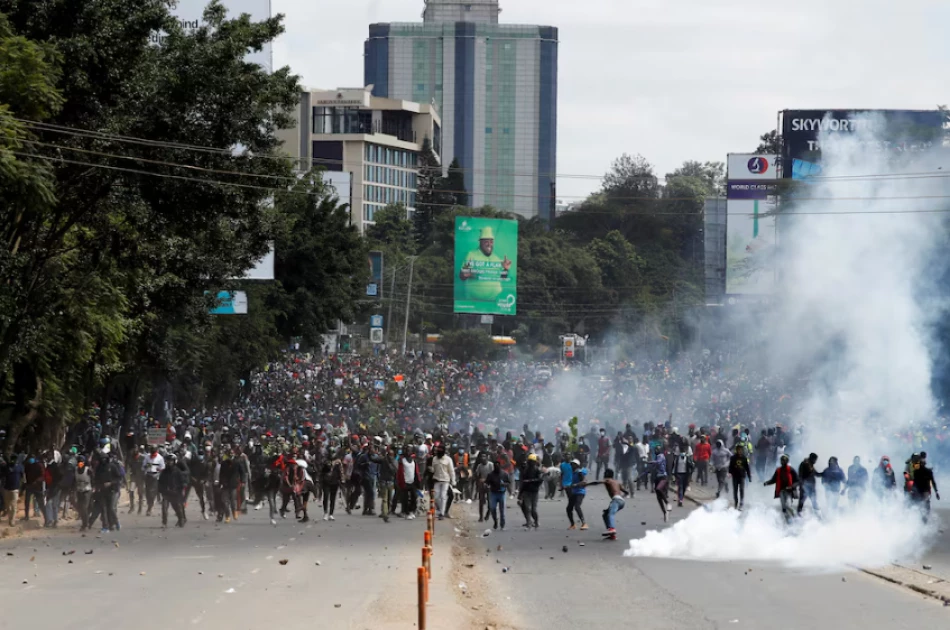
People attend a demonstration against Kenya's proposed finance bill in Nairobi, Kenya, June 25, 2024. REUTERS/Monicah Mwangi

Audio By Vocalize

Occupy Parliament was a remarkable success. It demonstrated the power of citizen action and compelled the government to withdraw the Finance Bill, 2024. For the first time in many years, young Kenyans had shown that they could influence national policy without the backing of established political parties. June 25, 2024, became a defining moment in Kenya's democratic history. Yet, while the Gen Z movement won an important battle, it failed to convert that victory into lasting political influence.
One of the greatest contradictions of
the Gen Z movement was its rejection of negotiations. The movement failed to
transition from the streets to the boardroom. What I learnt from Raila Odinga
was that protests are only one phase of struggle. After mobilization comes organization,
negotiation, and the institutionalization of gains. The Gen Z movement,
however, remained suspicious of leadership and rejected the idea of
representatives or negotiators riding on the ‘leaderless’ abstraction. As a result, after the withdrawal of the
Finance Bill, there was no coherent structure to articulate demands, engage
government, or define a roadmap for reforms. The energy that had shaken the
establishment dissipated because no mechanisms existed to channel it into
policy outcomes.
The insistence on being leaderless and
partyless, while initially useful in preventing political co-opting, eventually
became a liability. Every successful movement in history has required some form
of organization and leadership. By refusing to identify a leadership or build
institutions, the movement deprived itself of the ability to make collective
decisions and negotiate from a position of strength. Power abhors a vacuum, and
in the absence of organized leadership, established political actors moved swiftly
to occupy that space. The broad-based government came into force in the milieu
of Gen Z’s inability to adapt.
This vacuum created an opportunity for
the traditional opposition to reassert itself. While Gen Z activists remained
committed to horizontal organizing and rejected engagement with the political
class, Raila Odinga understood that politics ultimately revolves around
negotiation and compromise. He entered discussions with President William Ruto
and extracted concessions and political advantages, effectively becoming the
recognized interlocutor between the State and dissenting voices. The movement
that had generated the pressure was thus sidelined by actors who possessed
organizational structures and experience in political bargaining.
History is replete with examples of
movements that conquered the streets but failed to capture the institutions
that ultimately shape the future. The Arab Spring offers perhaps the most
sobering lesson. In 2011, millions of young people poured into public squares across
Tunisia, Egypt, Libya, Syria and Yemen demanding freedom, dignity and
accountability. In Egypt, the images from Tahrir Square captivated the world as
protesters forced President Hosni Mubarak from office. For a brief moment, it
appeared that a new democratic era had dawned.
Yet the revolutionaries had mistaken
the fall of a ruler for the completion of a revolution. They possessed passion
but lacked organization. They mistrusted hierarchy and failed to build
structures capable of translating street power into political power. While the
activists celebrated in Tahrir Square, the military and more organized
political actors quietly prepared to inherit the state. Within two years, Egypt
had come full circle. General Abdel Fattah el-Sisi had seized power, and many
of the young men and women who had ignited the revolution found themselves
spectators to a future they had sacrificed so much to create.
Elsewhere, the story was even more
tragic. Libya descended into factional conflict after the fall of Muammar Gaddafi.
Syria's peaceful demonstrations spiralled into a devastating civil war. Yemen
plunged into chaos. Even Tunisia, once hailed as the lone success story of the
Arab Spring, has witnessed democratic backsliding. The lesson from the Arab
Spring was not that protests are futile. Rather, it was that revolutions rarely
succeed through moral force alone.
Occupy Parliament proved that young
people could mobilize and force change, but the inability to move from activism
to organization meant that the movement lacked the capacity to consolidate its
gains. By rejecting leadership, distrusting parties, and refusing to establish
mechanisms for negotiation, the movement inadvertently ensured that others
would speak and bargain on its behalf.
The tragedy of the Gen Z movement was
therefore not that it failed to bring attention to legitimate grievances. It
succeeded in that regard. Its tragedy was that it confused the rejection of
traditional politics with the rejection of politics itself. Yet politics is
unavoidable. Someone will always occupy the boardroom. If those who generate
pressure refuse to negotiate, others will negotiate on their behalf. If those
who create history refuse to organize, others will inherit the future.
The enduring lesson of June 25 may therefore be this: it is not enough to win the streets. One must also learn to win the boardroom. Otherwise, the authors of change risk becoming spectators to the very future they helped create.
Join the Discussion
Share your perspective with the Citizen Digital community.
No comments yet
This discussion is waiting for your voice. Be the first to share your thoughts!