
OPINION: Why Adan Mohamed fits the moment KRA finds itself in
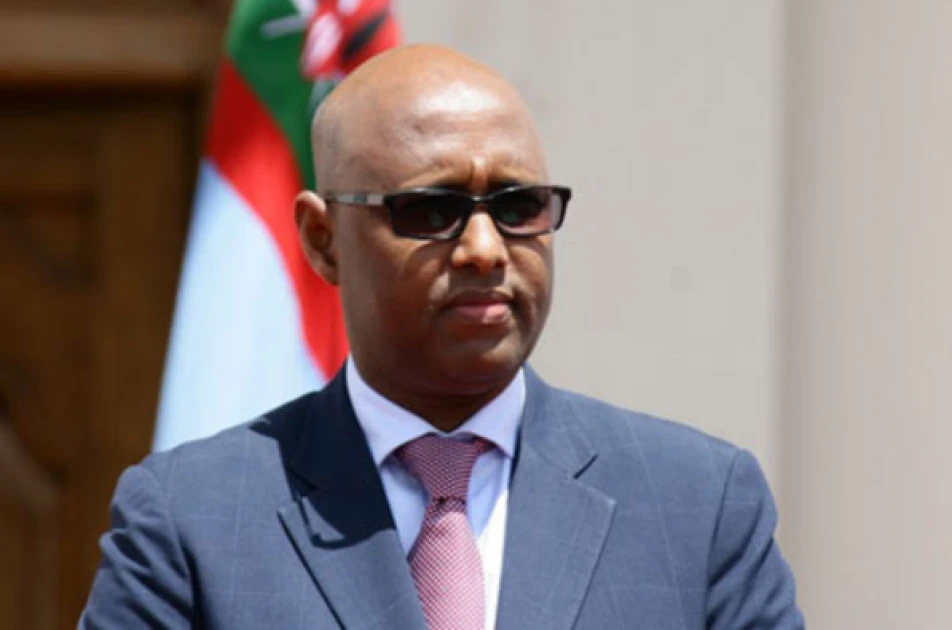
Adan Mohamed, the new Commissioner General of the Kenya Revenue Authority. PHOTO| FILE

Audio By Vocalize

The appointment of Adan Mohamed as
Commissioner General of the Kenya Revenue Authority marks more than just a
leadership transition at Times Tower. It signals recognition that KRA’s
challenges today are increasingly about the economy and longer purely about tax
administration.
Kenya’s tax environment has undergone significant changes over the past few years. First, based on what we witnessed two years ago with the Genz protests and even as recent as this week with the matatu strike, revenue collection has become increasingly politically sensitive. In addition, businesses
are under pressure from high operating costs, and taxpayers are increasingly
vocal about compliance burdens and aggressive enforcement.
On the other hand, government financing
needs continue to rise sharply, with the National Treasury relying heavily on KRA
collections to finance an expanding national budget and debt obligations.
In this environment, the traditional
profile of a tax administrator is no longer sufficient. A KRA Commissioner
General must understand how businesses make decisions, how investors react to
policy uncertainty, how financial systems work and how economic activity
ultimately drives sustainable tax revenues.
That is why Adan Mohamed’s appointment
stands out. His background combines something rarely found in public
institutions: deep private-sector financial experience alongside a long record
of public-sector reform and economic management.
Before entering government, Mohamed
built one of the most successful executive careers in Kenya’s banking sector.
He became the youngest Managing Director of a multinational bank in Kenya when
he took over Barclays Kenya at the age of 38. Under his leadership, Barclays
Bank Kenya became the first sub-Saharan subsidiary to surpass Ksh 10 billion in
profit while significantly growing assets, operating income and regional
presence.
But perhaps more important than the
numbers are the exposure that role gave him. Running banking operations across
multiple African markets meant dealing directly with regulators, investors,
compliance systems, monetary policy environments and cross-border business
realities. That experience becomes highly relevant for KRA at a time when
investor confidence and tax policy are becoming increasingly intertwined.
Today, KRA is no longer simply
collecting customs duties and corporate taxes. It is dealing with digital
transactions, fintech platforms, cross-border commerce, betting taxes, virtual
assets, data-driven enforcement systems and increasingly complex compliance
frameworks. The authority is becoming more technology-driven and more
economically consequential.
That requires leadership capable of
understanding the broader economy, not just tax procedures.
Mohamed’s record in government also
explains why the Board may have viewed him as uniquely suited for the role. During
his years overseeing trade, industrialization and regional integration, Kenya
undertook some of the most ambitious business and regulatory reforms in its
recent history. The country improved from position 136 to 56 in the World Bank
Doing Business rankings within five years, becoming one of the world’s most
improved reformers during that period.
His tenure also coincided with major
reforms in business registration, insolvency laws, trade facilitation, special
economic zones and digitization of government services. These reforms were not
merely bureaucratic exercises. They were aimed at making Kenya more
investment-friendly, improving enterprise growth and supporting formal economic
activity.
That distinction matters because one of
KRA’s biggest problems today is the narrowness of the country’s tax base. The
authority continues to depend heavily on a relatively small pool of compliant
businesses and salaried workers while much of the informal economy remains
outside the tax net. Meanwhile, businesses within the formal sector
increasingly complain about compliance costs, unpredictable tax disputes and
pressure-driven enforcement approaches.
This has contributed to a growing trust
deficit between KRA and taxpayers. Many businesses now see KRA less as a
facilitator of economic growth and more as a punitive enforcement institution.
Whether fully justified or not, that perception affects voluntary compliance,
investment sentiment and business confidence.
The next Commissioner General, therefore, inherits not just a revenue collection challenge, but also a relationship
challenge. Mohamed’s experience engaging investors, coordinating reforms and
working across both government and private-sector ecosystems could become
particularly important in this regard. His track record suggests familiarity
with the delicate balance between regulation and economic growth, a balance KRA
will increasingly need to manage carefully.
His background in industrialization and
SME development may also prove relevant as KRA attempts to widen the tax base.
Under programmes initiated during his tenure, SME financing expanded,
export-oriented manufacturing grew, industrial parks were developed and
investment mobilization accelerated across several sectors. This matters
because Kenya’s future revenue growth will ultimately depend less on squeezing
existing taxpayers harder and more on growing formal economic activity itself.
KRA is also entering a period of major
internal transformation. Systems such as eTIMS, automation of compliance
functions and expanded use of data analytics are changing how the institution
operates. While digitization is necessary for reducing leakages and improving
efficiency, it has also increased complexity for many SMEs and smaller taxpayers.
Managing that transition will require not only technical understanding, but
also organizational leadership and change-management capability.
Ultimately, the Board’s decision
reflects an understanding that KRA’s future success depends on more than enforcement
targets. Its next leader therefore needed to be someone capable of operating
comfortably in the intersection of economic growth, public trust, and the
overall business environment. This is where Adan Mohamed’s career has largely
been built around.
James Mworia is the Group CEO, Centum
Investment Company Plc
Join the Discussion
Share your perspective with the Citizen Digital community.
No comments yet
This discussion is waiting for your voice. Be the first to share your thoughts!